This copy is for your personal, non-commercial use only. Distribution and use of this material are governed by our Subscriber Agreement and by copyright law. For non-personal use or to order multiple copies, please contact The Epoch Times Reprints.
President Donald Trump said on Dec. 17 that Venezuela must return oil, land, and other assets that it seized from U.S. companies years ago, suggesting that the uncompensated expropriations are one of the reasons behind his administration’s newly announced blockade of sanctioned oil tankers traveling to or from the South American country.
Trump’s remarks came a day after he ordered a “total and complete blockade” of sanctioned oil tankers off Venezuela’s coast as part of a broader pressure campaign against socialist Venezuelan leader Nicolás Maduro’s regime, which has been designated by the United States as a foreign terrorist organization.
“We’re not going to be letting anybody go through who shouldn’t be going through,” Trump told reporters at Joint Base Andrews on Dec. 17 when asked about the blockade. “You remember they took all of our energy rights. They took all of our oil not that long ago. And we want it back. But they took it—they illegally took it.”
His remarks build on his earlier Dec. 16 post on Truth Social, in which he said Venezuela “is completely surrounded” by a massive armada, warning that the military buildup would intensify until Venezuela returned “all of the Oil, Land, and other Assets that they previously stole from us.”
Trump further stated that Maduro’s “illegitimate” regime was using the proceeds from the stolen assets to finance itself—along with “Drug Terrorism, Human Trafficking, Murder, and Kidnapping.” He added that the blockade applies to all sanctioned oil tankers entering or leaving Venezuela, and that his administration would act decisively against any “hostile regime” that expropriates U.S. assets or otherwise harms or threatens the United States.
Roots of the Dispute
Trump’s assertion that Venezuela stole U.S. oil assets appears to refer primarily to events in 2007, when the government of then-leader Hugo Chávez ordered the seizure of major oil projects owned by foreign companies, including ExxonMobil, Chevron, and ConocoPhillips, as well as Norway’s Statoil and France’s Total.
Those seizures built on an earlier nationalization process launched in 1976 under President Carlos Andrés Pérez, which brought Venezuela’s oil industry under state control. Venezuela holds the world’s largest proven oil reserves and has, for decades, attracted substantial foreign investment.
While Chevron ultimately reached agreements allowing it to continue limited operations, ExxonMobil and ConocoPhillips exited the country and pursued international arbitration. In 2014, the World Bank’s International Centre for Settlement of Investment Disputes awarded ExxonMobil $1.6 billion in compensation. In 2019, the same tribunal awarded ConocoPhillips nearly $9 billion.
Venezuela’s attempt to annul the ConocoPhillips award failed in January 2025, when the tribunal upheld the ruling. As of this year, the award remains unpaid. Venezuela’s dispute with ExxonMobil also remains unresolved.
Trump faulted previous U.S. administrations for failing to confront Venezuela more forcefully over the seizure of U.S. oil assets.
“They took it away because we had a president that maybe wasn’t watching,” Trump said on Dec. 17. “But they’re not going to do that again. We want it back. They took our oil rights—we had a lot of oil there. As you know they threw our companies out, and we want it back.”
Stephen Miller, Trump’s deputy chief of staff, said Venezuela’s oil nationalization amounted to a massive theft.
“American sweat, ingenuity and toil created the oil industry in Venezuela,” Miller wrote in a Dec. 17 post on X. “Its tyrannical expropriation was the largest recorded theft of American wealth and property.”
Military Pressure and Seizures
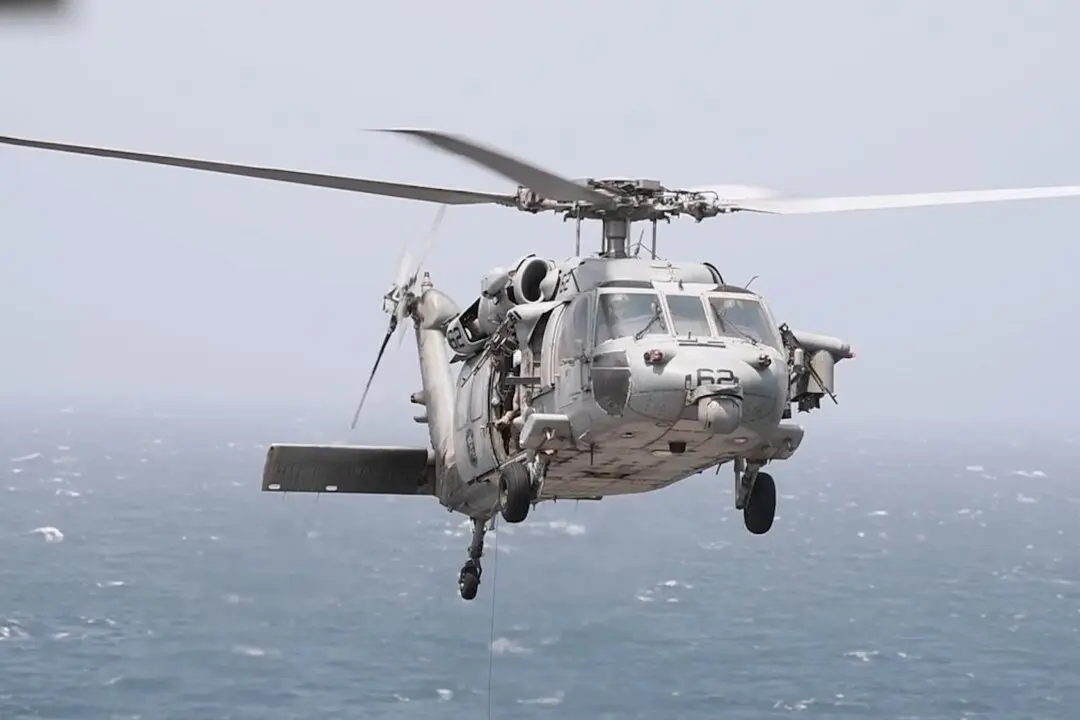
Since Trump returned to office for a second term, the United States has ramped up military pressure on Venezuela. U.S. forces have built up naval assets around the country and carried out strikes on boats that, according to the Pentagon, belong to narcotics traffickers linked to the Maduro regime.
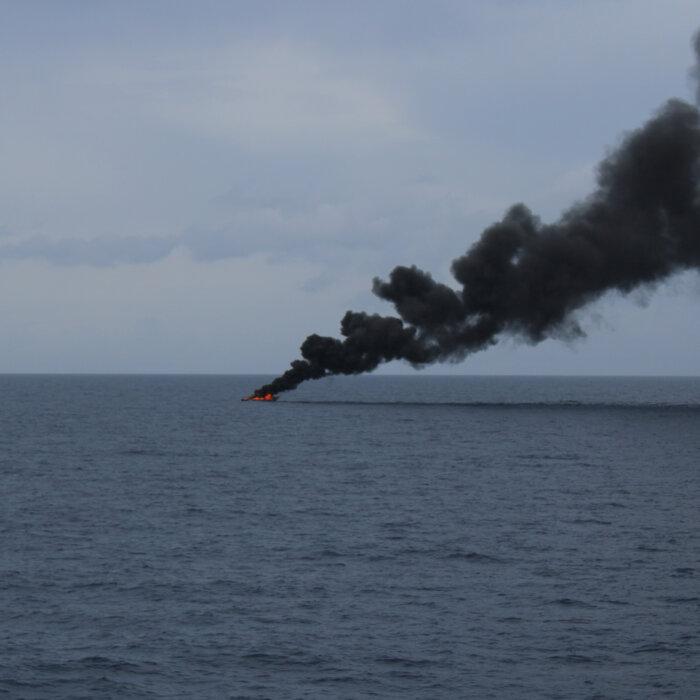
On Dec. 10, U.S. forces seized an oil tanker off Venezuela’s coast, an action that Caracas described as “blatant theft” and “international piracy.” The Pentagon has also launched a series of strikes on suspected drug boats in the Caribbean Sea and eastern Pacific Ocean, killing at least 99 people, including four in a strike on Dec. 17.
Trump has said he is also considering strikes on land, prompting questions from some lawmakers and legal experts about the scope of executive authority and the legal justification for the use of force.
Rep. Joaquin Castro (D-Texas) criticized the blockade, calling it “unquestionably an act of war.”
“A war that the Congress never authorized and the American people do not want,” Castro wrote in a Dec. 16 post on X, adding that the House of Representatives is scheduled to vote on Dec. 18 on a resolution urging an end to hostilities with Venezuela.
Yván Gil Pinto, Venezuela’s foreign affairs minister, accused the United States of using military power in a bid to seize Venezuela’s natural resources.
“The true reasons for the prolonged aggression against Venezuela have been laid bare,” Pinto said in a Dec. 11 statement posted to Instagram. “It is not migration. It is not drug trafficking. It is not democracy. It is not human rights. It has always been about our natural wealth, our oil, our energy, the resources that belong exclusively to the Venezuelan people.”
Homeland Security Secretary Kristi Noem has defended the operation as part of the White House’s efforts to counter flows of illicit drugs into U.S. communities, while White House press secretary Karoline Leavitt said similar seizures could take place in the future to prevent oil proceeds from fueling “narcoterrorism.”
Andrew Moran and The Associated Press contributed to this report.
Tom Ozimek is a senior reporter for The Epoch Times. He has a broad background in journalism, deposit insurance, marketing and communications, and adult education.