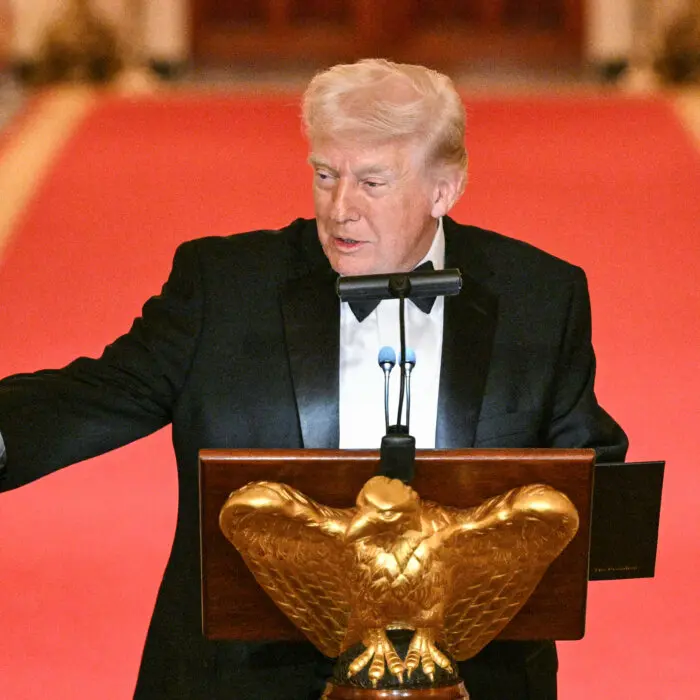
U.S. President Donald Trump has criticized Spain’s commitment to NATO, saying that the United States no longer wants to conduct trade with Madrid.
“Spain is a wasted cause. We don’t want to do any trade business with Spain anymore,” the president said on July 8 during a summit of NATO leaders in Ankara, Turkey.
“Spain is a terrible partner in NATO. They don’t participate, they don’t pay. I don’t want anything to do with Spain. Cut off all trade with Spain, including visits.”
The United States and Spain have been at loggerheads since Spain declined to join other NATO allies last year in pledging to increase defense spending. Relations were further strained when Madrid refused to let U.S. forces use its military bases or airspace during missions in the Iran war.
The U.S. president suggested that the other NATO allies were carrying Spain, because it was not fulfilling its spending commitments.
“Spain doesn’t agree to anything, and you shouldn’t carry him,” he said.
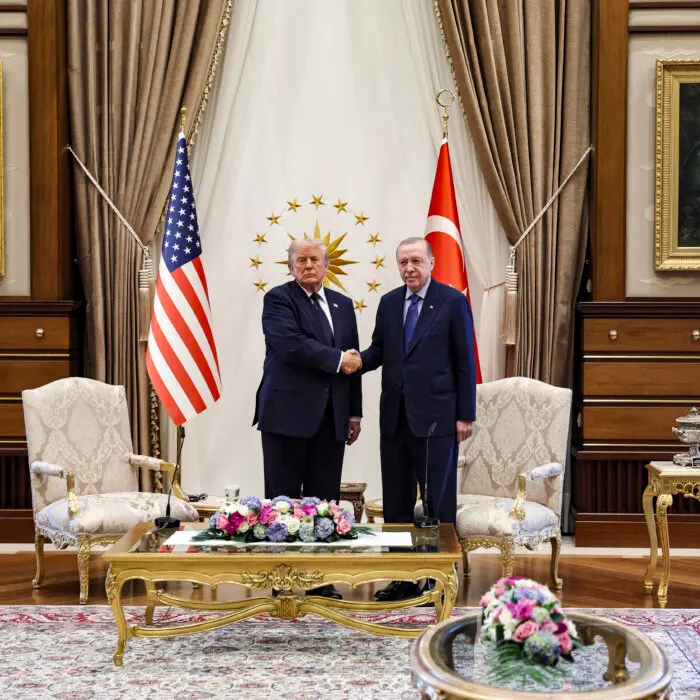
In response, the office of Spanish Prime Minister Pedro Sánchez said it was treating the U.S. president’s statements as business as usual, adding that bilateral relations benefited both countries.
Rising Tensions
On June 25, 2025, most NATO allies agreed to boost defense spending from 2 percent of gross domestic product (GDP) to 5 percent by 2035, with 3.5 percent for core defense, such as troops, arms, and equipment, and the other 1.5 percent to be spent on related areas, such as security and infrastructure.
Spain said at the time that it had made a deal with NATO to exclude itself from the increased target.
He noted that Spain could meet all of its commitments to NATO, in terms of staff or equipment, by spending 2.1 percent of its GDP.
According to the latest estimates from NATO, Spain remains one of the lowest spenders on defense, having contributed about 2 percent of its GDP last year. The Czech Republic (2.01 percent), Belgium (2 percent), and Slovenia (1.61 percent) are also among the lowest spenders in the alliance.
Iran War
Spain stated that the military operations do not comply with international law, with Sánchez calling it an “illegal war.”
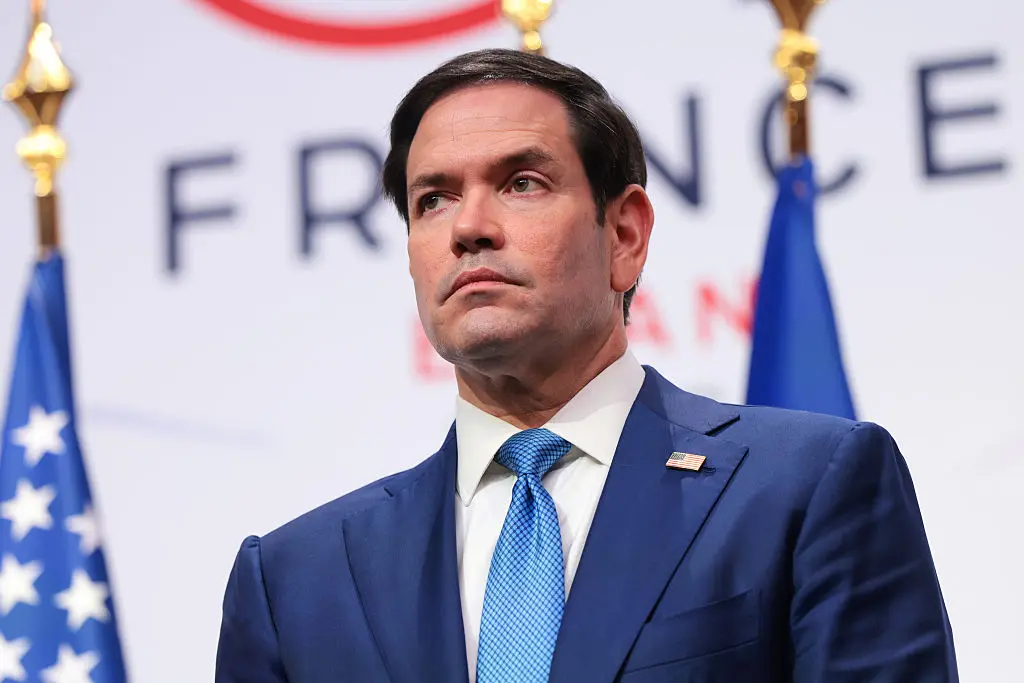
Rubio said one of the benefits of U.S. membership in NATO is that it enables Washington to station troops, aircraft, and arms in other parts of the world, including much of Europe.
During Operation Epic Fury, “we have countries like Spain, a NATO member that we are pledged to defend, denying us the use of their airspace and bragging about it, denying us the use of our—of their bases,” he said at the time, adding that there were other countries that had done that, as well.
He added that despite some disappointment, a number of allies have been supportive of American missions against the Tehran regime, including Croatia, France, Germany, Greece, Italy, Montenegro, Portugal, Romania, and the UK.
These allies, he said, were supporting the United States by allowing it to use their bases and by providing other logistical support.