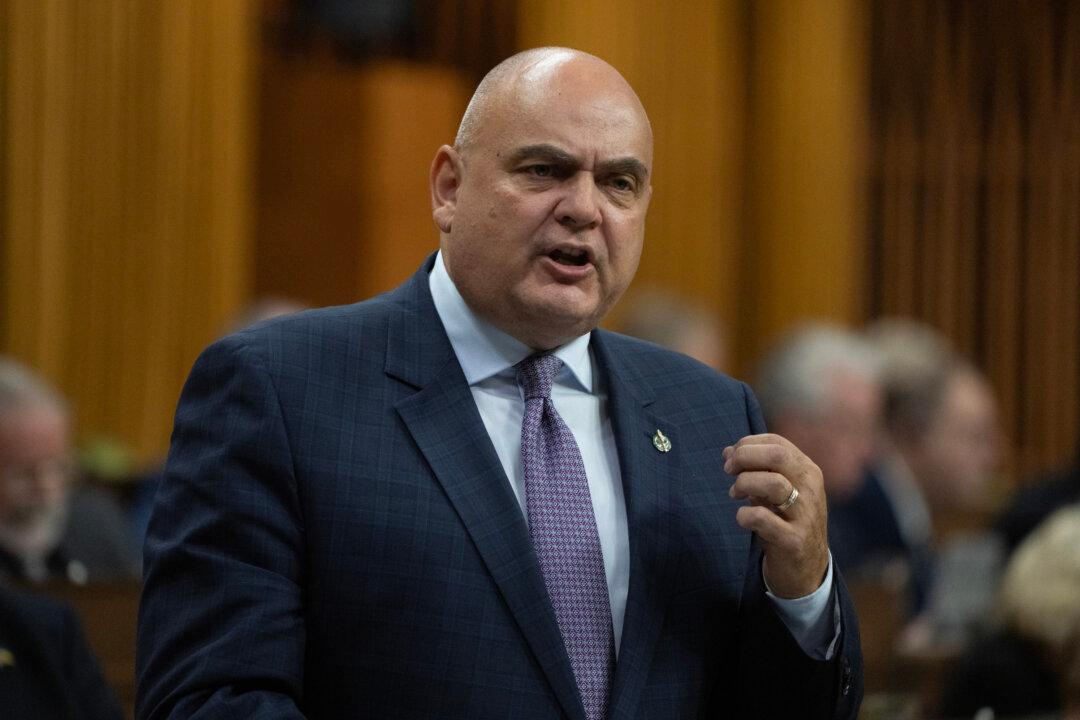
Conservative MPs are criticizing a provision in Bill C-2 that prohibits cash donations, deposits, or payments of $10,000 or more.
“I am hearing from my constituents that they are concerned,” said Conservative MP James Bezan during debate in the House of Commons on June 18, which was first covered by Blacklock’s Reporter.
Bezan noted it was not uncommon for small businesses and farmers to make five-figure cash deposits, saying that a small farming business such as a strawberry U-pick could “easily” collect over $10,000 in cash per day.
“There are ways we can still enforce the money laundering and terrorist financing rules in this country without going after people legitimately collecting cash in their day-to-day business activities,” he said.
Bill C-2, also known as The Strong Borders Act, states that banks, credit unions, charities and other federally registered businesses must not “accept a cash payment, donation or deposit of $10,000 or more in a single transaction or in a prescribed series of related transactions that total $10,000 or more.” Mandatory reporting of $10,000 deposits is already required under the Proceeds Of Crime And Terrorist Financing Act.
Conservative MP Michael Ma said cash is “very much part” of Canadian society, with some companies using it to avoid credit card fees.


“To legislate and force all transactions to go through credit cards and electronic means is just not practical for small and medium enterprises,” he said during the House debate.
Liberal MP Anju Dhillon told MPs the measure was designed to combat organized crime, not to inconvenience small businesses.
“Small businesses are the backbone of our country’s economy,” she said. “It is very important that we keep those businesses in mind. However when illicit financing occurs, this limit can crack down on money laundering and terrorist financing. It is essential.”
Bill C-2 also repeals legislation dating from 1867 that prohibits postal inspectors from opening letters deemed suspicious, as current search powers are limited to larger parcels. The bill also grants police new powers to intercept mail in transit, whereas they are currently limited to flagging suspicious mail for investigation after delivery.
Conservative MP Kerry Diotte argued Bill C-2 would give Ottawa the power to search people’s mail “on a whim,” but would not help the government catch criminals. “It would make a host of changes the government did not run on in the last election campaign,” he said.
“There are so many problems that I do not even have time to address them all.”
Bloc Québécois MP Rhéal Fortin said he expected the bill would be amended to address concerns from MPs.
“Does keeping our streets and borders safe always mean waiving our rights and freedoms?” said Fortin. “Maybe, maybe not. Personally I do not think so. There must be other ways to make our streets and borders safe.”
Liberal MP Chris Bittle said Canadians had said during the last election that public safety was a priority, and it was “disappointing to hear from some MPs who suggest that other MPs do not care about public safety.”
“Fundamentally, I believe this bill will keep Canadians safe by ensuring law enforcement will have the right tools to keep our borders secure, to combat transnational organized crime, stop the flow of illegal fentanyl and crack down on money laundering,” he said.