Police used air support capabilities—which include drones and helicopters—to improve response times, situational awareness, and public safety outcomes, the report says.
“These efforts reflect a commitment to using modern technology responsibly to support officers, protect the public, and strengthen community wellbeing,” according to the report.
The Toronto Police Service has been operating drones since 2017, but last year integrated drones and helicopters into a single Air Support Unit within the Emergency Management and Public Order unit, the report says.
The police service said it is also transitioning to owning, operating, and managing its own helicopter to improve efficiency and to ensure the aircraft is always available for use by the city, noting that the service relied on Ontario Provincial Police aircraft for its helicopter deployments in 2025.
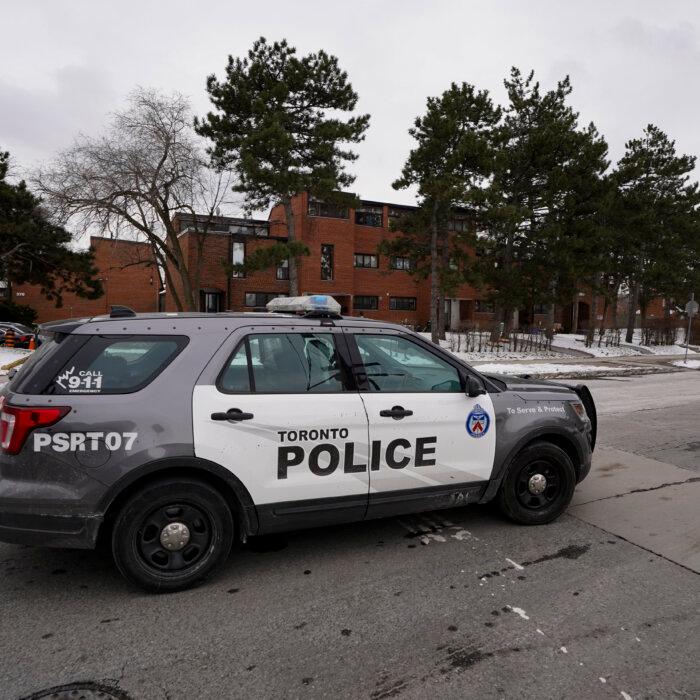

“Throughout the year, deployments supported hundreds of incidents involving missing persons, robberies, break and enters, traffic collisions, people in crisis, disaster response, serious violence and major events,” the report says.
“Drones also helped locate suspects and evidence while reducing risk to both the public and responding officers.”
Police also stepped up enforcement of unsafe drone activity—particularly at large public gatherings—by conducting counter‑drone investigations and issuing administrative penalties, the report says.
In 2025, a total of 2,365 drone flights were made over 795 radio calls, which led to 25 direct finds including suspects, missing people and evidence.
The report also highlights a broad year-over-year decline in major crime across Toronto, with almost every key category trending downward.
Assaults dropped by nearly 3 percent to 21,157 incidents, while auto thefts saw a significant 24 percent decline, coming in at 7,421 cases. Robberies fell by close to 22 percent to 1,995 incidents. The most dramatic decreases were seen in homicides and hate crimes—murders plummeted by over 47 percent down to 45 incidents, while reported hate crimes fell by nearly 47 percent to 236 cases.
Auto theft is still up substantially compared to pre-pandemic levels, despite recent drops. In 2019, Toronto reported some 2,000 fewer auto thefts than in 2025.
Assaults are also slightly up. The city reported approximately 20,455 assaults in 2019 compared to 21,157 in the recent report.
Commenting during the July 23 board meeting on how the service uses data from the reports, Toronto Police Chief Myron Demkiw said police redirected resources where needed to reduce crime.
“When we saw an increase in hate crimes, we expanded the hate crime unit, and more recently, established a counterterrorism security unit to address evolving threats, extremism, and to better support public safety,” he said.
“We use statistics in concert with other tools, such as hotspot analysis and intelligence, to help us identify trends, understand where resources are needed most, and measure the impact of the strategies and initiatives we put in place.”
Demkiw said police made more arrests in 2025, arresting 32,487 individuals compared to 31,889 the previous year. The police service has also nearly doubled bail compliance checks since 2022, he said.
Toronto city councillor Shelley Carroll asked the chief to comment on reports that residents do not feel as safe as in past years. Demkiw acknowledged that many residents remain concerned about public safety and said crime and other community safety indicators are trending in the right direction.
He said policing must combine enforcement with compassion, by working with health and community partners to address issues such as mental health, addiction, and homelessness, while ensuring officers respond quickly and effectively when the public needs them most.
“It’s important to recognize that law enforcement and the role of the police in safety and security actually intersects with being compassionate,” Demkiw said. “Those two do not live independent of each other; they live together.”