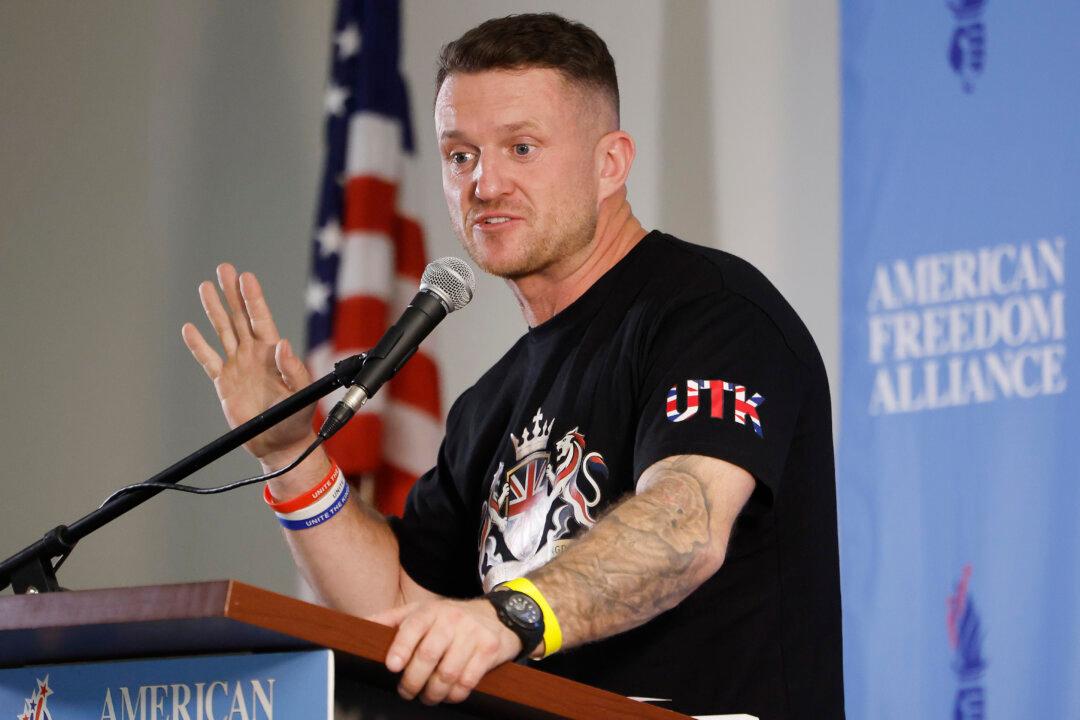
Former Prime Minister Tony Abbott doesn’t mince words when he talks about the big issues.
Abbott, who led Australia from 2013 to 2015, spoke candidly with former deputy prime minister John Anderson, in a down-to-earth discussion hitting on everything from defence to education—and the topic of what went wrong for the Coalition in this year’s election.
Despite polling in late 2024 indicating an election that seemed winnable for the Coalition, the party failed to secure government.
As he delved into the loss, Abbott urged Liberal voters not to lose heart in what he called a “dispiriting time.”
The Coalition, he says, started to fall by the wayside by failing to make a sustained case against the Labor government despite its immense fiscal failures.
People tend to ask themselves two questions of a prospective government according to the former leader, the first is whether the incumbent government deserves re-election and the second is whether the competitor is ready to rule.

“In the end, we weren’t able to persuade them we were ready,” Abbott said, describing the Coalition campaign as “terrible” because the longer it went on, the fewer voters wanted to give their support.
The Coalition also failed to present clear-cut policies.
Abbott described the idea to get public service workers back into offices as a “thought bubble” policy that was unpopular and later rescinded.
Despite a lot of talk about immigration, the Coalition never presented a clear policy, much like energy, where whispers around nuclear power never actually generated a clear game plan.
Then there was the announcement of a gas reservation scheme before costings had been produced.
“While I have enormous respect for Peter Dutton as a human being and while you’ve got to give him credit for getting us into a remarkably competitive position a few months ago, we completely blew it,” Abbott said.
The country, Abbott says, was let down.
Despite fewer than one in three Australians voting for Labor, the fastest collapsing living standards among wealthy countries, out of control immigration, a genuine cost of living crisis, renewables sending power prices up, declining productivity, high inflation, and dependence on personal taxation–the Coalition still failed to bring the prize home.
“It’s to our shame and it’s to the damage of the country,” Abbott said.
The Problem in Politics
Abbott likens modern politics to ostriches with heads in the sand. Few, he says, want to acknowledge the hard issues, and fewer still are prepared to talk about them.Many Australians, he argues, remain oblivious to the “dire turmoil” the country faces, while both major political sides fail to analyse national difficulties.
“None of us wanted to look at the consistent trend of overspending, none of us wanted to look at the reasons behind the productivity fall,” Abbott said.
Questions around whether Net Zero is really any good and the issues with renewables are also seldom discussed in a meaningful way.
Renewables projects are taking large swathes of farmland and forest across the nation, but the process goes on.
“The idea that we should destroy so much of the planet to supposedly save the planet is bizarre,” Abbott said.
With grid instability likely once 35-40 percent of power is generated by renewables, Abbott says it was “brave and correct” to commit to nuclear, but the promise fell through due to a lack of credible policy and fear of upsetting the public.
“In the end, political leadership is not giving them what they want, it’s about giving what they need, and successful political leadership is persuading them that they actually want what’s needed, that they are prepared to do the tough things as opposed to the easy things,” Abbott said.
“If renewables really are the cheapest form of power then why are they subsidised?”

A Need for Unity
Abbott argues that Australia needs to stop relying on mass migration, and instead refocus on shared identity and cultural heritage.He describes Australia’s foundations as “one country, one people” built on the Anglo-Celtic culture and Judeo-Christian values that got the nation where it is today.
“Let’s face it, our migrants didn’t come here because they wanted to lead exactly the same life as they led back home, they came here because they wanted a better life,” he said.
“Frankly we should be stressing our unity far more and any diversity that we might have far less.”
Britain’s influence on Australia isn’t something to be ashamed of, Abbott says.
The influence of Britain gave Australia the “mother of parliaments” and the most spoken language in the world.
“Regardless of what country (migrants) come from, they should be encouraged to participate fully in that heritage, which has become their heritage,” Abbott said.
Military Decline
Abbott said Australia once had a more prepared and self-reliant defence outlook, where Australian men were involved in national service, could shoot a gun, and could ride a horse.Australia now exists in a much more modern military era, with a much larger population, but the nation’s once great military might is now in tatters.
“We don’t even have a plan,” Abbott said.
Even as a young country, the old Australia possessed one of the world’s most powerful navy ships—HMAS Australia.
Launched in 1911, the vessel was the envy of many, and in her first year in Australia, she was steered to as many Australian ports as possible to celebrate national pride.
“Once upon a time–as late as the 1960s–we had a war book, which was regularly updated, talking about what the country needs to do in the event of a serious military threat regarding some sort of military mobilisation,” he said.
He warns that no one is currently compiling the lists of longer and harder defence requirements, societal needs, things that would need to be made and stockpiled, and what we can rely on allies for.
They’re all vital pieces of analyses for any country, Abbott says, but are “great political folly” to talk about–perils that become “real” if they’re acknowledged, so heads stay firmly planted in the sand.
Australia, he says, needs more missile systems, naval ships, 5,000 more personnel, and two new squadrons of F-35 jets capable of operating from navy ships.
“We’ve been talking about getting light frigates urgently for 18 months.,” Abbott said.
“Analysis paralysis is killing us.”

Value for Money?
Government spending sounds good, but does it really equate to outcomes? It’s a question Abbott ponders as he delves into the problem of splashing cash for little result.Australia spends more than $86 billion annually on education, yet student performance and mental health outcomes are declining.
“The only thing that matters in the end is what kind of a difference does it make?” Abbott said.
In the realm of education, two key markers are class size and funding, neither of which will make a difference if the quality of teaching is inferior.
“If you don’t emerge from your education as a reasonably capable, reasonably aware, reasonably curious person, then you’re prone not just to economic failure but to all the social and ultimately mental failures that so many people are subject to today,” Abbott said.
Another example Abbott gives is the “sinkhole of money” that goes into Indigenous policy with little difference to show.
“But how much difference does it make? In the end, if kids don’t go to school, adults don’t go to work, nothing will happen,” Abbott said.
Trend to the Nationals
Abbott noted that the Nationals, the more right-wing faction of the Liberal National coalition, were the first to oppose Labor’s $400 million failed Indigenous Voice to Parliament referendum.They also held all their seats in the election.
“Most people feel that the National Party has a stronger identity than the Liberal Party,” Abbott said.
Abbott believes the Liberals must reaffirm their core instincts, rather than trying to be “everything to everyone.”
It’s a similar sentiment expressed by Senator Jacinta Price, who announced she would move from the Nationals to the Liberals to bring the party back to its core values.
“As conservatives, we support the family, small business institutions, and values that have stood the test of time–but above all else, as patriots, we think this is the best country in the world to live. We want to keep it that way,” Abbott said.