Tokyo is set to host the inaugural Indo-Pacific Energy Security Ministerial and Business Forum as part of U.S. President Donald Trump’s energy strategy later this year, the U.S. Embassy in Tokyo announced on Feb. 22.
Between March 14 and March 15, the forum will feature U.S. Secretary of the Interior Doug Burgum and U.S. Secretary of Energy Chris Wright—who serve as the National Energy Dominance Council’s chairman and vice-chairman, respectively—as well as U.S. Environmental Protection Agency administrator Lee Zeldin.
The trio will meet with almost a dozen Indo-Pacific countries for energy security talks, the announcement said.
Those attending will include energy, infrastructure, industrial, and finance business executives and government officials from multiple Indo-Pacific countries.
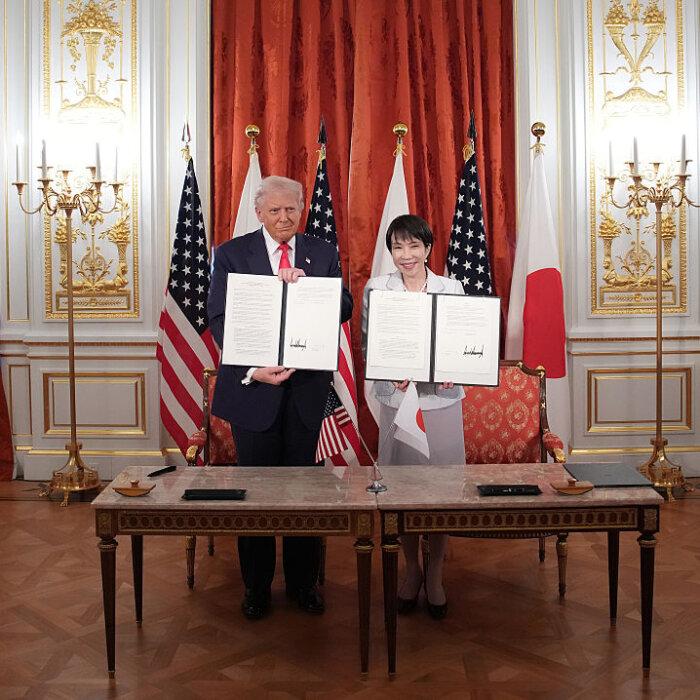
He said they discussed plans for Japan to make strategic investments in the United States through the two nations’ trade and investment agreement.
Kato signaled that Japan had flexibility but did not commit to ceasing imports.
“Japan will do what it can based on the basic principle of coordinating with G7 countries to achieve peace in Ukraine in a fair manner,” Kato said at the time.
Later that month, Japan signaled that it would be difficult to ban all imports of Russian liquefied natural gas.
Japan imported 600,000 barrels of Sakhalin Blend crude oil from Russia in June, the first time since early 2023.
That export-grade mixture of crude oil and gas condensate—a byproduct of liquefied natural gas production—was sanctioned by the United States and the European Union after Russia invaded Ukraine.
However, the U.S. Treasury Department granted Japan a waiver and allowed it to import crude oil to facilitate a stable national gas supply for Tokyo.
Investments From Japan Trade Deal
On Feb. 17, Trump announced three new projects that are part of the first stage of the trade deal that his administration brokered with Japan, which will see more than $500 billion dollars spent on U.S. manufacturing and energy development. The three projects are worth $36 billion, the president said on Feb. 17.“The Gas Power Plant in Ohio ... will be the largest in History, the LNG Facility in the Gulf of America will drive Exports, and further our Country’s Energy dominance, and our Critical Minerals Facility will end our foolish dependance [sic] on Foreign Sources.”
“We believe these initiatives truly embody the purpose of this Strategic Investment Initiative, namely the promotion of mutual benefit between Japan and the United States, the enhancement of economic security, and the promotion of economic growth,” she wrote on social media.