Thailand’s prime minister said he is set to speak with President Donald Trump on Dec. 12 as fierce fighting with Cambodia entered a fifth day. The Southeast Asian nation was plunged deeper into political uncertainty after the Thai king approved the dissolution of parliament and a snap election.
Thai Prime Minister Anutin Charnvirakul told reporters in Bangkok he was scheduled to speak with Trump late Friday, as artillery, rockets, drones, and airstrikes continued along the long-disputed Thai-Cambodian border, killing at least 20 people this week and displacing hundreds of thousands on both sides.
Trump’s Intervention Pledge
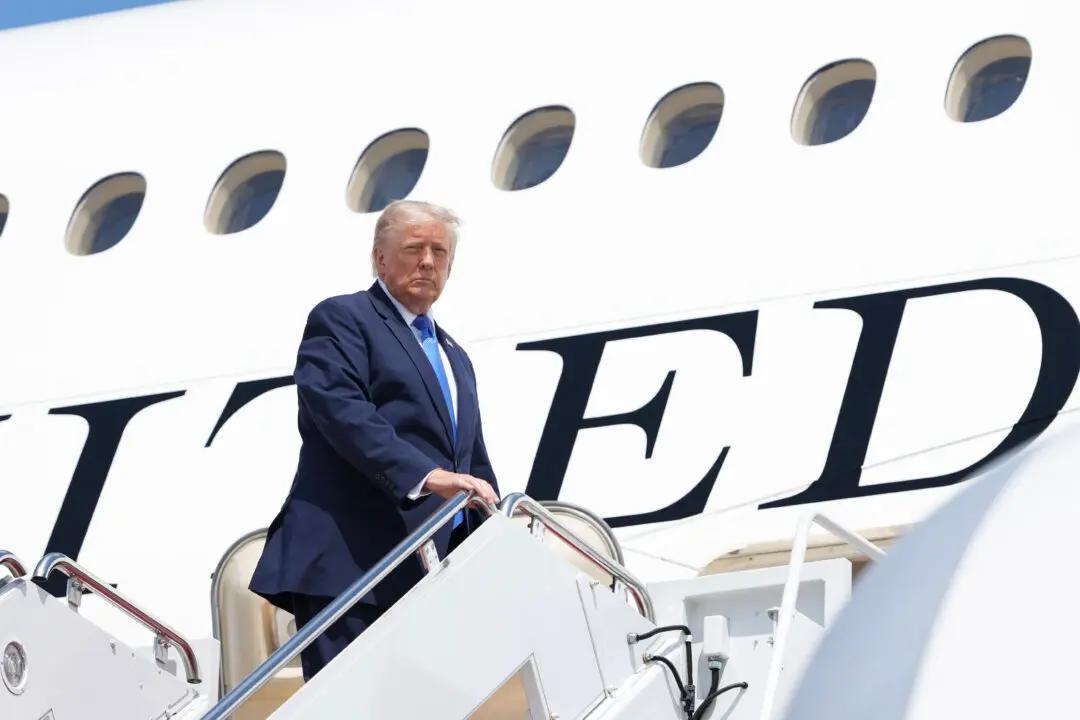
Trump has vowed to intervene to halt the renewed clashes, which shattered a fragile cease-fire he helped broker in July after the most intense fighting in decades. Speaking earlier this week at a rally in Pennsylvania, Trump said he would “make a phone call” to stop the reignited conflict.“I hate to say this ... Cambodia, Thailand ... it started up today, and tomorrow I’ll have to make a phone call,” he told the crowd.
“Who else could say, ‘I’m going to make a phone call and stop a war of two very powerful countries, Thailand and Cambodia.’ They’re going at it again, but I'll do it.”
Anutin told reporters in Bangkok on Dec. 12 that the call with Trump was scheduled for 9:20 p.m. local time later that day, though he downplayed expectations that it would lead to an immediate breakthrough.
Any decisions about military operations would remain in the hands of Thailand’s government and armed forces, he said.
“I think it’s just an update. [Trump] would probably ask how things are now,” Anutin said.
Renewed Border Clashes
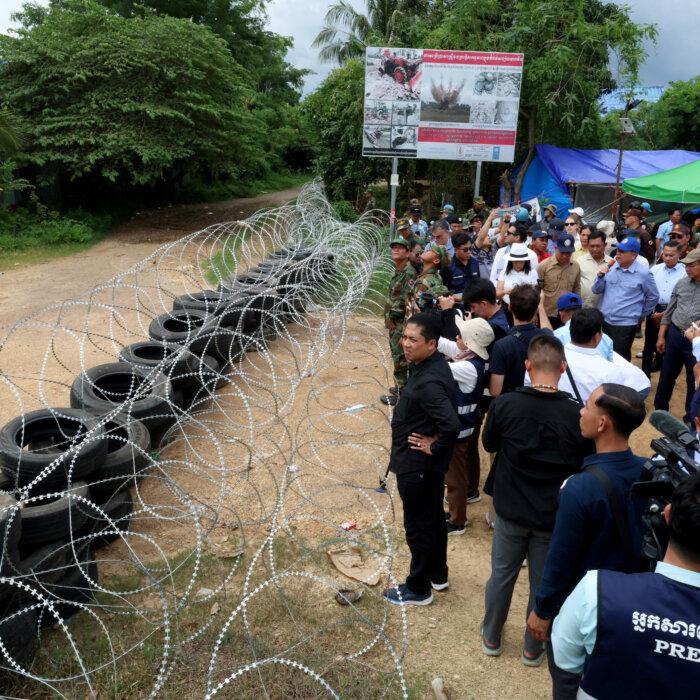
The latest violence has erupted along more than a dozen points on the 508-mile border between the two countries, including near the contested 11th-century Preah Vihear temple complex. Both sides have accused the other of targeting civilian areas.Thailand’s military said Cambodian forces fired BM-21 rockets near a hospital in Surin Province, forcing evacuations, and used drones to drop explosives. Cambodia countered, saying that Thai forces shelled homes, deployed armed drones, and sent F-16 fighter jets into Cambodian airspace.
Despite Trump’s push for a quick end to the renewed fighting, Anutin said earlier this week that the conflict was a bilateral matter and diplomacy would take time.
“Other national leaders may have good intentions in wanting peace,” the prime minister told reporters.
“It cannot be as simple as picking up the phone and calling. There must be proper appointment and agreed talking points. We still have time to prepare these issues if such discussions are to take place.”
For civilians near the border, political efforts to halt the conflict offered little comfort.
“There’s no certainty,” said Yod Lengtharmdee, a 60-year-old evacuee sheltering in Surin Province.
“The government has never cared about solving the border conflict anyway. I’ve always had to flee from the clashes a number of times.”