Preliminary investigations into the July 7 bombings in Damascus point to a cell connected to the ISIS terrorist group, Syrian authorities have said.
Syrian Brig. Gen. Ahmad al-Dalati said on July 9 that security forces had arrested all members of the cell involved in the blasts, which occurred near a hotel where French President Emmanuel Macron spent the night during a trip to Damascus to meet with Syrian President Ahmed al-Sharaa.
“We were able to track down one member of the cell responsible for the July 7 Damascus bombings, and by monitoring him, we identified the rest of the group’s members,” al-Dalati told Al-Ikhbariya TV.
All suspects have been detained, with the arrests following a coordinated operation overseen by Internal Security officials and the General Intelligence Service’s Counterterrorism Directorate, al-Dalati said, according to the state-operated Syrian Arab News Agency (SANA).
Syrian Security Forces described the bombs as crudely made and were preparing to defuse them when they detonated.
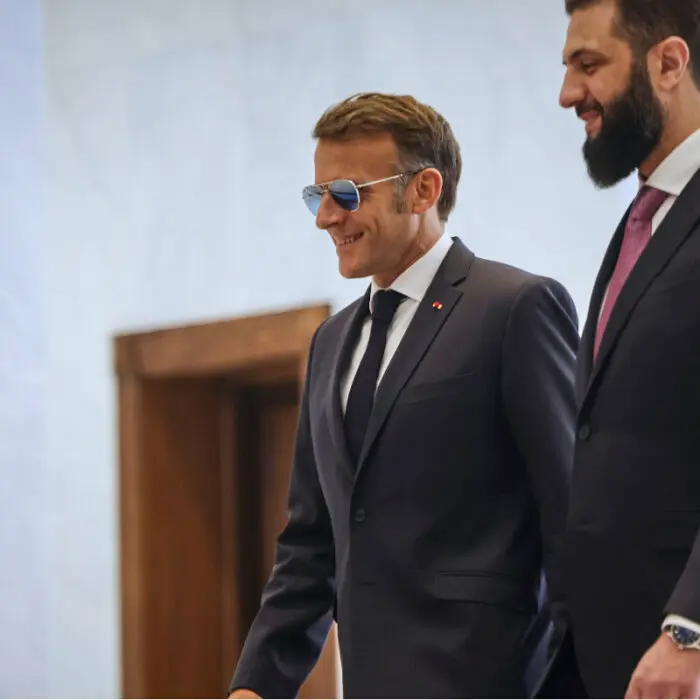
They were planted outside a security cordon where the French president was staying, but the ministry said that the devices posed no threat to Macron.
As a result of the blasts, one person was killed, and another 36 were injured, according to SANA.
Interior Minister Anas Khattab said in a July 9 post on X that the identities of the cell’s members and their roles will be released after investigations are completed.
Macron in Damascus
The attacks occurred while Macron was in the Syrian capital. However, French officials said Macron did not hear the explosions and continued with his scheduled meeting with al-Sharaa.
Hours after the explosions, Macron posted on X that “nothing can smother the aspiration of Syrian women and men to live in a fully sovereign, safe, pluralistic, and united Syria.”
“This morning, I met Syria in all its diversity. I saw dignity, courage, and determination. My visit continues,” he wrote.
Macron was the first European Union leader to visit Syria since militants led by al-Sharaa ousted former leader Bashar al-Assad and toppled the Ba'athist regime.
“I have come to express France’s commitment to the Syrian people,” Macron said in a post on X after his arrival in the country on July 6. “For a sovereign Syria, united in its diversity and at peace with its neighbors. Together, let us open a new chapter of stability and peace.”
The visit between the French delegation and the Syrian leadership focused on the reconstruction of the country, which was ravaged by over a decade of civil war, as well as business and development opportunities.
US to Lift Designation
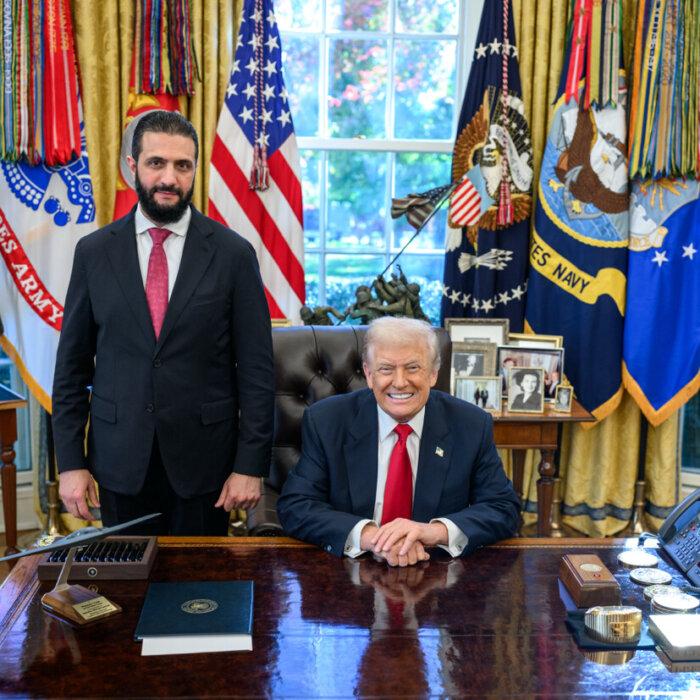
On July 8, the Trump administration said that it was going to remove Syria from its list of state sponsors of terrorism.
He said the United States intends to remove the designation following a 45-day pre-notification period.
“Lifting sanctions on Syria will unlock international trade and investment, give Syria a chance to rebuild, and open up a new chapter for the Syrian people,” Rubio said.
“A stable, unified Syria at peace with itself and its neighbors benefits not only the region, but the entire world.”