Sweden’s government announced a new national mining strategy July 23, designating critical metals and rare earth minerals a national security interest as the country strives to reduce its dependence on China.
The designation is expected to make it easier for the industry to obtain permits and create better access to Sweden’s resources to attract more investment.
Ebba Busch, Sweden’s deputy prime minister and minister for energy and enterprise, said the new policy would allow the country to protect itself from volatile political conflicts.
“Sweden must not be a pawn in the game between Putin, Trump, and Xi,” Busch said in a post on X. “We are literally sitting on the solution in our own bedrock. Therefore, the government is presenting a new mineral strategy to strengthen our competitiveness, our defense, and our independence.”
The government is also looking into how to help finance projects critical to its operations and may share royalties from mining with local communities, Busch said.
The strategy will be to continue operating with high environmental standards while mining the country’s resources, Busch added.

“We have the industry. We have the expertise. Now, we must also summon the political will to harness all of this,” Busch wrote in a July 23 op-ed. “Let us unleash the power of Sweden’s natural resources. Let us build a strong Sweden once again.”
Europe is heavily dependent on imports of critical materials from China, which controls about 70 percent of global rare earth mining.
“We need to become more self-sufficient,” Busch wrote. “Sweden has already witnessed what happens when political ideology takes precedence over reality.”
The government is also looking at possibly creating a state-owned investment company and a new environmental impact assessment authority to support the mining sector.
Sweden, the European Union’s leading mining country, is the largest producer of iron ore in Europe—representing 93 percent of production—and also produces lead, zinc, and copper.
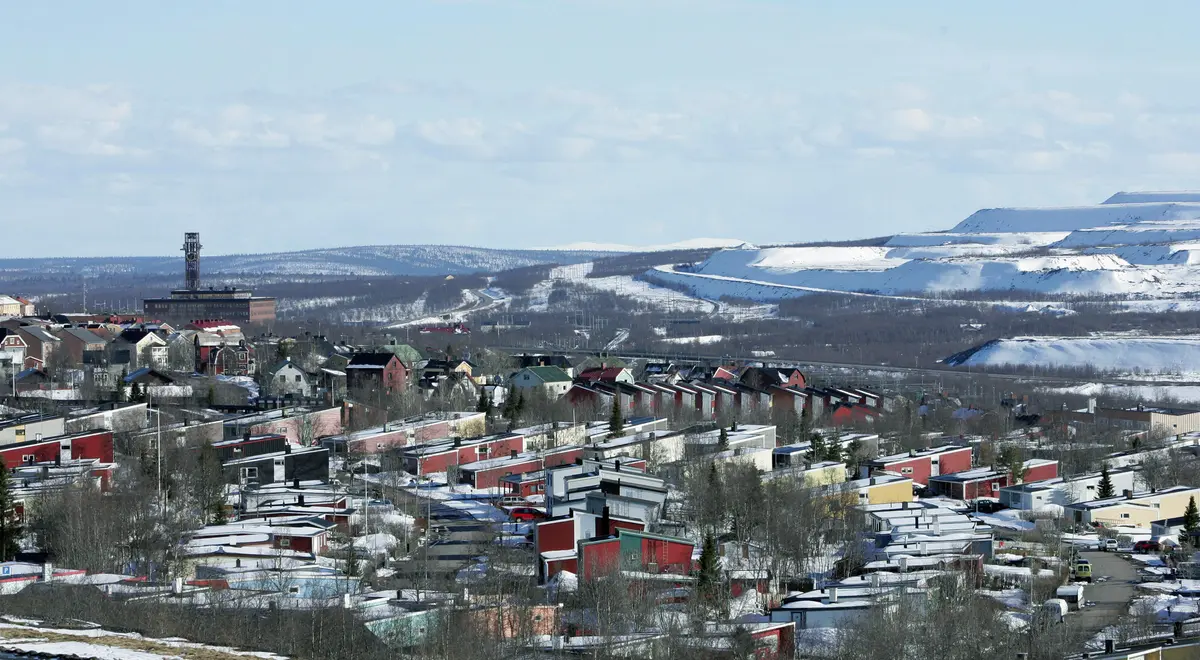
The country also has deposits of graphite, cobalt, and rare earth elements, according to the Geological Survey of Sweden. Sweden’s state-owned mining company LKAB discovered Europe’s largest known deposit of rare earth metals in the northern Kiruna region in 2023.
Sweden also produced about 7 metric tons of gold and 436 metric tons of silver in 2025, the agency reported.
The country’s mineral deposits are located mainly in three main ore districts: Norrbotten and Skellefte in northern Sweden, and Bergslagen in south-central Sweden.
The country had up to 260 mines at the end of World War I. That number has dwindled to only 13 active metal mines in 2025, according to the agency’s latest report.
Europe consumes about a quarter of the world’s raw materials but only produces about 3 percent of them, forcing the countries to rely on imports, according to the Geological Survey of Sweden.
The European Commission has listed 34 critical minerals and metals as important strategically for European society and welfare.
The critical raw materials are needed in technology to meet the EU’s climate and digitalization goals, and for the defense and space industries, according to the Commission.
China is the largest producer of most of the critical raw materials, including magnesium, tungsten, antimony, gallium, and germanium.
In June, the Swedish Parliament also approved legislation to streamline permitting for the extraction and processing of nuclear materials, including uranium.