An ongoing debate over eligibility to play State of Origin—one of Australia’s most watched sporting events—has finally been put to bed as players from New Zealand or England will be allowed to participate.
On Feb. 16, the Australian Rugby League Commission (ARLC) made the surprise announcement, saying the move would modernise “State of Origin international eligibility rules to reflect the continued growth and global strength of Rugby League.”
Under the new rules, any player meeting existing State of Origin eligibility criteria will be able to play the game, regardless of the nation they represent in international fixtures.
In an effort to improve international competition, for years players have been allowed to play for their state of “origin,” as well as a “tier two” nation, like Tonga, Samoa, or Fiji.
But those that play for “tier one” nations, namely England and New Zealand, have faced the dilemma of choosing between playing State of Origin—arguably the peak of rugby league—or choosing their country of birth or heritage.
The issue has come to a head in recent years due to the sheer volume of Pacific Islander-born players in the system, and that it awkwardly splits the international rugby league scene into two tiers.

The arguments against the change are that it may dilute the parochial nature of State of Origin and the underlying competitiveness between New South Wales and Queensland. Further, such a change could see the steady erosion of Australia’s test team.
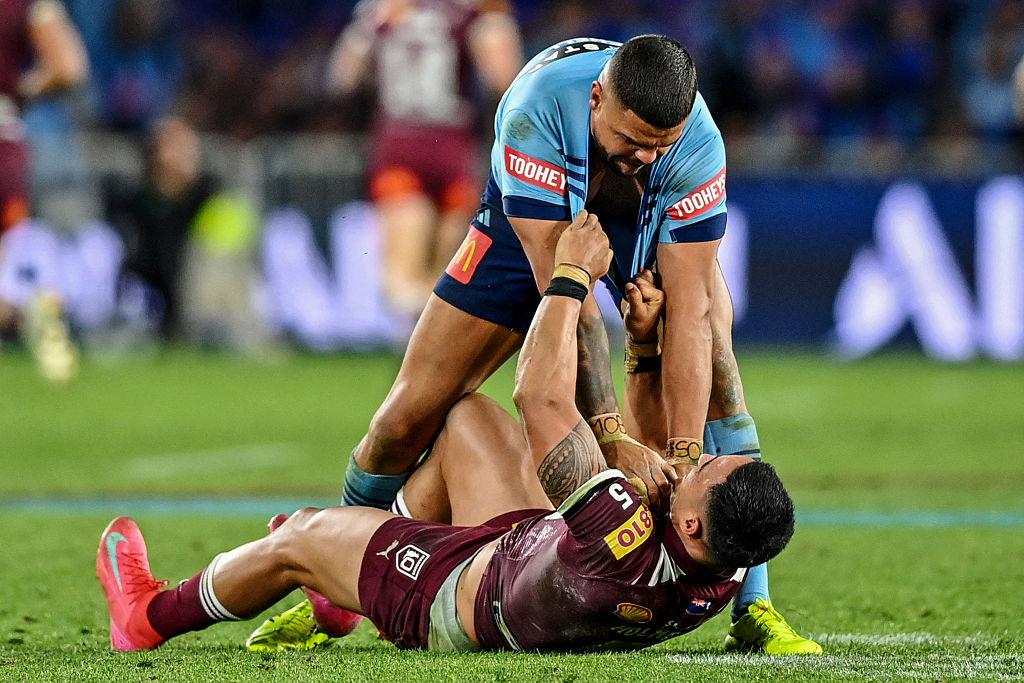
Basic eligibility requires players to be born in either New South Wales or Queensland, have lived in those two states prior to turning 13, or their father must have played State of Origin.
“Rugby league has changed, the international game has grown, and our rules need to reflect that,” ARLC Chairman Peter V’landys said in a statement.
“If a player is eligible to play State of Origin, it makes no sense to exclude them simply because they’ve represented New Zealand or England at Test level.”
V'landys said the change allows the best players to take part.
“State of Origin is about where you’re from and what state you’re eligible for—not which country you represent internationally,” he said.
“Over 45 years, State of Origin has developed into something special, and we want the best players playing if they’re eligible.”