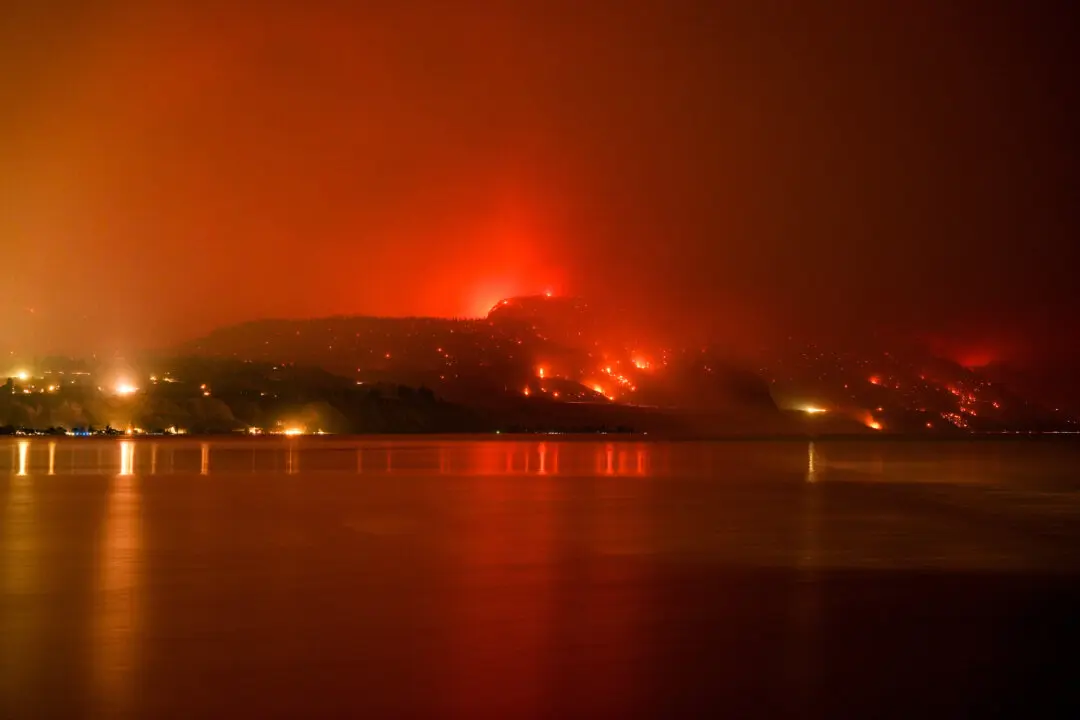
The district of Squamish in southern British Columbia has declared a state of local emergency in response to an active wildfire burning out of control near the community of 24,000.
The blaze, located some 45 kilometres north of Vancouver, has grown to 14.4 hectares, prompting a June 10 evacuation alert for residents in the Brackendale and Tantalus Road regions east of Highway 99.
Hurford said the decision to declare a state of emergency came from an abundance of caution, and it wasn’t about a change in the fire behaviour. The emergency declaration will remain in place until June 24 unless rescinded.
In addition to online advisories, bylaw officers and RCMP went door-to-door in the alert area to ensure people were ready to evacuate.
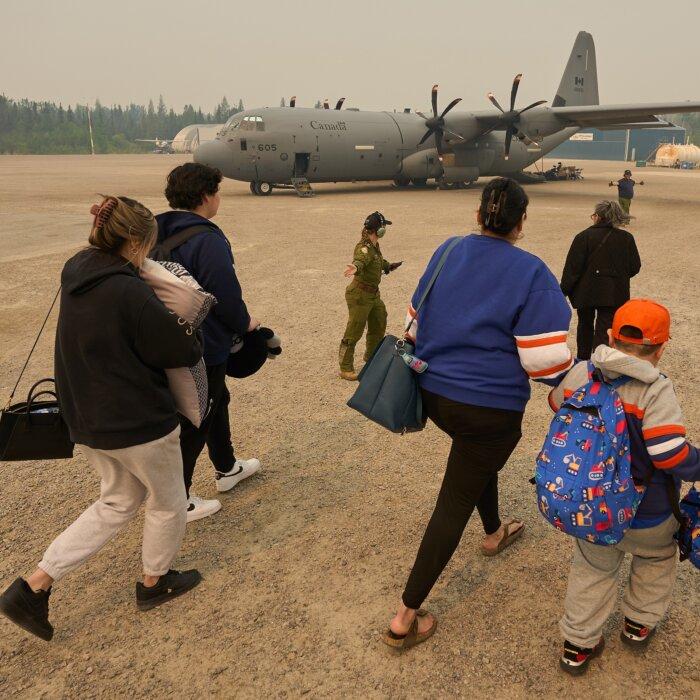
The district said a crew of 20 firefighters from the BC Wildfire Service along with an initial four-member attack crew were on scene.
“The fire suppression efforts continue to be aggressive with air and ground crews,” the district said in a statement, noting that three helicopters have been dedicated to helping battle the blaze. “Given the terrain, these are the most effective tools to tackle the fire. Additional fixed wing aircraft will be brought in if required.”
BC Wildfire Service officer Marc Simpson said the steep terrain in the area poses a challenge for firefighters.
“There’s going to be places that are inaccessible to work, which is going to make this a drawn out event,” he told reporters during a June 10 press conference.
“We’re right now focusing on getting containment at the south and west, to protect the homes and put a good containment in that area, but as we move up the hill, especially on the north side of the fire, we’re going to be dealing with steep … inaccessible ground.”
“Highway 99 acts as an already existing fire break and it is extremely unlikely that the fire will move onto the west side of Highway 99,” he said, noting that the reserve is working with fire personnel to identify and protect cultural sites near the fire.
He also advised residents to limit their time outdoors as the air quality in the region is compromised by smoke.
Additional BC Fires
One of the largest wildfires in B.C. has doubled in size since the beginning of the week to measure 1,300 square kilometres in the Peace River Regional District.The fire is thought to have been ignited by lightning, prompting the district to issue an evacuation order and alert.
The wildfire resulted in the closure of Highway 97 over the weekend, but the service said in an update that the road had reopened on June 9.
Forty-seven are classified as burning out of control, many of which are located in the northeast end of the province. There are also three wildfires of note in the Prince George area.
Warm dry weather has been an exacerbating factor in many of the wildfires in British Columbia and other areas of the country. Wildfires are also burning in the northern regions of Alberta, Saskatchewan, Manitoba, and Ontario.
Those conditions are unlikely to change anytime soon. Environment Canada is predicting a warmer-than-normal summer with uncertain precipitation levels in most provinces.
An early-season heat wave has caused several new temperature records to be set in various regions of Alberta and British Columbia in the past few days.
The temperature climbed to 39.3 degrees Celsius in wildfire-stricken Lytton, B.C. on June 8, marking it as the hottest location in the country and surpassing a record that was set two years prior.
Nanaimo on Vancouver Island recorded a temperature of 31.7 degrees Celsius, while Pitt Meadows reached 32.3 degrees Celsius June 8, both surpassing records established in 1903.
The mountain town of Banff in Alberta recorded a temperature of 27 C on June 9, breaking a record of 26.1 C set in 1918, while Pincher Creek, Alta., reached 32 C, shattering the old record of 29.4 C from 1918.