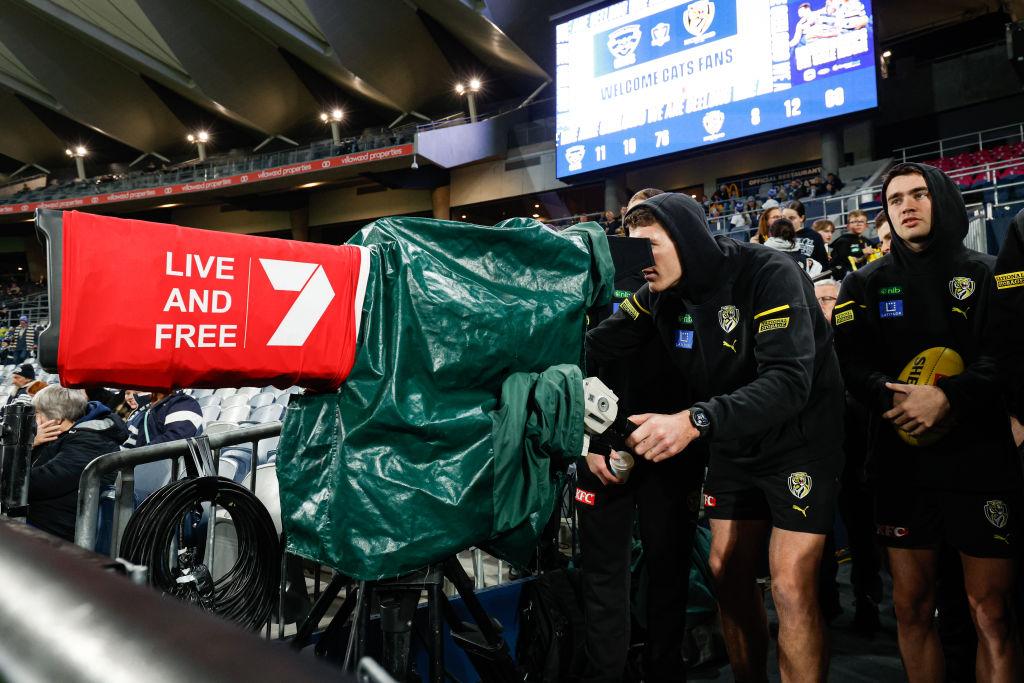
For the first time, social media platforms are the main source of news for more Australians (26 percent, up 1 percent from last year) than online news media sites (23 percent, down five), according to a survey.
The Digital News Report is conducted annually, with the University of Canberra’s News and Media Research Centre handling local data collection and reporting as part of a global effort spearheaded by the Reuters Institute for the Study of Journalism at Oxford University.
It found that this shift in news consumption comes at a time when trust in information is increasingly fragile.
Globally, Australians are the most concerned about misinformation, with 74 percent of over half a million local respondents saying they were worried about the veracity of what they read online and saw in the media.
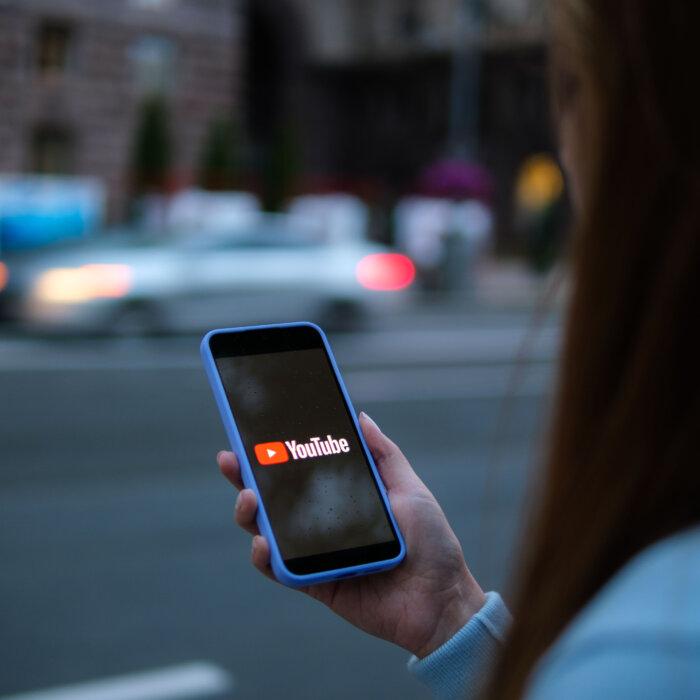
When asked which online platforms pose a major misinformation threat, 59 percent nominated Facebook, followed by TikTok (57 percent), X (49 percent), Instagram (42 percent), and YouTube (35 percent).
But when they encounter what they suspect is misinformation, 39 percent turn to trusted news brands to verify its accuracy.
In terms of who is more likely to be telling untruths, people rated online “influencers” (57 percent) as more likely to do so than politicians (48 percent). News media and journalists were a concern for 43 percent.
Facebook (59 percent) and TikTok (57 percent) are seen as major misinformation threats among social platforms, and Australians believe YouTube and TikTok are not removing enough false material.
Different age groups also had strong differences in views about who is most likely to produce misinformation.
Younger people aged under 35 see the mainstream news media as the main culprits (46 percent), whereas older participants attribute that to online influencers (61 percent).
Two trends on which legacy media could capitalise are consumers’ increasing preference for local news—which has risen to 51 percent, up six, and much higher than the global average of 42 percent—and personalisation.
At present, however, a slim majority of Australians are using social media to access local news (25 percent) versus TV or newspapers, both on 22 percent.
Among those under 35, the proportion who rely primarily on social media for local news rises to almost half (44 percent).
Then there are people who avoid news altogether. Those who say they “often, sometimes or occasionally avoid news” have risen to 69 percent, up from 62 percent in 2019. That’s still slightly less than the world average, which is 71 percent.
Certain groups have shown shifts in their avoidance over time.
Growing Acceptance of Artificial Intelligence
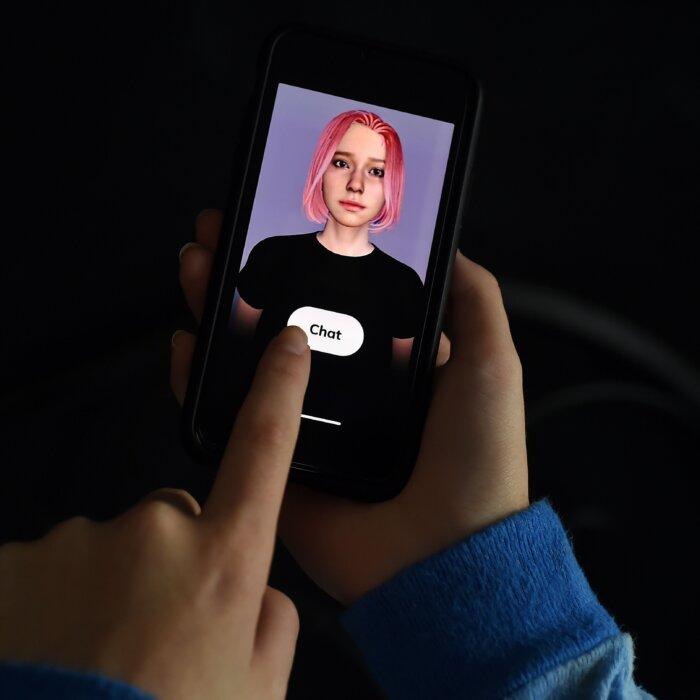
Australians are becoming more comfortable with news produced mainly by AI with some human oversight (21 percent, up four, and above the global average of 18 percent).However, only 1 percent of people cited AI as their main source of news.
The greatest level of acceptance was among young people, those with a higher education, urban dwellers, and those with a high interest in politics.
Generally, people viewed AI-produced news as cheaper and more up-to-date but less trustworthy, less accurate, and less transparent than that written by humans.
Only 29 percent said they were interested in having AI summarise the news.
Australians Less Polarised
Compared to the United States, Australians’ trust in the news is far higher.In America, it sits at just 30 percent, and far more Americans rely on Elon Musk’s X for news—23 percent versus 16 percent in Australia.
While 57 percent of Australians see influencers as the main peddlers of misinformation, a similar proportion of those in the United States blame politicians.
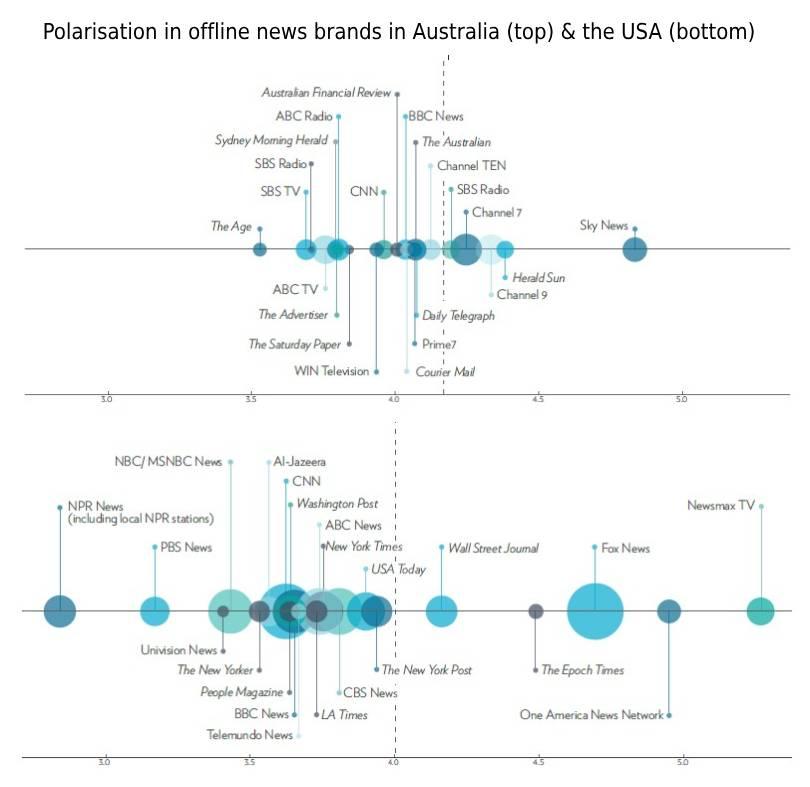
News audiences in Australia are more clustered towards the centre of politics, report author and University of Canberra Professor Sora Park said.
“We are still open to getting exposed to views that you don’t agree with, which is quite promising. Trust is more based on the quality and transparency of news rather than political views,” she said.
The study compared the spread of news brands across the political spectrum based on the audience’s self-reported political orientation.
It found that audiences of offline news brands in the United States are spread more widely from left to right, whereas in Australia they are more tightly clustered around the centre, with the odd outlier.
“This highlights how important it is not to simply transplant trends in America in relation to political media polarisation in Australia,” the report notes.