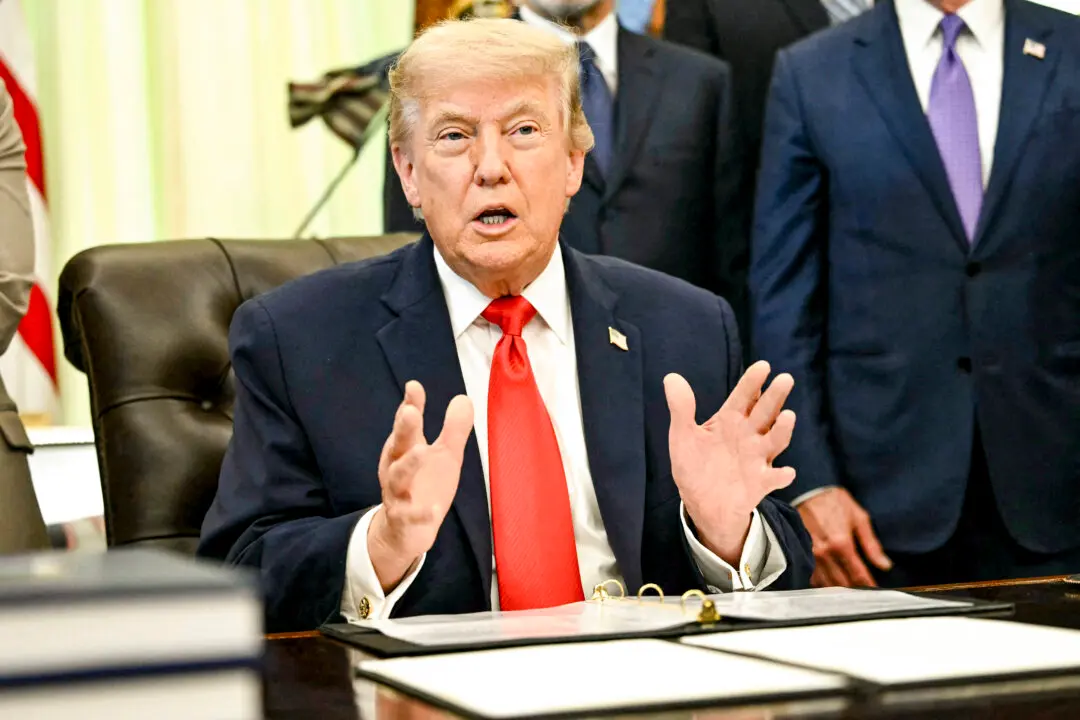
Slovakia has pushed back on U.S. President Donald Trump’s demands to curb Russian oil imports, aligning itself with Hungary.
“It takes time to diversify this. So that’s why we are calling for some kind of empathy.”
He said that sanctions had not worked to change the course of the Russia–Ukraine war, which started in 2022.
Since then, the European Union has managed to reduce much of its reliance on Moscow’s energy, but has yet to turn off the taps.
Hungary and Slovakia are the two EU members that still mostly depend on Russian oil delivered via the Druzhba pipeline. Both countries are keen to keep Russian supplies flowing despite EU efforts to diversify supply.

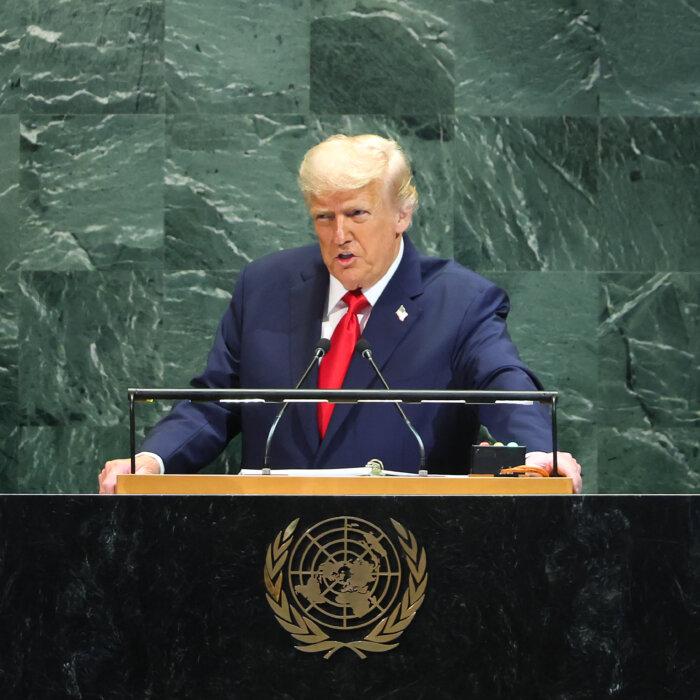
“But inexcusably, even NATO countries have not cut off much Russian energy and Russian energy products,” he said. “Think of it, they’re funding the war against themselves.”
“We are a landlocked country,” Szijjarto told ATV television in an interview on Sept. 23 in New York City, where he was attending the U.N. General Assembly. “It would be great if we had access to the sea; we could build an oil refinery or an LNG terminal on the coast and cover the entire world market. But that’s not the case.”
The EU is keen to ramp up its Moscow energy decoupling. It had previously planned a phase-out by Jan. 1, 2028, but Trump has repeatedly urged the bloc to end Russian energy purchases more quickly.
Kaja Kallas, the EU’s foreign policy chief, said on Sept 19 on X that the new proposal aimed “to speed up the phase-out of Russian liquefied natural gas [to be complete] by 1 Jan 2027.”
On the same day, European Commission President Ursula von der Leyen wrote that the bloc wants to end Russian fuel dependence “for good.”
“Europe was a major oil and gas producer,” he said. “They just throttled their own production, drove up prices, pushed out their industries, and became dependent on Russia and others for their own resources. At least they should have depended on the United States or the allies. So we are pro-energy in the U.S. and abroad.”
The Epoch Times contacted the Slovak and Hungarian governments for comment but did not receive a response by publication time.