The Senate has rejected a bid for an inquiry into the sale of Tasmania’s Rushy Lagoon amid concerns about the use of taxpayer-backed investment and carbon incentives to transform thousands of hectares into a plantation forestry.
Rushy Lagoon is Tasmania’s largest farm at more than 21,000 hectares and has historically been used for dairy, beef, sheep and cropping.
The farm has previously run up to 4,000 dairy cows, while its dairies produced around 6 million litres of milk annually before closing ahead of the sale.
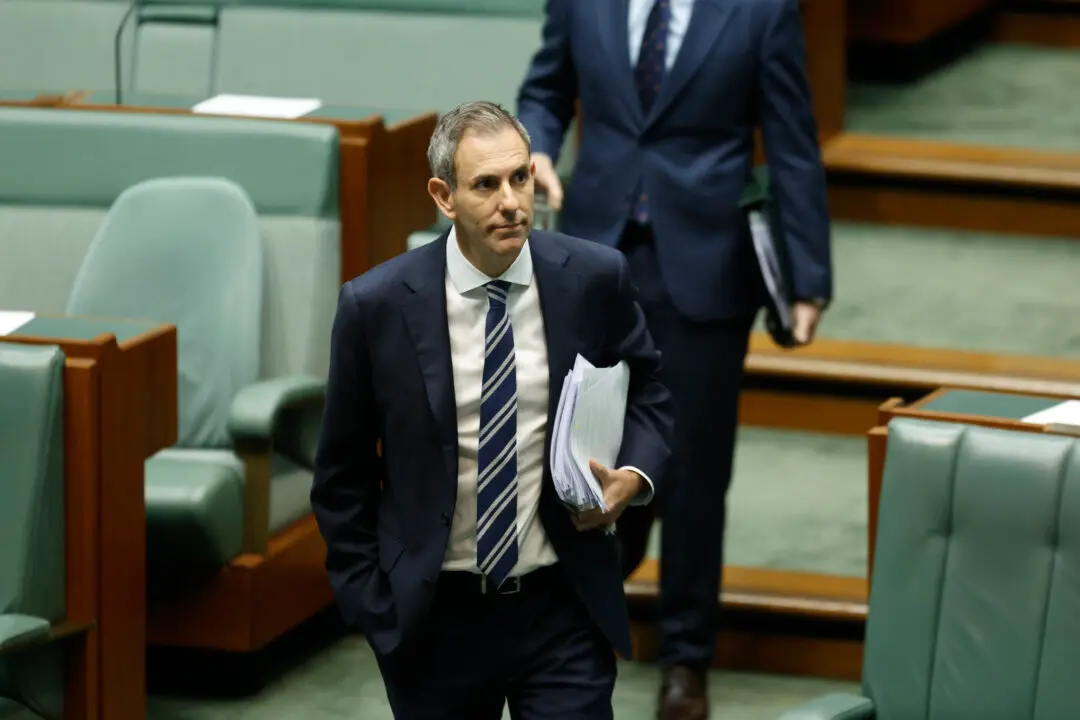
In July, Treasurer Jim Chalmers approved the $142 million sale of the property to the Tasmania Natural Asset Trust, an investment platform managed by the UK’s Gresham House.
The federal government’s Clean Energy Finance Corporation also committing $69 million to the project.
While cattle will continue to graze on parts of the property, around 9,000 hectares will be converted to radiata pine plantations, which are expected to generate carbon credits that can be sold on the carbon market or used to offset emissions.
Senator Concerned Too Much Farmland Being Repurposed
Speaking in the Senate on the evening of Aug. 17, centre-right Liberal Senator Slade Brockman argued in support of the motion put forth by party colleague Richard Colbeck.
He argued several points including concerns local farmers were priced out of buying the property because of the carbon credit economics.
Another was the loss of fertile farmland and how it would detriment the nation, and lastly, that taxpayers had to pay via the Clean Energy Finance Corporation.
“I will preface this contribution by saying I am not opposed to foreign investment in Australian agriculture,” said Brockman.
“But what I am raising with great concern about is this entanglement of foreign investment, government funding, government-backed schemes to value ... Australian carbon units as they’re called, and the outbidding of Australian farmers by 30 percent for land that should be in the business of producing food and fibre not just locally, but for the world.
He pointed to an ongoing trend.
“There are 225 examples of property being tied up with carbon unit production in the state of Western Australia alone—225,” he said.
“So if you do it enough times, you will materially decrease our access to food and fibre, both in this country and for export to the world.”
Conservative-leaning One Nation Senator Malcolm Roberts backed the motion, saying he had only recently learned that no native plants can grow below pine trees.
“There it is, this ideology-driven delusional Labor government, dishonest government, is turning Tasmania’s largest agricultural producer into a subsidy farm for carbon dioxide credits,” he said.
The motion to investigate the sale was rejected 34-27.
Labor Argues for Jobs, Says No Local Buyer Interest
“We’re talking about a $140 million investment,” she said. “We’re talking about 190 jobs.”
Collins said there had been a lot of misinformation and concern around the sale.
“We’re also importantly talking about some timber and farming still occurring on the site,” she said.
“But, importantly, timber at a time when Australia has a timber shortage and at a time when we do need timber for construction of homes.”
In response to concerns that local farmers had no realistic chance of buying the property, Collins said it had sat on the market for a decade without any successful bid.
Tasmania Launches Inquiry into Federal Involvement
Rockliff said the proposed Select Committee will inquire into the influence of the Commonwealth on the sale of productive agriculture land in Tasmania for carbon sequestration.
The inquiry will examine the influence of federal funding in the sale, the consideration given by the Foreign Investment Review Board to Tasmania’s interests, the adequacy of the Commonwealth’s assessment process.
“Tasmanians want and deserve answers over the federal government’s involvement in the sale and what it means for productive agricultural land across our state,” Rockliff said.