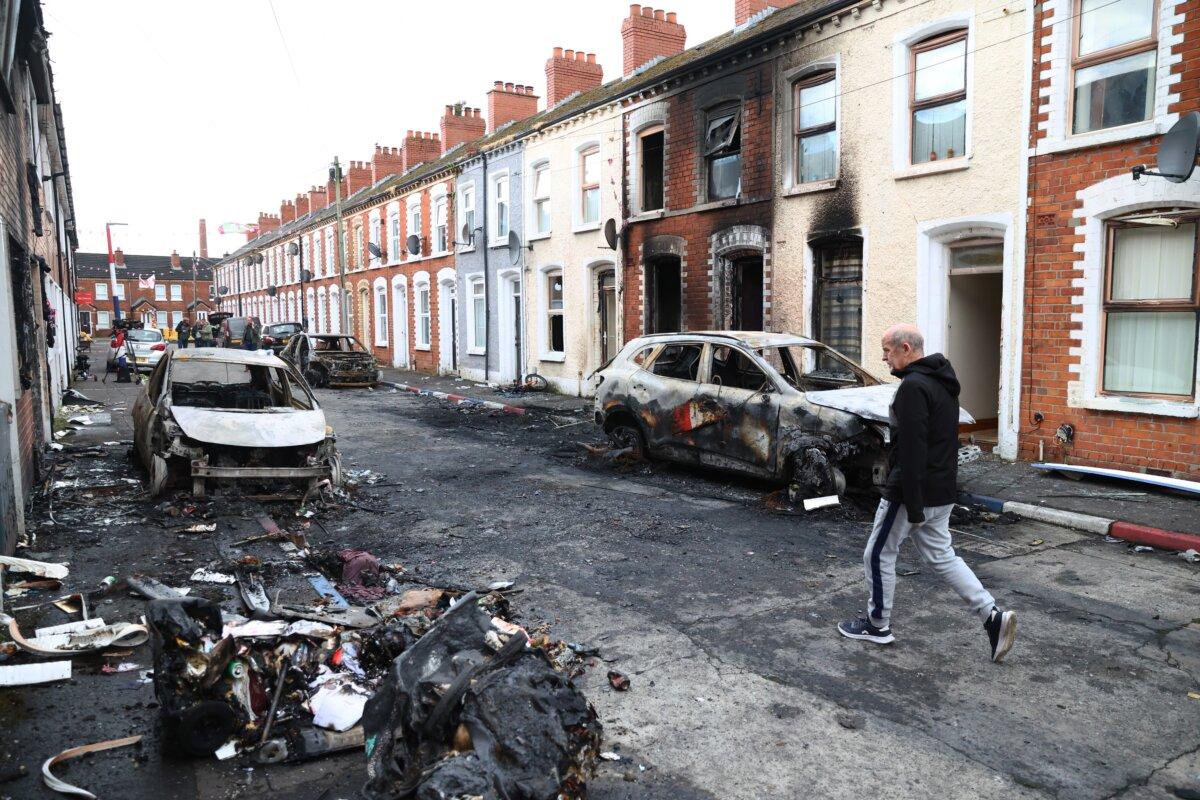
For a second night, hundreds of protesters took to the streets of Belfast, Northern Ireland, resulting in clashes with police, burnt vehicles and damage to properties. The unrest was sparked after footage of an alleged knife attack by a Sudanese asylum-seeker, which left a local man with serious head and neck wounds, went viral.
Officers used water cannon and fired plastic batons on Wednesday night as rioting broke out again in Belfast, Glengormley, and Portadown.
Police said they came under attack from petrol bombs, masonry, and flares, while a bin lorry, a car, and a vacant building were set alight. A hijacked van was also pushed toward the police.
The riots followed the circulation of footage from a June 8 knife attack in Belfast that left a man with serious head and neck wounds.
In the footage, shared widely online on June 8, a man is seen repeatedly stabbing a blood-drenched man and shouting in what appears to be a foreign language as horrified members of the public shout for help, screaming that the attacker is trying to “cut his head off.”
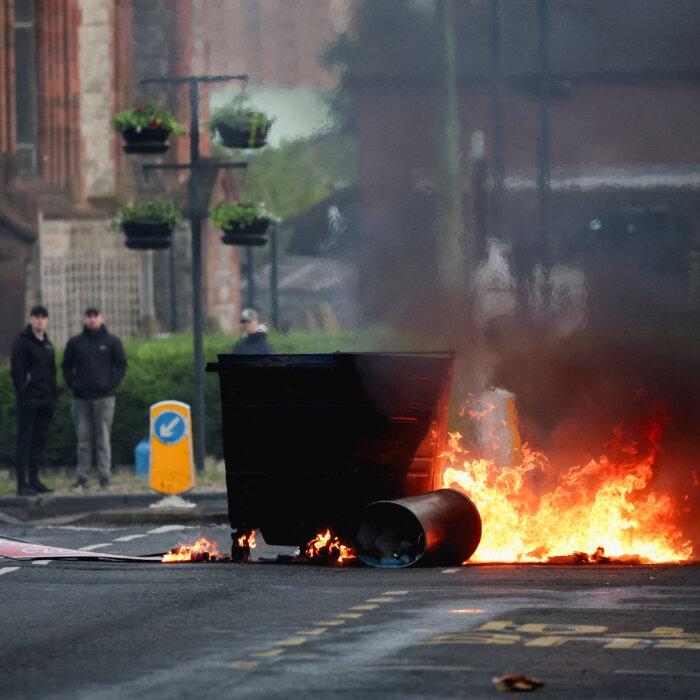

The Police Service of Northern Ireland (PSNI) condemned the second night of disorder in some areas of Northern Ireland in a statement on June 11 and urged a “return to calm and for lives to get back to normal.”
“Firstly, I strongly condemn the disorder. This violent behaviour, by a thuggish minority, will not be tolerated,” Assistant Chief Constable Ryan Henderson said.
“We arrested 16 people, with two already charged, and 12 officers were injured, some by petrol bombs, following significant rioting.”
The first night of unrest first erupted in Belfast on Tuesday when masked men set fire to several homes they believed to house immigrants, torched a Belfast bus, and pelted police with rocks and other objects. Firefighters rescued several people from burning homes.
“The scenes in Belfast last night were shocking and completely unacceptable,” British Prime Minister Keir Starmer said in a June 10 post on X.
“There is no justification for the violence and disorder that we saw threatening our communities, nor for those who encouraged it, online or elsewhere.
“It is clear that people were targeted last night because of their background, and I will not tolerate it. Those responsible will feel the full force of the law.”
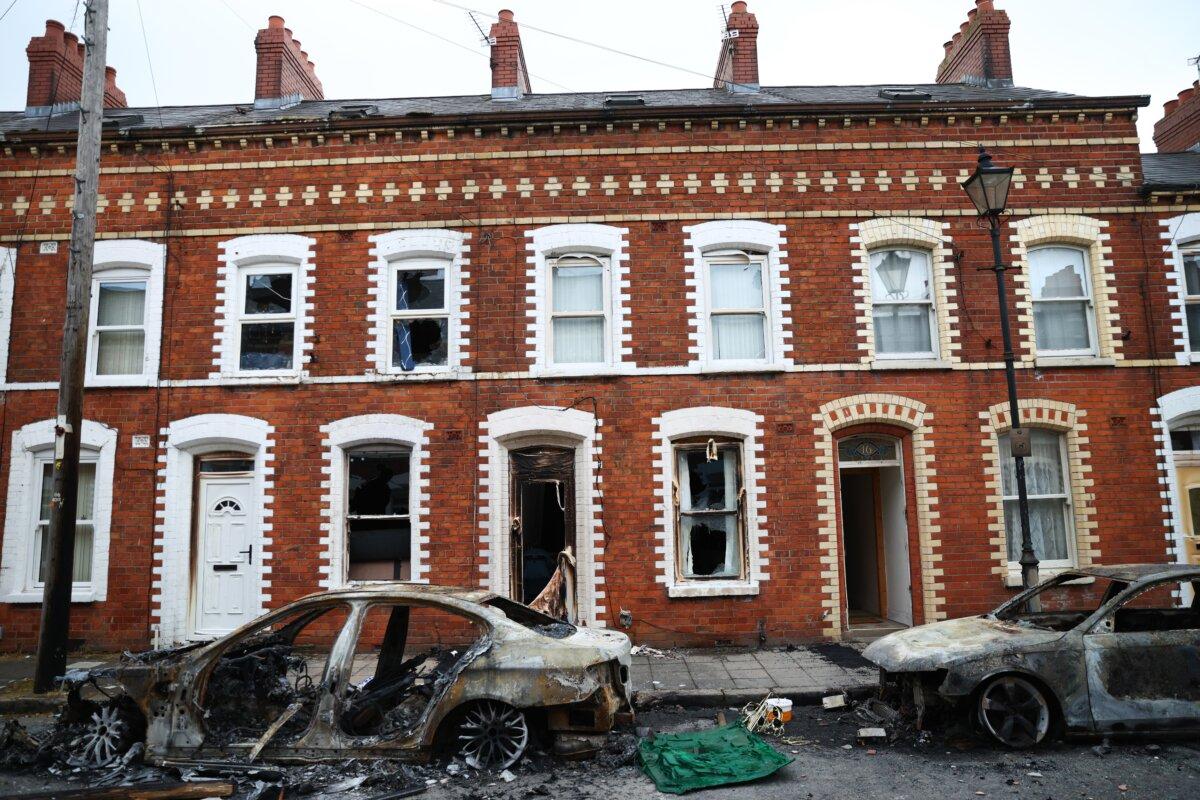
A view of the damage after rioting broke out late Tuesday following a stabbing incident, in east Belfast, Northern Ireland, on June 10, 2026. (Peter Morrison/AP Photo)PSNI Chief Constable Jon Boutcher said at a press conference on June 9 that the suspect was “granted leave to remain in the United Kingdom on the 28th of September 2023.”
He said that Alodid arrived in Paris from Sudan on an unknown date and then flew to Dublin on an unknown date. He then traveled from Dublin to Belfast by bus on Feb. 10, 2023, and claimed asylum on that date.
Speaking at a news conference on Tuesday, Nigel Farage, leader of the conservative Reform UK party, said that “things kicked off in Belfast last night in a very, very big way, and things will continue to kick off.”
He said that “some very bad actors get involved in this stuff, but not the vast majority.”
He added that the “vast majority are fearful, the vast majority want action, they actually want something done to make their streets safer, and nothing is being proposed.”