Saskatchewan has joined Ontario and Alberta in signing an agreement to build new pipelines, rail lines, and other energy and trade infrastructure needed to deliver Ontario critical minerals and Western Canadian oil and gas to new markets.
Ontario Premier Doug Ford and Alberta Premier Danielle Smith had first signed the memorandum of understanding (MOU) on July 7. Saskatchewan Premier Scott Moe joined on July 22, the second day of a three-day meeting of Canadian premiers in Muskoka.
“We are sending a clear signal that Canada’s energy future will be built by Canadians, for Canadians,” said Premier Moe in a statement. “This agreement commits our provinces to work together to unlock new markets, shore up our supply chains from mine to port and advocate for the federal reforms our industry needs.”
The agreement calls for new pipelines to be built along a route that will connect western Canadian oil and gas to new and existing refineries in southern Ontario, as well as a new deep-water port in James Bay of northern Ontario. Additionally, the agreement calls for new rail lines to connect Ontario’s minerals in the Ring of Fire region to ports in Western Canada.
New railways and pipelines will be built using Ontario-made and Saskatchewan-made steel, which Ford says will create jobs, attract investment, and “unlock the full potential” of Canada’s economy.
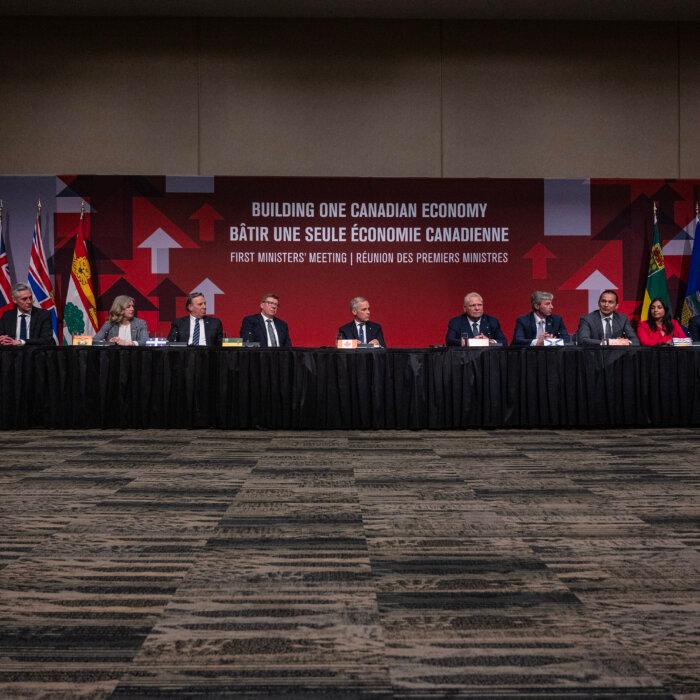
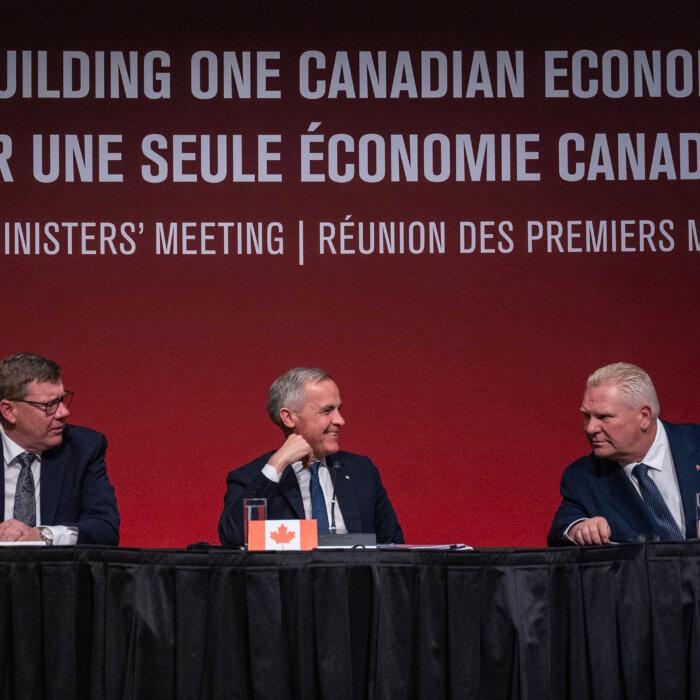
Saskatchewan produces potash, oil and gas, agricultural products, uranium, as well as copper, helium, lithium, and rare earth metals. At the press conference, Moe thanked Ford and Smith for spearheading the agreement, which he said marked a “positive step” towards providing energy, food, and manufacturing security to Canada and beyond.
The three premiers commented on federal policies they said needed to undergo changes to remove barriers to nation-building projects. Smith cited the Impact Assessment Act, the emissions cap on the oil and sector, the federal industrial carbon pricing, the Clean Electricity Regulations, and the West Coast tanker ban as some of the policies she'd like to see changed.
Ford said that building a pipeline from Alberta to Ontario on Canadian soil is essential amid ongoing disputes between Canadian pipeline operator Enbridge and the governor of Michigan over the Line 5 pipeline that currently runs from Alberta to Ontario through the United States.
“We can’t chance it any longer,” Ford said. “We need to be independent. We need a pipeline going to Southwestern Ontario, to one of the refineries, and be self-reliant.”
Carney Attends Premiers Meeting
Canada’s 13 premiers are currently participating in a three-day meeting focusing on the country’s economy and trade relationships. The meeting, hosted by Ford, is taking place from July 21 to 23 in Huntsville, Ont.A new federal major projects office will be open on Labour Day, Carney said, which follows the passing of Bill C-5, also known as the One Canadian Economy Act. The act received royal assent and became law on June 26.
Continuous engagement with indigenous peoples is “critical” to the success of major projects, the prime minister said, acknowledging the premiers’ July 21 discussions with leaders of national indigenous organizations on economic development, reconciliation, and other priorities of First Nations communities.
Carney will be meeting with the Inuit crown partnership committee on July 24 in Inukvik and with Metis leadership at the beginning of August to “begin the process of setting out how we are going to cooperate,” he said.
Additionally, the prime minister commended the series of free trade agreements that have been signed between Ford and 10 other provinces and territories. On July 21, Ford signed MOUs with B.C. Premier David Eby, Yukon Premier Mike Pemberton, Northwest Territories Premier R.J. Simpson, and Nunavut Premier P.J. Akeeagok.
“Bottom line is, Canadians can be our own best customer and we’re making sure that’s the case,” Carney said. “We can give ourselves far more than anyone else can take away.”