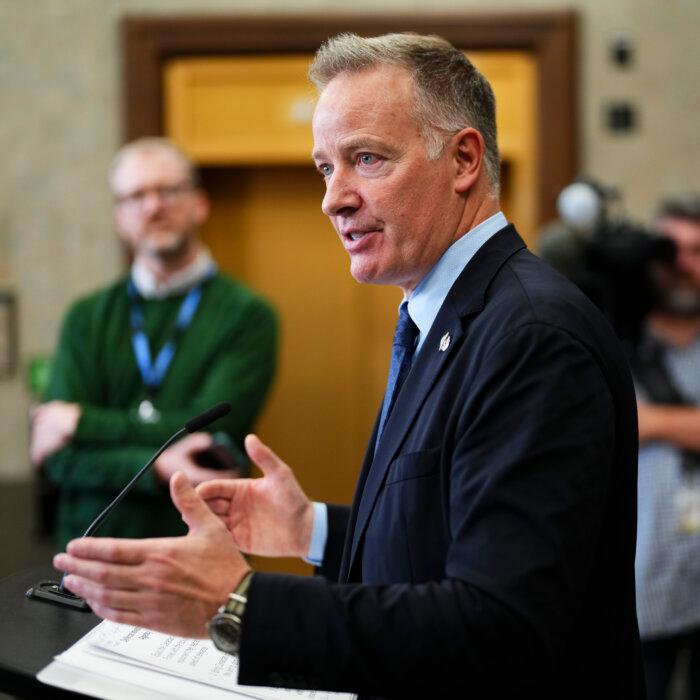
Industry Minister Mélanie Joly is asking two defence companies to compete for Canada’s fighter fleet order, saying the country’s current contract for American-made F-35 stealth fighter jets doesn’t deliver enough economic benefits.
Joly told reporters this week that Ottawa is in talks with Swedish defence company Saab, which has dangled the possibility of 10,000 aerospace manufacturing jobs coming to Canada if the government puts in an order for a fleet of its Gripen fighter jets.
Meanwhile, Joly said Canada “didn’t get enough” out of its current $27 billion deal with American firm Lockheed Martin to buy 88 U.S.-made F-35 jets. She said Ottawa is continuing to look at what the U.S. firm can offer, but noted she also wants to see if Saab can provide a better deal.
Joly’s comments were made during the same week that executives from Saab accompanied the royal family of Sweden on their state visit to Canada. The business delegation is meeting with government officials in Ottawa as the company evaluates the possibility of establishing a manufacturing facility in Canada to make its Gripen fighter jets.
“When it comes to the Gripen, of course we’re really interested in seeing what can be done,” Joly said. “Ten thousand jobs is indeed a very interesting offer. We'll see how that is concrete. And at the same time, we’re looking at what Lockheed Martin can do.”
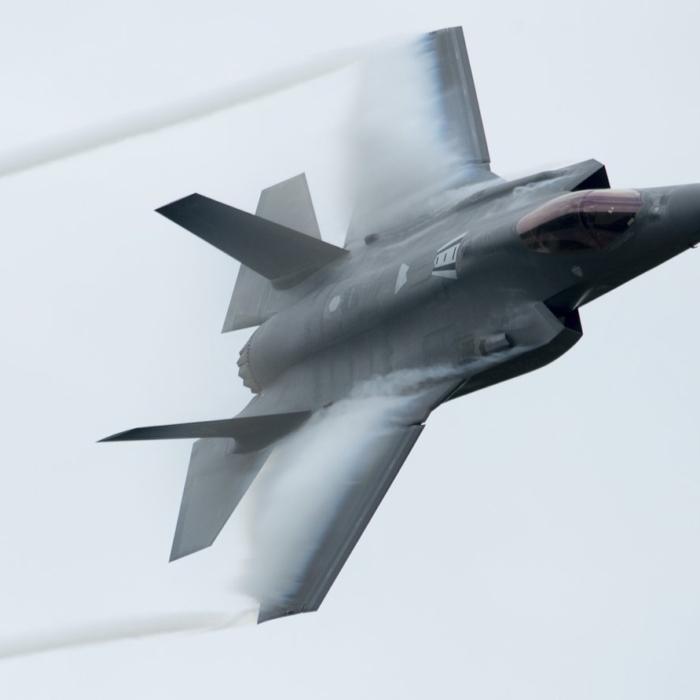
Saab CEO Micael Johansson has said Ukraine’s need for its Gripen fighter jets would double the company’s production requirements, compelling it to expand its manufacturing facilities in Europe or, potentially, in Canada. Ukraine is working to upgrade its air force with new jets, including nearly 100 Rafale fighters from France and upward of 100 Gripens from Saab.
Joly said the government must thoroughly evaluate the new proposal from the Swedish defence firm, noting it was an “unsolicited” offer.
“We have to look at what our military capabilities need, and at the same time, what are the number of jobs created across the country,” she said, adding that more jobs need to come out of the F-35 contract with Lockheed Martin.
“That’s clear to me and clear to this government,” she said.
F-35 builder Lockheed Martin responded to Joly’s remarks in a media statement, saying it is generating economic industrial benefits within Canada and cautioned that these benefits would decrease if Canada were to cut back on its order size.
The company said it anticipates Canada’s plan to acquire 88 F-35 aircraft will generate more than $15.5 billion in industrial value over a 50-year span, from 2007 to 2058, noting that there are roughly 30 active Canadian suppliers involved in the F-35 program.
“(The figures) have potential to grow as Canada further defines sovereign sustainment requirements,” Lockheed F-35 vice president and general manager Chauncey McIntosh said in the statement.
“Economic benefits are commensurate with a country’s program of record, and they will shrink if Canada ultimately purchases fewer than 88 aircraft.”
The Liberal government announced in 2023 its decision to procure 88 F-35 jets from Lockheed Martin to update Canada’s aging CF-18 Hornet fleet. But Prime Minister Mark Carney asked for a review of the deal in March, while the trade war between Canada and the United States was in its beginning stages.
Mixed Fleet an Option?
Joly also said Ukraine’s efforts to build a fleet from various suppliers demonstrates that a mixed fleet is “possible.”The industry minister has made similar comments in the past. Both she and Secretary of State for Defence Procurement Stephen Fuhr said last month the federal government has not ruled out purchasing a mixed fighter fleet.
Joly said one option for Ottawa is to move forward with a small fleet of F-35s while also acquiring a separate fleet of Gripens. Fuhr said a mixed fleet would provide Canada with greater flexibility in addressing different threats, instead of depending on a single type of plane to resolve an issue.
The Opposition Conservatives have expressed doubts about Canada’s plan to consider a mixed fleet and have accused the government of putting existing Canadian contracts and jobs at risk by undertaking the F-35 contract review.
Tory defence critic James Bezan recently pressed Fuhr for assurances that no jobs would be lost if the government changed course.
“Canada’s been part of that, and we’re only now building the very first Canadian F-35s. Are you prepared to jeopardize this or have you been talking to the joint project office to ensure that we don’t lose those jobs in Canada if we change course?”
Fuhr said the government planned to preserve the jobs already in place, but wants Lockheed Martin to offer more.
The first eight aircraft will be delivered to the F-35A Pilot Training Center in Luke Air Force Base in Arizona next year, to enable the training of Canadian pilots while the necessary infrastructure to support aircraft delivery in Canada is completed.
Ottawa has said the new fleet is expected to be in service beyond 2060.