President Donald Trump recently said Russia’s economy is “absolutely terrible right now,” after calling Moscow a “paper tiger.”
Trump wants to ramp up the pressure by choking off the sale of Russian oil to the likes of China and India.
Previously, the Russian economy had shrugged off the initial sanctions imposed by the West. But the latest numbers suggest the economy may be starting to struggle, and its oil-revenue engine is vulnerable.
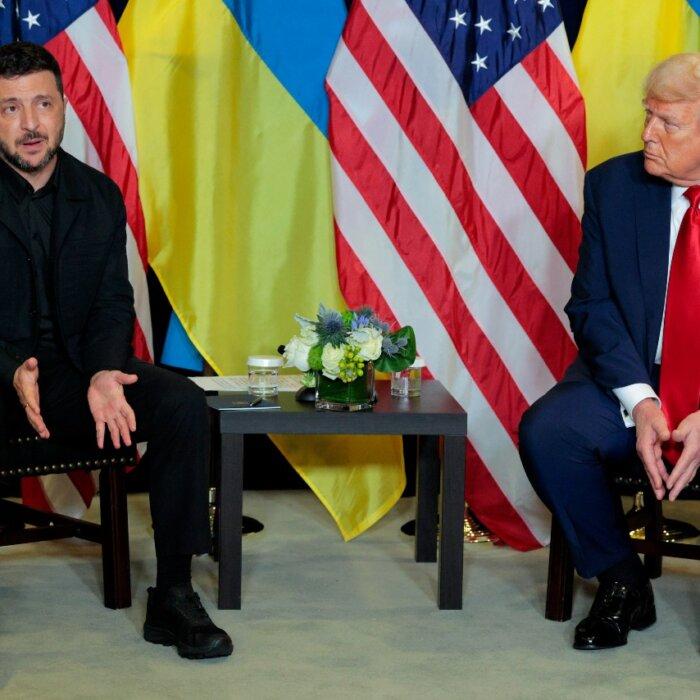
Appearing next to Turkish President Recep Tayyip Erdogan at the White House on Sept. 25, Trump told reporters that it was time to begin applying tougher economic pressure on Russia.
“[Russia’s] economy is absolutely terrible right now,” Trump said. “And I think it’s a shame that they’re doing that, killing a lot of people unnecessarily; 7,818 people were killed last week, mostly military people.”
The Kremlin dismissed Trump’s “paper tiger” comments.
Taking Away Black Gold
“We are in a race now between how long can the Ukrainian military hold up versus how long can the Russian economy hold up,” Treasury Secretary Scott Bessent told NBC’s “Meet the Press” earlier this month.One product that has propped up the Russian economy over the past few years has been energy.
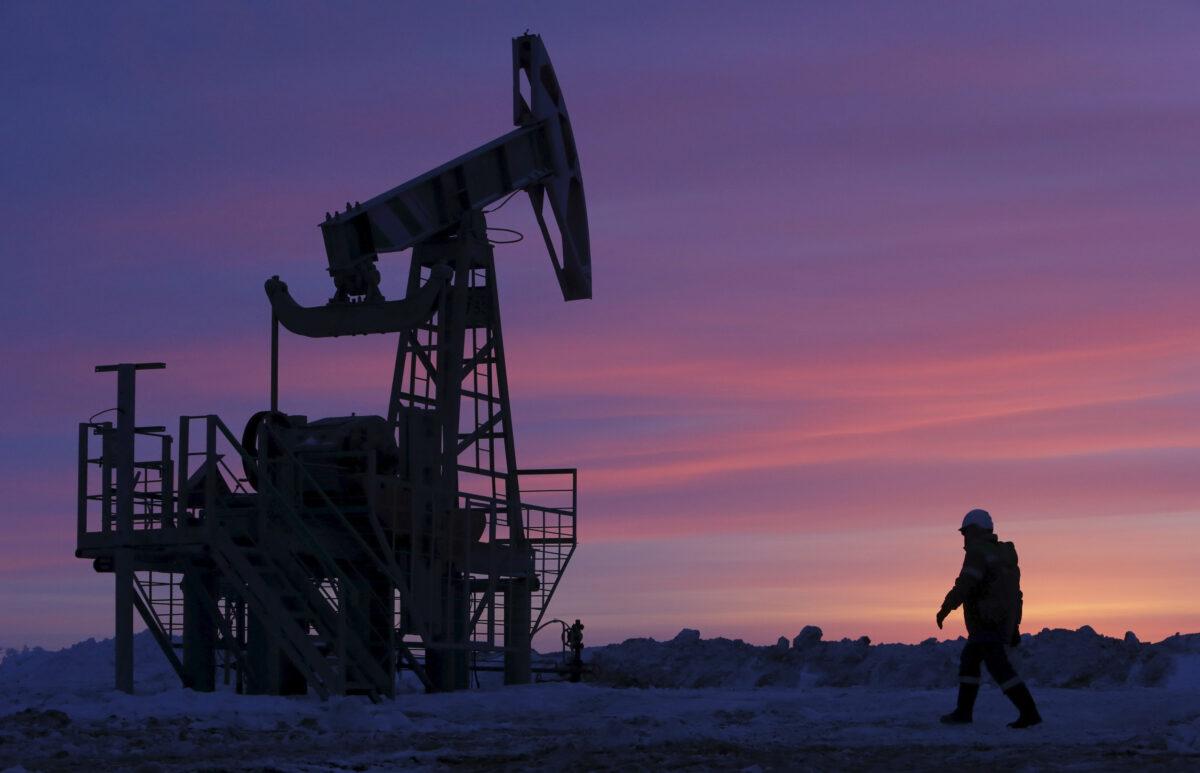
This year, Moscow projects that energy exports will account for approximately one-third of revenues, totaling more than $200 billion.
A combination of Western sanctions and falling global energy prices—Brent crude oil prices have tumbled by about 7 percent this year to $69 per barrel—has punctured significant holes in the Kremlin’s budget. The federal deficit has totaled $60 billion in the first seven months of 2025.
The ministry stated that the additional funds would be allocated to the campaign in Ukraine.
Although Trump has not blocked crude oil sales, he has called on NATO countries to halt their purchases of Russian petroleum products.
“Anyway, I am ready to ‘go’ when you are. Just say when? I believe that this, plus NATO, as a group, placing 50% to 100% TARIFFS ON CHINA, to be fully withdrawn after the WAR with Russia and Ukraine is ended, will also be of great help in ENDING this deadly, but RIDICULOUS, WAR.”
In addition to China and India, the European Union is one of Russia’s biggest customers for its liquefied natural gas (LNG) and pipeline gas.
Despite international efforts to reduce Europe’s dependence on Russian energy, the eurozone continues to be a major client, even years after the outbreak of war in Ukraine.
In August, Hungary was the largest importer of Russian fossil fuels in the EU, having purchased 416 million euros ($490 million) of crude oil and pipeline gas. This was followed by Slovakia (276 million euros), which also acquired crude oil and pipeline gas. France (157 million euros), the Netherlands (65 million euros), and Belgium (64 million euros) rounded out the top five.
During the summer, meanwhile, the president floated the idea of secondary tariffs to reduce Russia’s cash flow that funds military operations in Ukraine. He followed through on an additional 25 percent levy on India over its purchases of Russian energy, bringing the total U.S. tariff rate to 50 percent.
Any of these strategies would “deepen Russia’s revenue loss,” according to Mark Temnycky, nonresident senior fellow at the Atlantic Council’s Eurasia Center.
State of the Russian Economy
Russia’s economy has slowed sharply this year, prompting the Bank of Russia to implement a 100-basis-point interest rate cut earlier this month, which lowered the key rate to 17 percent.Monetary policymakers say they will maintain a tight monetary policy heading into 2026 to address inflationary pressures. The central bank projects that the annual inflation rate will ease to a range of 6 percent to 7 percent and return to 4 percent next year—and “stay at the target further on.”
In August, the annual headline inflation rate eased to 8.1 percent from 8.8 percent in the previous month.
The rate cut formed part of what Governor Elvira Nabiullina described as a “carefully calibrated” strategy aimed at supporting balanced growth and guiding inflation lower.
The health of Russia’s economy has deteriorated in recent months, driven by a convergence of fiscal, geopolitical, and structural challenges.
Rosstat, the federal statistics service, reported last month that the second-quarter gross domestic product (GDP) growth rate was 1.1 percent, compared with 4 percent in the same period a year ago.
As a result, Russia’s Ministry of Economic Development has downgraded its GDP growth forecast for 2025 to 1.5 percent, down from an earlier estimate of 2.5 percent. The projection for 2026 was similarly cut to 1.3 percent from 2.4 percent.
This was roughly in line with the International Monetary Fund’s recent outlook for Moscow.
Bearish estimates are unsurprising, given the barrage of recent economic data.
For the past two years, Russia’s economic landscape “has been under sustained pressure,” Temnycky told The Epoch Times.
Industrial output has been negatively affected by military conscription and conflict-related disruptions. The Kremlin’s spending on the war in Ukraine has amplified fiscal deficits. Currency depreciation and supply chain challenges have eroded living standards and reduced consumers’ purchasing power.
Although Moscow has kept the economy afloat by emphasizing military production, economic conditions have been anemic, Temnycky said.
“But growth remains stagnated, with indicators pointing to an impending recession. Sanctions continue to hamper Russia’s access to advanced technology and markets outside of friendly states,” he said.
Russian Economic Development Minister Maxim Reshetnikov warned in June at the St. Petersburg International Economic Forum that the country was teetering on the edge of a recession.
“Figures point to slowdown; according to current feelings, [the economy] is already on the verge of transiting into recession,” he said.