This copy is for your personal, non-commercial use only. Distribution and use of this material are governed by our Subscriber Agreement and by copyright law. For non-personal use or to order multiple copies, please contact The Epoch Times Reprints.
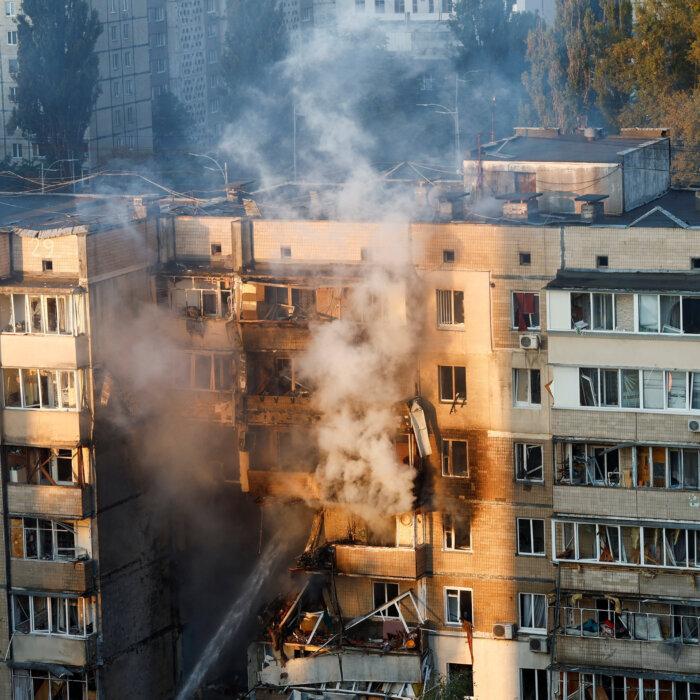
Emergency workers extinguish a fire in an apartment building that was damaged during a Russian drone strike in Kyiv, Ukraine, on Sept. 7, 2025. Thomas Peter/Reuters
Russia is intensifying its war against Ukraine instead of pursuing peace talks, U.S. special envoy Keith Kellogg said after Moscow launched a record-breaking drone and missile strike.
The Russian attack hit cities across Ukraine overnight on Sept. 7, wounding more than 40 people and, for the first time, damaging the Cabinet of Ministers building in central Kyiv.
Ukraine’s Air Force reported that Russia deployed 810 Iranian-designed Shahed drones in the barrage, making it the largest such attack since Russia’s invasion in February 2022.
Kellogg, President Donald Trump’s special envoy for Ukraine, said the scale of the strike underscored Moscow’s unwillingness to settle the war through diplomacy even as Washington presses for peace.
“Russia appears to be escalating with the largest attack of the war hitting offices of the [Ukrainian] Cabinet in Kyiv,” Kellogg wrote in a post on X, in response to a video showing the damaged government building. “History shows events can escalate out of control through actions as these. It is why President Trump is working to stop this war. The attack was not a signal that Russia wants to diplomatically end this war.”
The United States has sought to broker a peace agreement between Kyiv and Moscow since Trump began his second term. In July, he set a 50-day deadline for Russian President Vladimir Putin to impose a cease-fire or face sweeping U.S. tariffs on countries that trade with Russia. Weeks later, Trump shortened the deadline to Aug. 8, citing frustration over continued Russian strikes and Moscow’s reluctance to move the peace process forward.
The threatened 100 percent tariff did not materialize after the deadline, although Washington on Aug. 6 imposed an additional 25 percent tariff on goods from India, one of Russia’s largest oil buyers, on top of the 25 percent duties already in place. Indian officials responded that cheap Russian oil remained essential to their economy and that domestic energy needs would continue to take priority.
On Sept. 7, the same day as the record Russian strike, Trump said he was “not thrilled” with the attacks and suggested new U.S. sanctions could be imminent.
When asked at a White House briefing whether he was prepared to move into the “second phase” of measures against Moscow, he replied: “Yeah, I am.” He did not provide more details or a timeline.
Later that day, Trump told reporters he planned to speak with Putin “very soon” and “over the next couple of days.”
“We’re going to get it done,” he said. “The Russia–Ukraine situation. We’re going to get it done.”
Trump previously signaled a shift away from seeking a temporary pause in fighting, instead pressing for a permanent end to the war. This followed a high-profile meeting with Putin in Alaska on Aug. 15, as well as separate conversations with Ukrainian President Volodymyr Zelenskyy and European leaders.
“It was determined by all that the best way to end the horrific war between Russia and Ukraine is to go directly to a Peace Agreement, which would end the war, and not a mere Ceasefire Agreement, which often times do not hold up,” he wrote in a Truth Social post on Aug. 16.