Approximately 300 Armed Forces soldiers along with thousands of Canadian Rangers are patrolling Canada’s territories, an area totalling more than 3 million square kilometres, federal documents say.
A June 20 Department of National Defence briefing note counted 5,640 Canadian Rangers in Yukon, Northwest Territories, and Nunavut in addition to the roughly 300 soldiers monitoring the region. It did not count the number of military reservists in the territories.
“Strategic competition, climate change, technological advancements and economic interests are making the region strategically vital. That is why the department, alongside its government partners, is focused on defending the Arctic,” the note said as first reported by Blacklock’s Reporter.
The Canadian Armed Forces plans to expand its northern operations, and is open to assistance from other allied nations, the briefing note said.
“This expansion anticipates including more Canadian Armed Forces personnel and the potential for increased inclusion of forces from Allied nations with an Arctic interest,” it said. “New activities aim to support a near year-round military presence through exercises and training to assert Canada’s presence and sovereignty.”
An earlier 2024 report counted 308 regular forces members in the territories of Yukon, Northwest Territories, and Nunavut. The report found that one-third of military installations in the territories dated back to at least 1974 and were no longer useful.

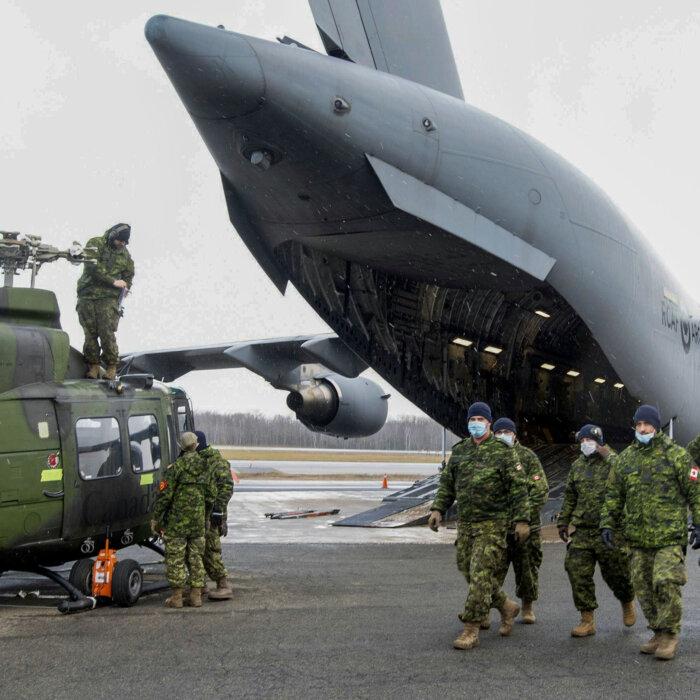
“Of 102 Arctic airfields less than 48 percent can be used by the versatile CC-130 Hercules,” said the 2024 report, adding that only 13 percent of airfields in the region can be used by the CC-177 Globemaster due to the railways being insufficient in length and made of gravel.
The report found there was “minimal consensus” among Canadian military commanders on whether the country faces any foreign threat in the Arctic. However, it noted Russia has military capabilities in the region that it “could employ against Canadian Arctic targets.”
Canada’s military spends nearly $9.9 million yearly on Arctic training exercises known as Operation Nanook. However, auditors previously questioned the effectiveness of the exercises because they take place during the warmest months of the year.
“The largest component of Operation Nanook occurs in late summer, a period that does not present the sustainment challenges associated with winter, such as the absence of maritime support and the need for equipment capable of withstanding extreme cold,” wrote auditors.
Prime Minister Mark Carney announced in March that Ottawa would increase its Arctic capabilities by partnering with Australia and investing $6 billion to develop advanced Over-the-Horizon Radar technology, investing $420 million in northern operations and training exercises, and investing in excess of $253 million in Nunavut’s economy.