Rising Tick Threat in Southern Ontario: How to Protect Yourself

Rising Tick Threat in Southern Ontario: How to Protect Yourself
Ticks in a file photograph. Getty Images
|Updated:
0:00

Ontario is experiencing a rise in reports of blacklegged ticks this spring, as the populations of these tiny parasites continue to increase in the province year after year.

There has been a more than 40 percent surge of Lyme disease-carrying ticks reported this year compared to the same time frame in 2025, according to local data.

Driven by warmer winters expanding the insects’ geographic range, the surge means some areas of the province are already seeing high early-season case rates, including the Greater Toronto Area (GTA) and the surrounding regions.

Here is what you need to know to stay safe this year as the presence of ticks continues to grow, even in urban areas.

Tick Hot Zones

Ticks can be found across the province but are more prolific in certain regions. There has been a marked surge in tick populations and encounters this spring, with substantial concentrations observed in the GTA as well as in established habitats extending eastward, according to eTick data.

eTick is a free Public Health Agency of Canada platform that allows Canadians to upload photos of ticks found on themselves, their pets, or in the environment to have them identified by trained professionals.

The platform has documented 3,212 tick reports in Ontario this year, including 1,843 blacklegged ticks, the principal carriers of Lyme disease. This is an increase from 1,064 blacklegged ticks reported in the same time period last year.
Most of the tick reports this year have been concentrated in southern Ontario, particularly in the Toronto-to-Hamilton corridor.

More than 2,200 of the reports so far this year originated in the GTA and surrounding areas, according to eTick’s public tick map.
The region has the largest human population in Ontario, resulting in an increased number of tick reports. But its warmer climate and large population of white-tailed deer—the ticks’ favoured hosts—also play a role. The Southern Ontario agricultural belt boasts one of the highest deer densities in the province.

Other areas to the east of Toronto, like Markham and Oshawa as well as further north like Newmarket and Barrie, have also had hundreds of reports, according to the eTick map.

Areas to the east have also been plagued with high levels of ticks. The Southeast Public Health region, which serves areas like Bancroft, Trenton, Belleville, Kingston, and Brockville, is an established high-risk zone for blacklegged ticks and has had hundreds of tick reports so far this year.
Ottawa and the surrounding region is also a hot zone for blacklegged ticks. The country’s capital had a higher incidence of Lyme disease compared to the provincial average in 2021, and it continues to be considered a high-risk area, according to Ottawa Public Health.

What are Ticks?

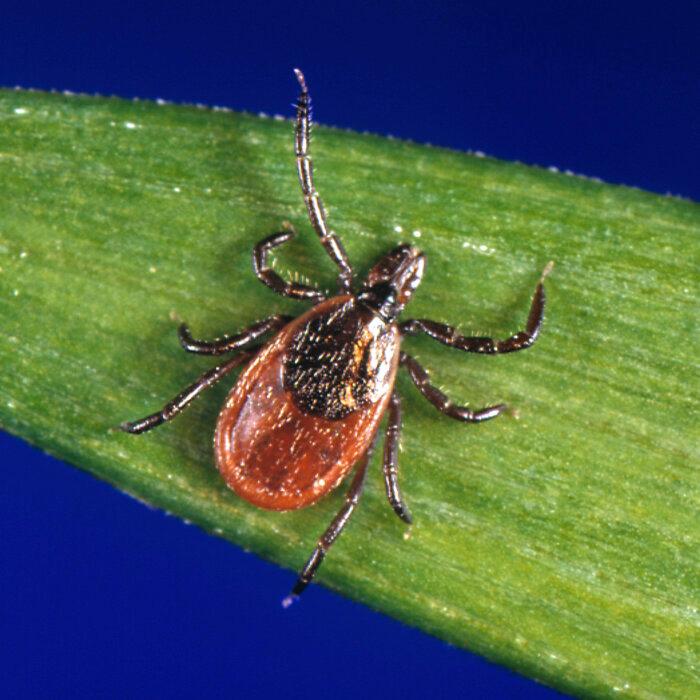
Ticks are small, blood-sucking arachnids that can carry bacterial illnesses, infections, or various types of fevers, making them a danger to humans and pets alike.
Frequently found in wooded areas, tall grass, and shrubs, ticks have been spreading to new areas in Canada, according to the Public Health Agency of Canada.

Ticks need blood from humans or animals to survive. The minuscule parasites attach themselves to their host by burrowing their heads into the skin where they can feed on the blood of their victims until engorged.

It is during this feeding period that infection can occur, the government website says. If the tick is removed soon enough, however, the chance of illness is drastically reduced.

Lyme disease is the most frequently encountered tick-related illness. It is characterized as a bacterial infection that, when untreated, can spread to the heart, joints, and nervous system, potentially causing chronic symptoms.
It is typically accompanied by a rash and flu-like symptoms, but reactions can vary from person to person, making it “challenging” to diagnose, Health Canada says.
It can also cause swollen lymph nodes, spasms, numbness or tingling, and facial paralysis, and untreated Lyme disease can lead to symptoms that last for years, including recurring arthritis, neurological difficulties, numbness, paralysis, and, in very rare situations, death.

Antibiotics is the only way to treat Lyme disease, the agency says, and the earlier treatment is received, the higher the chance for a successful recovery.

A 2017 study in the Ottawa area found that nearly 30 percent of the 239 ticks collected were infected with Lyme disease. A similar study in the Dundas area found that 12 out of 29 blacklegged ticks collected—or 41 percent—carried the disease.
The growing tick population has translated into an increase in Lyme disease, however. In 2009, there were just 144 cases compared to 2024 when more than 5,239 cases of Lyme disease were reported, government stats show.
Ontario has 136 documented cases of Lyme disease in 2026 as of the week ending on May 10. It also logged four cases of anaplasmosis, another tick-borne disease. It results in symptoms similar to those of the flu, with certain symptoms persisting for up to 60 days. In rare cases, if treatment is postponed or if other medical issues exist, anaplasmosis may result in severe health complications, such as respiratory failure, bleeding disorders, organ failure, and even death.

How to Avoid Ticks

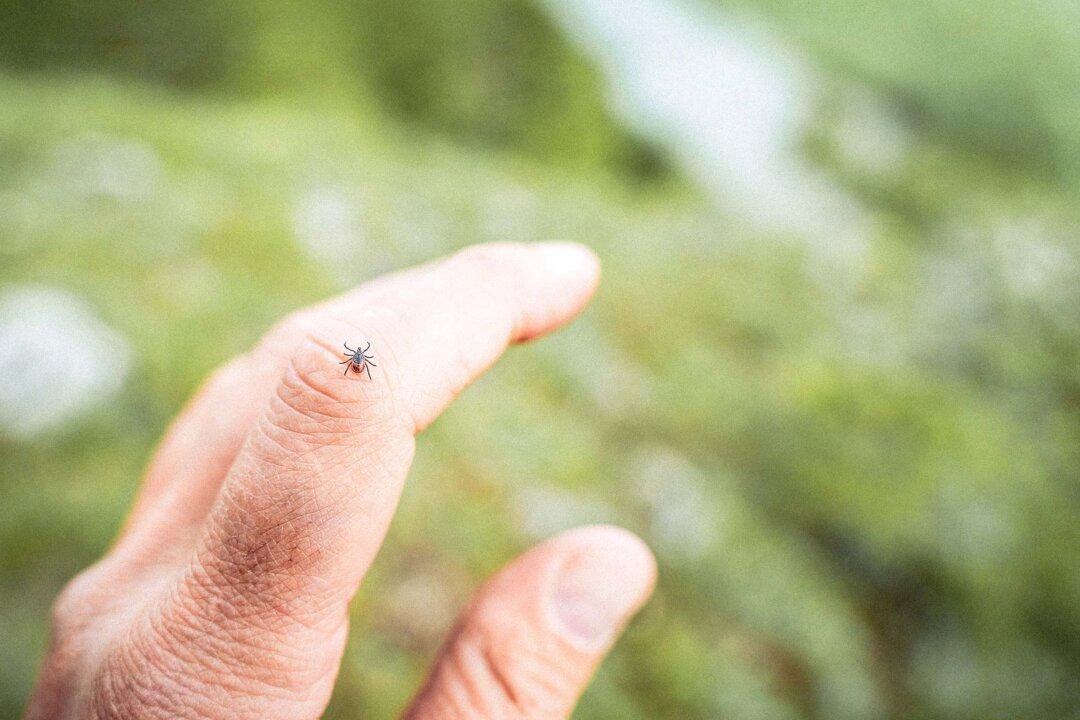
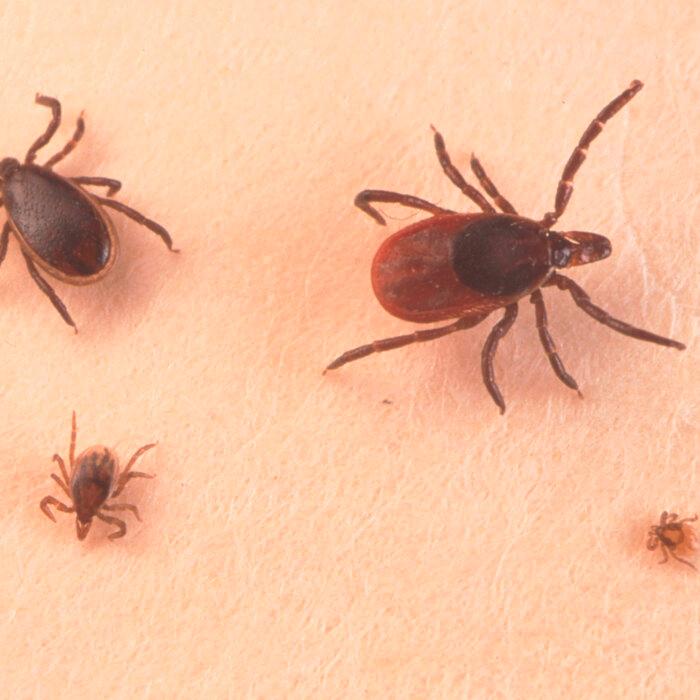
Due to their size, ticks can be difficult to detect, especially before they reach adult size. An adult is approximately two to four millimetres in size, while young ticks, also known as nymphs, can be as tiny as a poppy seed.

While ticks are more common in wooded areas and fields with long grass, they can also be found in suburban and urban environments.

Mississauga tick and mosquito control company BuzzSkito warned in a recent blog post that ticks are often found in leaf litter, woodpiles, under decks and porches, and along fence lines. They can also be found in tall grass and dense ground cover as well as on the edges of lawns bordering woods, ravines, or other natural areas.
The peak season for ticks is in May and June and again in the fall throughout September and October, BuzzSkito said in another post.

That doesn’t mean those months hold the only danger, however. Tick bites are a risk at any time of the year as long as the temperature exceeds 4 degrees Celsius.

“Unlike most Ontario insects, they don’t die off in cold weather,” BuzzSkito said. “This is why blacklegged ticks can be encountered on warm February or March days.”

Steering clear of tick habitats is the most effective strategy for preventing bites, but it’s\s not especially realistic, particularly for those who enjoy being outdoors.

Ottawa Public Health inspector and healthy environments officer Michelle Goulet says those heading into bushy, shrubby, forested areas, or even tall grasses need to take precautions.

Goulet said in a video post that walkers and hikers should never venture off the trail, but that alone might not be enough protection.

She recommends applying a Health Canada-approved insect repellent containing DEET or icaridin as well as dressing properly. That means wearing your long-sleeved shirts and pants tucked into your socks. It also helps to wear light-coloured clothing so ticks can be spotted more easily.

“After your hike or walk, do a full-body check on yourself, your children, and pets for ticks,” she said. “Pay careful attention around your toes, knees, groin, armpits, and scalp. And if you find a tick, remove it as soon as possible.”

BuzzSkito also recommends placing clothing in the dryer on high for 10 to 15 minutes after being outdoors to help kill any ticks that have found their way into your clothes, as well as showering within two hours to help rinse off unattached ticks.

How to Deal With a Tick Bite

Finding a tick within the 24- to 36-hour transmission window reduces risk of illness, but removing an attached tick properly is key.
The best way to remove a tick is with a pair of fine-tipped tweezers, BuzzSkito says. Grasp the tick as close to the skin as possible and pull the tick firmly up and out of the skin.

“Do not twist or jerk — this can cause mouthparts to break off in the skin,” BuzzSkito said. “Do not crush, burn, or apply petroleum jelly. These methods are ineffective and may increase transmission risk.”


Once the tick is removed, it can be stored for identification purposes. Seal it in a bag or container with the date.  A picture of the tick can also be submitted for identification at eTick.ca.