The CEO of the German defence firm that was named the preferred bidder in the competition to build Canada’s next fleet of submarines this week said negotiations to formalize the contract will move quickly.
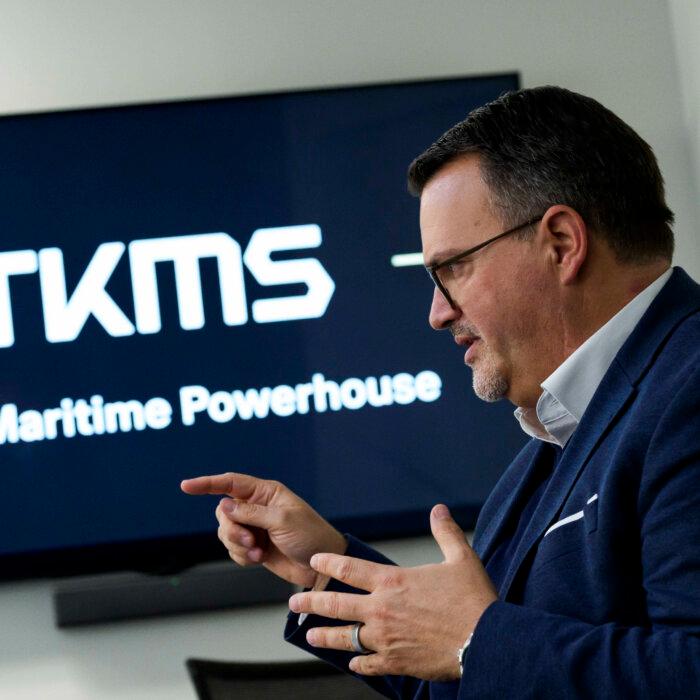
Germany’s TKMS took a brief moment to celebrate after the announcement Monday but CEO Oliver Burkhard said the real work is now about to begin.
Prime Minister Mark Carney said Canada’s new Defence Investment Agency will lead the negotiations with the submarine maker as the two sides nail down the details of the final cost, delivery schedules and industrial benefits. As he announced the next phase of the country’s largest-ever military procurement project in Halifax on Monday, Carney said the talks could take somewhere between six and 18 months.
Burkhard said he’s hopeful things could move faster.
“A lot has been already negotiated between Germany, Norway, and us as an industry player. So I think Canada can, to say it a bit simple in my words, copy and paste a lot of that,” he said in an interview on Tuesday in Ottawa.
The competition between TKMS and its partners, the governments of Germany and Norway, and South Korea’s Hanwha Oceans was intense and, unusually, played out in public through sponsorships and advertising campaigns in Canada.
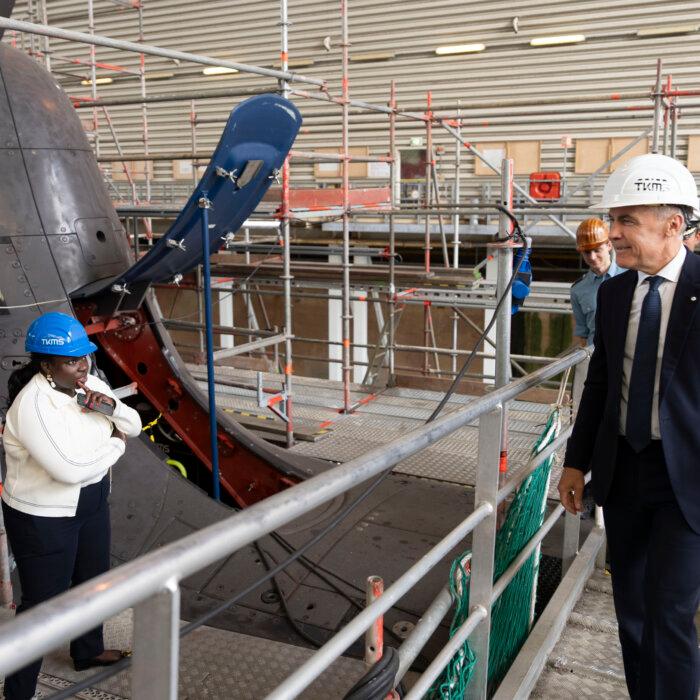
Ottawa selected the two bidders in 2025, setting unusually tight deadlines that moved the process along at “light speed,” Burkhard said.
The CEO said the approach from the German and Norwegian governments was something he'd never seen before, either: putting another government “into a partnership where everybody is on eye level.” He attributed the new industrial policy approach to shifting geopolitical realities.
“German politicians are normally quite shy when it comes to defence business,” he said. “But this has changed, through the outbreak of the Ukraine war.”
Canada plans to purchase a fleet of up to 12 submarines—a significant upgrade from its current four. Those Victoria-class submarines were built in the late 1980s and 1990s and are set to be retired from service by 2035.
Retired vice-admiral Mark Norman said because of the way subs are rotated through maintenance, training and deployment, a fleet of up to 12 would allow Canada to have three or four boats in active use at a time—something he said is essential for the country with the world’s longest coastline.
“We have been negligent, to put it bluntly, for decades about protecting our own approaches,” he said in an interview on Monday.
Norman and other analysts said the contest was extremely close.
“There was no slam-dunk obvious choice here,” he said.
Paul T. Mitchell, a professor of defence studies at Canadian Forces College, said the Koreans “threw everything at this particular procurement” and said he expected them to be disappointed by Monday’s decision.
Carney, too, seemed to try to soften the blow by praising the Hanwha bid and emphasizing that he planned to meet South Korean President Lee Jae Myung on the sidelines of the NATO summit in Turkey this week. That meeting did happen Tuesday, shortly after Carney arrived in Turkey. He also spoke to Lee by phone about the decision on the weekend.
The prime minister talked up the TKMS 212CD submarine’s stealth and Arctic capabilities and emphasized that it can operate alongside NATO allies.
In a statement to Korean media, Hanwha Oceans said it was “unable to overcome the wall of the NATO alliance.”
Vina Nadjibulla, vice-president of research and strategy at the Asia-Pacific Foundation of Canada, said that is something the South Korean company has been trying to do for several years.
But she said the campaign Hanwha and the South Korean government launched through the bid process resonated outside Canada, too.
“It has introduced Hanwha as well as South Korea as a major defence and strategic partner for Canada. A lot more Canadians now know about South Korea,” she said.
Nadjibulla said Canada should build on the momentum of this process, noting South Korea has a strong defence industry.
“I see this as an opportunity to continue to deepen the partnership including in the defence sector,” she said.