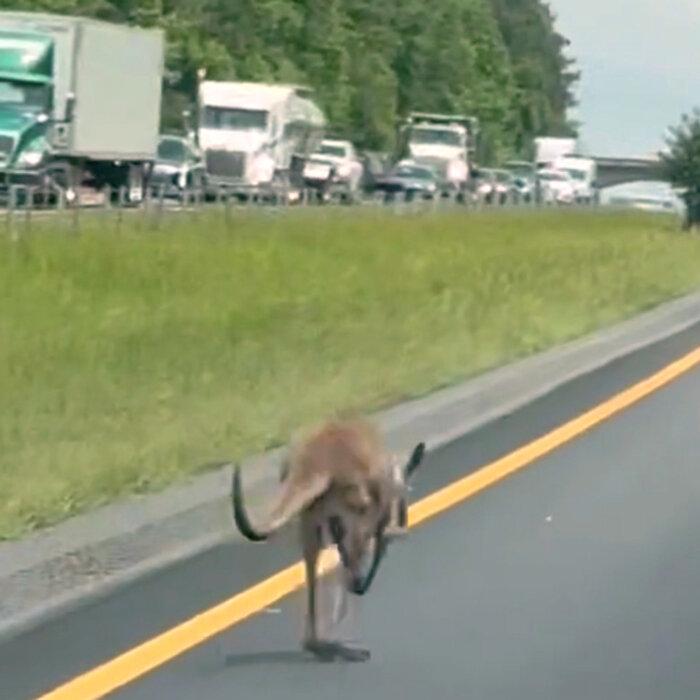
Kangaroo collisions are damaging a record number of cars in Victoria, and the RACV—a major provider of both roadside assistance and insurance—is pleading with motorists to slow down and be more alert.
Between 2021 and June 2025, the Royal Automotive Club of Victoria (RACV) Insurance received over 23,000 claims for kangaroo-related collisions, with 2024 recording the highest number of claims at 5,883. That’s over 16 collisions every day of the year.
The average claim animal-related claim in the 2025 financial year was $8,984, meaning that on an average day the insurer is paying out almost $144,000 to cover such incidents.
RACV Insurance General Manager Bill Bloodworth said collisions with wildlife are unfortunately common in Australia’s second most populous state, especially in areas where urban development encroaches on areas still served by regional roads.
“We do see a pattern of higher claim volumes during the cooler months, particularly from April to August, when kangaroo movement increases and daylight hours are shorter,” Bloodworth said.
“Motorists should slow down, stay alert, and scan the roadside—especially at dawn and dusk, when kangaroos are most active.”
- Sunbury (234 claims)
- Heathcote (195)
- Wallan (192)
- Benalla (182)
- Bacchus Marsh (179)
- Bendigo (170)
- Ballarat (169)
- Gisborne (164)
- Woodend (160)
- Kyneton (156)
- Be aware of peak times: Kangaroos are most active at dawn, dusk, and night.
- Slow down: Reduce speed in areas with wildlife signage or when visibility is poor.
- Scan ahead: Look at both sides of the road and the edges of the tree line for movement.
- Avoid swerving: If a collision is unavoidable, brake firmly in a straight line.
- Use high beams: When it is safe to do so, high beams can help detect animals further ahead.
“If you’re involved in a collision, pull over safely, activate hazard lights, and check on passengers. If anyone is injured, call 000. If the animal is injured, contact local wildlife services on (03) 8400 7300.”