The Quebec government is enacting a ban on the use of newly created gender-neutral words in all of its official communications, describing it as an effort to avoid confusion and preserve the integrity of the French language.
The newly revised language policy pertains to gender-neutral pronouns frequently used by transgender individuals and those who identify as non-binary.
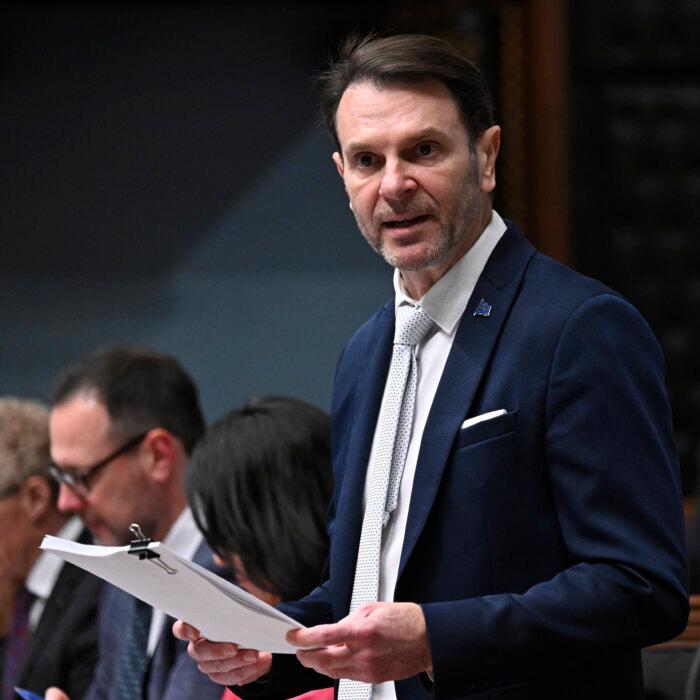
Jean-François Roberge, the minister responsible for French in Quebec, told reporters this week that an increasing number of public bodies have been using gender-neutral words and it is causing confusion, as certain terms are incompatible with French grammar rules.
“What we see is that there is an incoherence, it’s like everyone has their own grammar, it doesn’t make sense,” he said on Sept. 24. “It doesn’t make sense.”
Roberge said the change is intended to provide clarity and should not be seen as an attack on transgender rights. “I don’t want to exclude anybody,” he said.
Non-binary individuals will continue to have the option to use the gender marker X on certain official government documents, the province says.

The newly implemented language policy will prohibit the use of terms such as “iel” — a recent creation that serves as an alternative to the singular pronoun “they” for individuals who identify as non-binary.
It will also ban new methods of writing words that seek to merge their masculine and feminine forms, such as “étudiant.e.s,” which pertains to both male and female students.
“There are things that are incompatible with grammar,” Roberge said.
One of the grammar issues pertains to gender agreement. There is a lack of consensus regarding the formation of adjectives with masculine and feminine forms—such as “beau” and “belle”—in relation to gender-neutral pronouns like “iel.”
The policy is currently set to affect government departments and municipalities, but similar regulations will be implemented for schools, universities, and the health-care system as well, Roberge said. It will apply to all government communications to citizens but does not apply to internal emails.
Parti Québécois Leader Paul St-Pierre Plamondon expressed his support for the government’s decision, on Sept. 24, telling reporters that inclusive writing can cause “complications.”
Leftist party Québec solidaire MNA Manon Massé said the government is “inventing problems” as a means of distraction.
Differing Gender Usage in Laws
While Quebec may be eliminating gender-neutral terms, some jurisdictions have formally adopted “gender-inclusive” terminology, including the federal government.Ottawa encourages use of the plural—their—to refer to unspecified individuals when drafting legislation.
Federal legislation also uses non-gender specific nouns such as “person,” “individual,” “sibling,” and “child” unless gender-specific nouns are necessary, such as using “she” and “her” in the Department for Women and Gender Equality Act.
British Columbia has used gender-neutral alternatives since 2021 in its official documents.
Pronouns such as “he” or “she,” have been revised to include gender-neutral options, while familial terms like “sister” and “brother” are now referred to as “sibling.”
Quebec’s Stance
Quebec’s Coalition Avenir government has addressed other gender-related issues in the province in the past year.Education Minister Bernard Drainville said the decision was made to ensure the “well-being, privacy and respect for private life” of students.
Transgender individuals in the past had the option to request placement in the detention facility of their preference and could be segregated from the general population for security purposes.
Under the new rules, they will still be permitted to identify with the gender of their choice, but will be housed according to their biological gender.
Public Safety Minister François Bonnardel said the new direction is a bid by the government to ensure “fairness in the treatment of all inmates in Quebec” as well as the safety of “correctional officers, our fellow citizens, and incarcerated individuals.”