Quebec and Ottawa say a new agreement will streamline the environmental assessment process for major infrastructure and resource development projects.
Pascale Déry, provincial environment minister, and Joël Lightbound, Quebec Lieutenant and federal minister of government transformation, public works and procurement, made the joint announcement Monday.
The two governments say they have reached an agreement in principle that aims to expedite environmental assessments for major projects such as mines, ports and pipelines.
The agreement will ensure projects that fall under Quebec’s jurisdiction are subject only to the province’s evaluation.
Déry said this agreement will eliminate duplicate assessments.
“We need to strengthen our economy, diversify our markets, and that means developing our projects more efficiently and quickly,” she said.
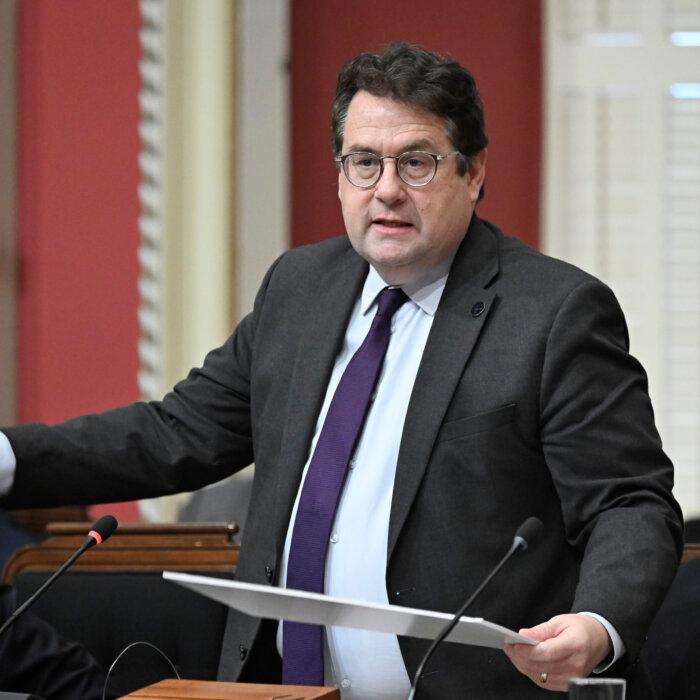
Residents and groups have 21 days to voice their concerns about this agreement to the federal government. The goal, according to Lightbound, is to make the agreement official within a month.
The Quebec branch of the Canadian Parks and Wilderness Society, which works to protect the ecosystems in which endangered species live, said it was “perplexed” by the announcement.
Its director, Alain Branchaud, said he is in favour of a one-stop shop for environmental assessments. However, he said he’s skeptical about the governments’ intentions because of their recent efforts to circumvent established environmental standards.
He cited Quebec’s Bill 5 as an example, which was inspired by Ottawa’s Bill C-5, and aimed to allow the provincial government to modify environmental laws to fast-track major projects. The provincial bill failed to pass before the end of Quebec’s parliamentary session and was dropped.
Déry has said this agreement would not sacrifice high environmental standards, but rather make the system more efficient.
Branchaud said he is also concerned about the timing and length of the consultation period.
“It isn’t a good idea to hold a consultation in the middle of summer and it isn’t a good idea to do it in only 21 days,” Branchaud said, adding that it “circumvents the democratic spirit of building an environmental regulatory and legislative framework.”
When asked if the summertime consultation period may be too short for people to take part, Lightbound said “upstream work” has already been done and indigenous groups have already been consulted.
In the last year, following a modification to its Impact Assessment Act, the federal government has reached similar agreements with seven other provinces to limit overlap in environmental assessment.