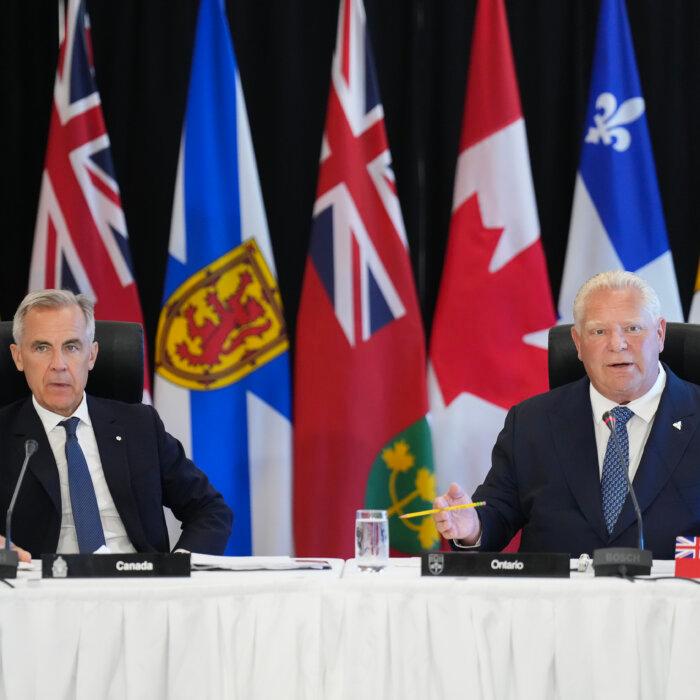
Canada’s premiers have concluded their three-day meeting in Muskoka with a focus on growing the country’s economy and requesting that Ottawa improve immigration policies and bail reform.
The meeting focused on strengthening Canada’s economy amid uncertainties in the Canada-U.S. trade relationship, and Ford said the premiers discussed cutting red tape and opening internal markets to build a “stronger, more self-reliant” economy.
The premiers have called on the federal government to improve the bail system across the country.
“We talked about the need for real bail reform that keeps criminals behind bars and keeps our community safe,” Ford said, adding that Prime Minister Mark Carney has been clear about his intent to implement changes, which Ford says the premiers will hold him accountable to.
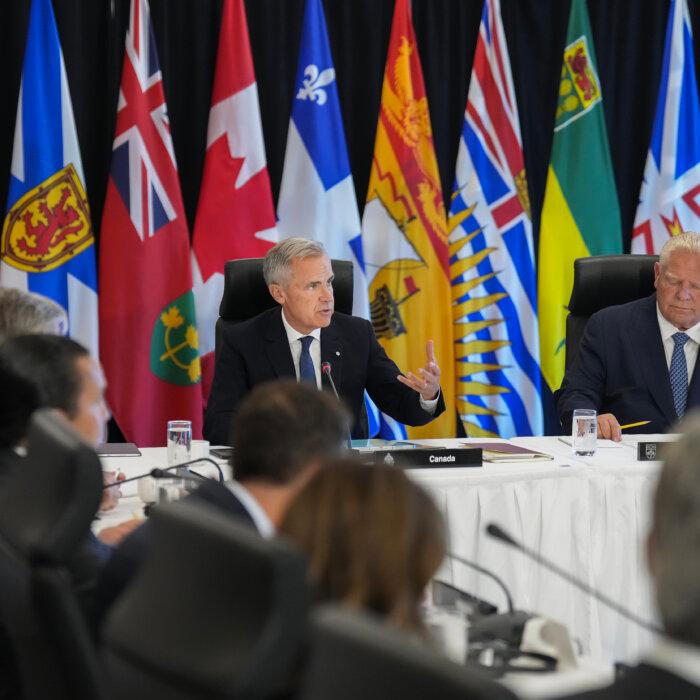
The premiers have also called for a stronger provincial role in immigration, Ford said, noting that while Carney agreed that provinces know their labour markets best, the federal immigration minister has not.
“We need the prime minister to be very, very clear with this minister,” Ford said. “She needs to work with the provinces and territories to fix Canada’s immigration system and make it more responsive to economic and market needs.”
In the meantime, the premier said that Ontario will be issuing its own work permits for asylum seekers using the provinces’ authorities under Section 95 of the Constitution.
Additionally, the provinces “aren’t going to sit around and wait for the federal government” when it comes to health care, Ford said. He said the provinces are making it easier for nurses and doctors to move and work anywhere in Canada, and the premiers also discussed how to expedite getting medications to patients.
Quebec Premier
Quebec Premier François Legault thanked Ford for chairing the Council of the Federation over the last year, noting that the year has been “very busy with the arrival of Trump.”In the face of U.S. tariffs and their impact on jobs ini Canada, Legault said the premiers are united in wanting to increase trade and remove barriers. He said they spoke of the importance of having major investments between the provincial, territorial, and federal governments to help replace jobs that could be lost through the uncertain trade relationship with the United States.
The provinces also discussed the need for the federal government to grant the provinces more power in choosing the number of immigrants allowed in each province, Legault said, including specifically reducing the number of temporary migrants in Montreal and Laval of Quebec.
The federal government is “not doing their share in financing health care costs that are increasing faster than any other expenditure,” Legault said, who stressed the need to continue to ask for increased health care transfers from the federal government.
In terms of public safety, the Quebec premier echoed the need to strengthen bail reform and “be cautious” before releasing sexual offenders and those who have committed violent crimes.
Alberta–BC Pipeline
During the closing press conference, B.C. Premier David Eby and Alberta Premier Danielle Smith were asked by reporters about a pipeline going through B.C., including whether Eby would be open to having the pipeline if Smith was able to find a proponent for the project.Smith responded by emphasizing that she has “many areas of common ground” with Eby, such as ammonia export from the Port of Prince Rupert, LNG expansions, new LNG proposals, integrating the provinces’ electricity systems, and expanding the capacity of the Trans Mountain Pipeline.
In order to revisit a project like Northern Gateway to carry oil and gas from Alberta to B.C. and ship it to overseas markets from the B.C. coast, Smith and Eby agreed that there needs to be “a lot more consultation.” Smith also noted that Alberta is listening to concerns raised by the province of B.C. including lowering emissions.
“When Premier Smith and the prime minister are in a position with a proponent, we’re absolutely willing to have those conversations with them,” Eby said, adding that in the meantime he is focused on the province’s more than $50 billion worth in projects where final investment decisions were either imminent or already taken.
US–Japan Trade Deal
As Ontario’s auto industry faces 25 percent U.S. tariffs, Japan made a trade deal with the United States on July 22 to lower tariffs on Japanese automobiles from 25 percent to 15 percent, which U.S. automakers have raised concerns about.Reporters asked Ford at the July 23 closing press conference how the lower tariffs for Japanese vehicles could affect the Canadian auto industry.
Ford noted that Canada is America’s “number one customer,” as Canada buys more than 400 percent more U.S. products than Japan does.
“We don’t have to take a back seat to anyone, and we sure the heck don’t have to take a back seat to Donald Trump,” Ford said.
“We’re an economic powerhouse in Canada, and we'll make sure that we send our products around the world and be less reliant on the Americans.”