This copy is for your personal, non-commercial use only. Distribution and use of this material are governed by our Subscriber Agreement and by copyright law. For non-personal use or to order multiple copies, please contact The Epoch Times Reprints.
Prime Minister Mark Carney, centre, and the premiers of Canada speak to media following the first ministers meeting in Saskatoon, Sask., June 2, 2025. THE CANADIAN PRESS/Liam Richards
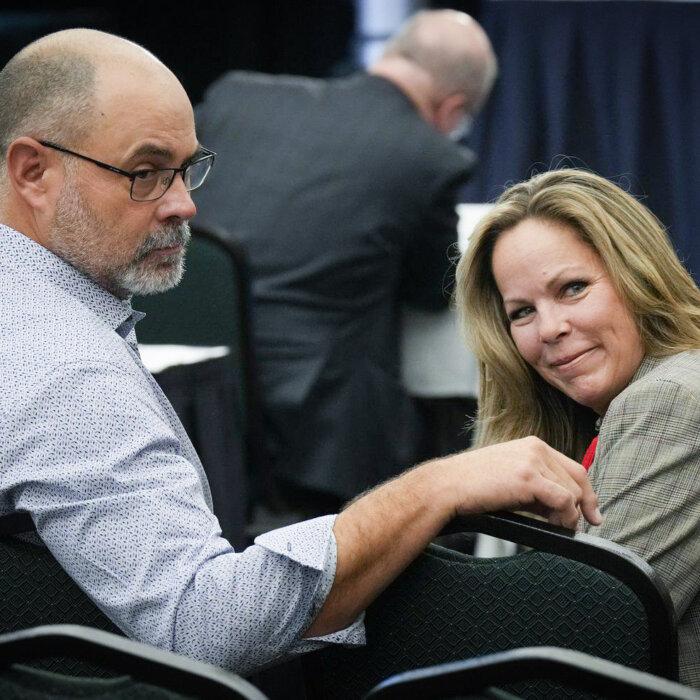
Canada’s 13 premiers are kicking off three days of meetings on the economy and trade on July 21, including discussions on how the premiers can help move nation-building projects forward.
The meeting, which is being held in Muskoka, Ont., is hosted by Ontario Premier Doug Ford and will focus on protecting Canada’s domestic economy in the face of U.S. tariffs, as well as advancing resource projects and reducing international trade barriers.
The first day will involve meeting with the leaders of national indigenous organizations to discuss economic development and reconciliation, as well as other priorities for First Nations communities.
On the second day, July 22, Prime Minister Mark Carney will join the premiers for a special meeting to discuss trade and provide updates on talks with the United States.
Ford said earlier this month he had requested that Carney attend the meeting in person. His request was made after U.S. President Donald Trump released a letter addressed to Carney on July 10, which threatened to increase tariffs on Canada.
Trump has put a series of tariffs on Canada in recent months, including 50 percent tariffs on steel and aluminum, 25 percent tariffs on cars and auto parts, and 10 percent tariffs on oil and potash. Trump has also imposed 25 percent tariffs on all goods not covered under the United States-Mexico-Canada Agreement, which he announced on July 10 would rise to 35 percent on Aug. 1.
Premiers’ Priorities
In a June 5 press release announcing the meeting of the premiers, Ford said Trump’s tariffs against Canada meant “we need to build and we need to build fast.” He added there had “never been a more important time” for premiers to work together to build a competitive economy.
Saskatchewan Premier Scott Moe told reporters in Muskoka ahead of the meeting on July 21 that getting “as close to zero” as possible on interprovincial trade barriers and seeking free trade in U.S. tariff disputes will be among his top priorities for the meeting. He added that he’s also concerned about tariffs from China that he said are having a negative impact on Saskatchewan’s agricultural sector.
Ford told reporters in Muskoka that Canada needs to “unleash Canadian industry resources” in terms of energy and critical minerals and said Ontario is “encouraging all provinces and territories to start buying Canadian-made vehicles, start buying Canadian-made everything.” Ford said this would impact the United States “more than anything,” since Canada buys a large volume of products from the United States and “doesn’t have to take a backseat.”
Quebec Premier François Legault told reporters he wants to know how long any potential deal with the United States reached prior to Aug. 1 will last, saying Canada’s economy “suffers because of the uncertainty.” Adding that he hopes Carney secures a “long-term deal with Mr. Trump,” Legault said one of his top priorities is that federal money spent on defence goes toward Canadian businesses, given large companies in Quebec like Bombardier are “ready to create 10,000, 20,000, 30,000 jobs.”
The premiers meeting in Muskoka was initially set to be held the same week the United States and Canada would finalize a trade deal, which Trump and Carney agreed to at the G7 Leaders’ Summit in Alberta in June. But the deadline for a final deal was delayed after Trump announced tariffs on Canadian goods would rise to 35 percent.
The premiers meeting follows Carney’s summit with First Nations on July 16 and 17 to discuss Ottawa’s recently passed major projects bill. The legislation, dubbed the One Canada Economy Act, allows the government to support the development of major projects such as pipelines, ports, and railways that are deemed of national interest.
The legislation also allows projects to bypass provisions of certain laws, and aims to reduce the approval times for major projects to two years. Indigenous groups have voiced concern, saying they were not properly consulted about provisions in the legislation that could weaken existing requirements related to indigenous consultation and environmental protections.