Premier Doug Ford is promising to table legislation this month that will obligate publicly funded institutions and municipalities to prioritize Ontario-made products and services in response to the ongoing trade disputes with the United States.
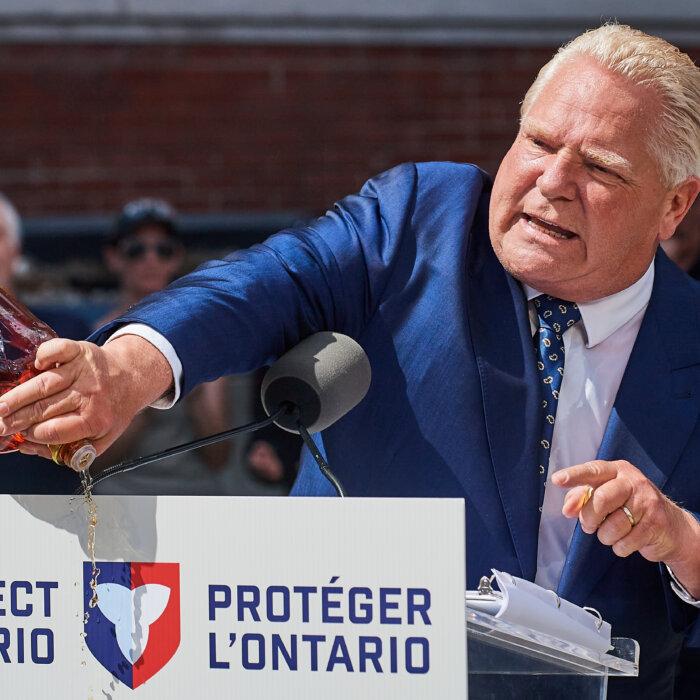
The province will be pushing for a “Buy Ontario” approach when the legislature resumes in the coming weeks, Ford told reporters during an Oct. 7 press conference, saying cities, towns, and public agencies should prioritize Ontario bidders for public contracts.
The existing system in the province encourages publicly funded entities such as colleges or hospitals to give preference to local bidders, but other firms, including U.S. companies, can still secure contracts. Ford said his proposed legislation aims to strengthen the regulations, making it more challenging to do business with companies outside Ontario.
“When possible, let’s buy Ontario-made vehicles throughout the municipalities, no matter if it’s fire trucks or any other vehicles, personal vehicles, we need to buy them off Ontario-made companies,” he said. “So anything that’s made here in Ontario, when possible, let’s let’s see that.”
The upcoming legislation represents the most recent effort by the Ford government to establish domestic spending as a priority amid the protracted tariff dispute with the United States and weakening employment figures.
Ontario also passed legislation in April to reduce interprovincial trade barriers and this month designated the last Friday of June in each year as “Buy Ontario, Buy Canadian Day” in a bid to increase local spending and hiring as local businesses grapple with tariffs imposed by U.S. President Donald Trump.

The White House has slapped Canada with 35 percent tariffs on products not covered by the United States-Mexico-Canada Agreement as well as a 50 percent tariff on aluminum, steel, and copper, a 35 percent tariff on softwood lumber, and a 25 percent tariff on vehicles and automotive parts, to name a few.
The tariffs have taken a toll on Ontario businesses, according to a report from the Financial Accountability Officer of Ontario. The province lost 38,000 jobs in the second quarter of 2025, at least some of which were tied to the tariffs.
The most pronounced drop in employment took place in the manufacturing sector, which experienced a loss of 29,400 jobs in the second quarter of this year, the financial watchdog found. That drop of 3.5 percent was the sharpest quarterly job loss in the sector since 2009, except for the COVID-19 pandemic.
Business, building, and support services experienced a decline of 14,900 jobs, while the culture and recreation industry lost 12,900 jobs, according to the report. There were also notable decreases in employment within the transportation and warehousing sector and in agriculture, at 8,600 and 8,500, respectively.