Polish fighters intercepted a Russian plane on Oct. 28 that was flying a reconnaissance mission in international airspace over the Baltic Sea, the Polish army said on Oct. 29. The Russian plane was flying without a filed flight plan, and its transponder was turned off.
“Polish fighters intercepted an Il-20 Russian aircraft carrying out a reconnaissance mission in international airspace, without a filed flight plan and with its transponder turned off. The aircraft did not violate Polish airspace.”
He said that during the operation, the Polish planes simply escorted the errant aircraft away, but he added, “Further actions could be taken by our pilots if Russian pilots were to take steps that we would not want, i.e., attempt to violate our airspace or perform other dangerous maneuvers.”
Although Moscow has not commented on this particular incident, it has in the past maintained that all flights by its military aircraft over neutral waters are conducted strictly in line with international regulations and do not pose any threat to foreign air traffic.

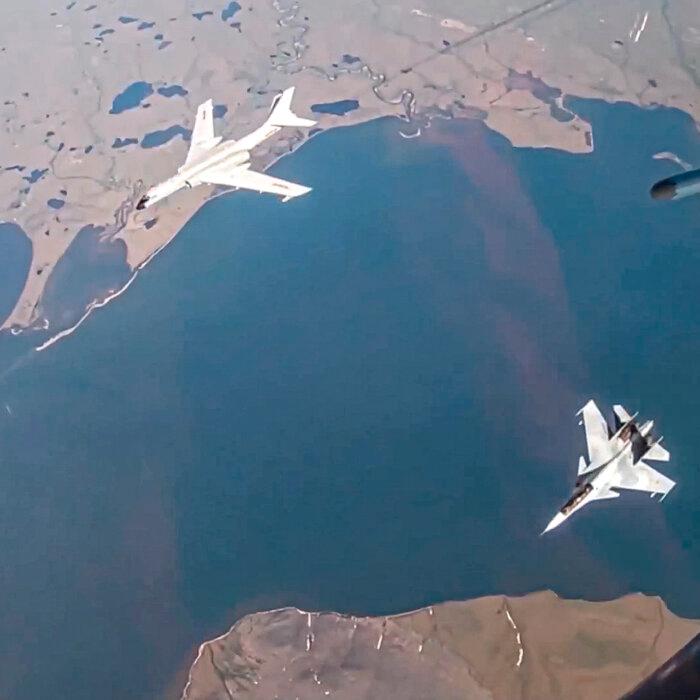
The incident comes as NATO’s eastern member states remain on high alert to incursions by Russian aircraft following a series of airspace violations in the region by Moscow.
Vilnius’s military said the two aircraft were potentially on a refueling training mission when they flew more than 2,000 feet into Lithuanian airspace from the Russian enclave of Kaliningrad.
Last week, Alexus Grynkewich, a U.S. Air Force general serving as NATO’s supreme allied commander Europe, said that Moscow appeared to have been deterred by the response but that Moscow is expected to continue testing boundaries.
“We do see indications that the Russians are trying to be more careful, that they recognize that they came close to or crossed a line in a couple of cases, particularly when you consider the drone event in Poland,” he said.
“We'll have a deterrent effect, but they’re going to continue to try to move and take hybrid approaches to how they challenge the alliance.”
The European Commission has also proposed four flagship defense projects, including a drone wall and fortification of Europe’s eastern border, as part of measures to boost the bloc’s defense by 2030.