Tusk told the Sejm, the lower house of the Polish parliament, that the identities of the Ukrainian nationals were known, but due to the ongoing investigation, their names would not be released.
Both suspects have fled to Belarus, the prime minister said, according to the Polish Press Agency.
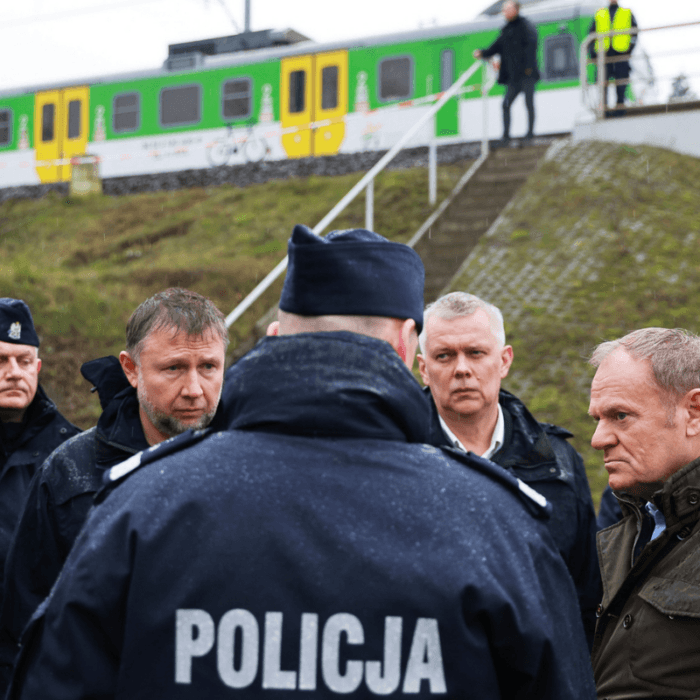
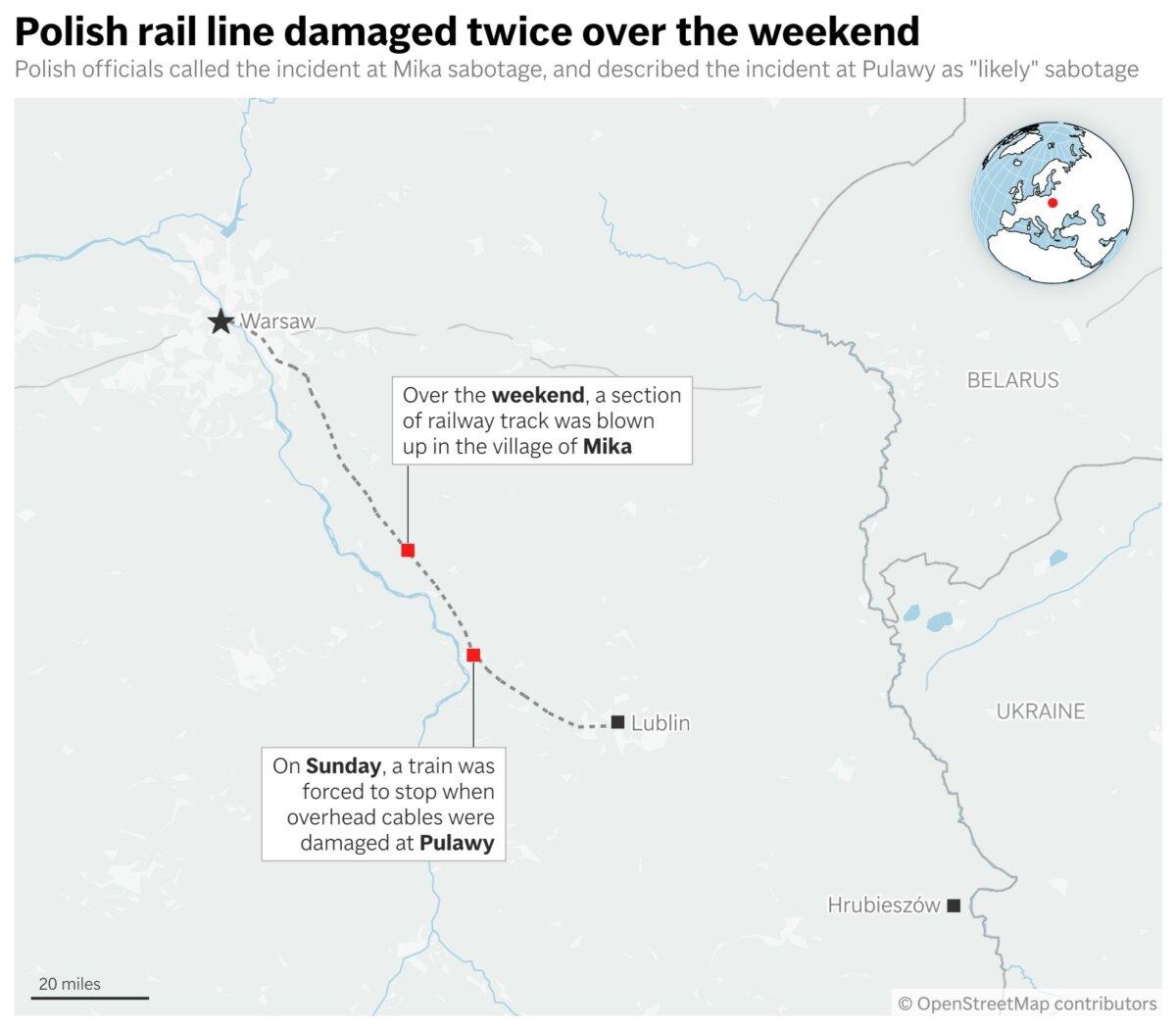
In a separate incident confirmed by Poland’s National Prosecutor’s Office, power lines over another segment of the same line, further south at Pulawy, were also damaged.
Tusk said these incidents “were intentional” and that the aim of the perpetrators “was to cause a railway disaster.”
‘Sabotage of a Terrorist Nature’
Tusk informed lawmakers that in one of the attacks, perpetrators used a military-grade explosive device made from C4 plastic explosive, which was detonated remotely via a wired system from a distance of approximately 300 yards.“A certain amount of explosive material, which did not detonate, was also recovered at the scene,” the prime minister said.
“These actions created an imminent threat of a land transport disaster, threatening the lives and health of many people and significant property damage,” the prosecutor’s office said.
Earlier on Nov. 18, Jacek Dobrzynski, the spokesman for Poland’s special services minister, said “everything indicates” that Russian intelligence services had commissioned the acts of sabotage.
Dobrzynski told reporters that authorities were “securing evidence, gathering information, and verifying the information they’ve gathered so far.”
On Nov. 18, the Kremlin said it was not surprised that Poland had accused Russia of involvement in the incident.
“Russia is being accused of all manifestations of the hybrid and direct warfare that is taking place. In Poland, let’s say, everyone is trying to get ahead of the European locomotive in this regard, and Russophobia is, of course, in full bloom there.”