Conservative Leader Pierre Poilievre announced his party will be kicking off a “massive nationwide campaign” to overturn the federal government’s electric vehicle (EV) mandate, which he said will harm automakers, farmers, and rural communities.
Speaking to reporters in Saskatchewan on Aug. 14, Poilievre said the campaign will include motions in the House of Commons, press conferences and events at car dealerships across Canada, petitions, and “pressure campaigns” in Liberal-held ridings.
The Tory leader said these events will “mobilize Canadians to maintain their right to decide what car they can afford and what car works for them.”
The Liberal government’s EV mandate, which was introduced in 2023 to reduce greenhouse gas emissions, decrees that at least 20 percent of new light-duty vehicles offered for sale in 2026 must be zero-emission, with the share rising each year until it reaches 100 percent in 2035. Automakers unable to meet the 2026 target can purchase compliance credits from competitors without a manufacturing footprint in Canada and limit sales of internal combustion vehicles.

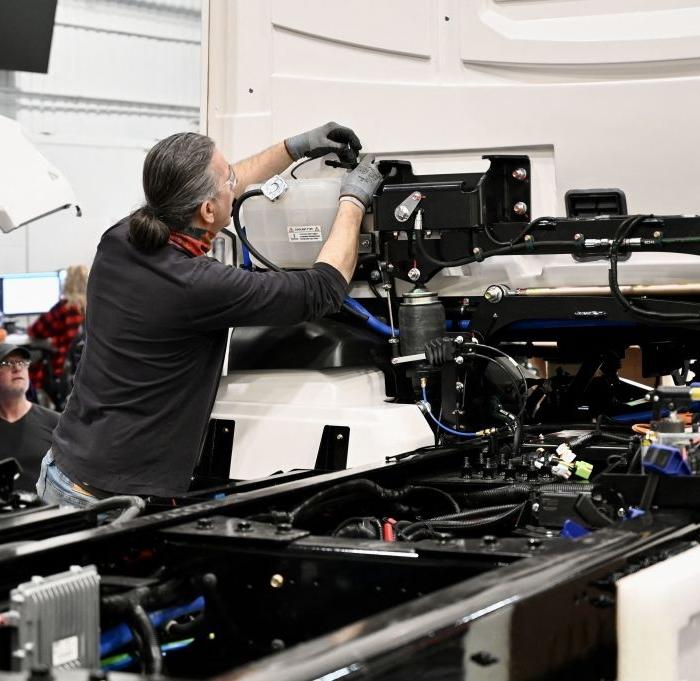
Poilievre said that Canadians are already suffering from U.S. tariffs, and “the last thing they need is a job-killing, price-hiking gas vehicle ban.”
A recent Leger survey found that 71 percent of Canadians view the EV mandate as “unrealistic,” would cost too much, and should be rolled back.
Chinese Tariffs, Byelection
During the Aug. 14 press conference, Poilievre also responded to China’s recently announced 75.8 percent tariffs on Canadian canola seeds, calling it “totally unjustified.” He said Ottawa should retaliate by cancelling the $1 billion loan the Canada Infrastructure Bank has given B.C. Ferries to purchase several new vessels from Chinese shipyards, something that the Tories have been calling for.“At a time when they’re targeting our farmers, I think we should look at ways we can penalize the regime in Beijing,” Poilievre said, adding that Carney had said “nothing” about the new Chinese tariffs.
Poilievre also said China’s latest batch of tariffs showed that “countries smell weakness,” and were taking advantage of Ottawa’s failure to make a trade deal with the United States before the end of last month. Carney had imposed a deadline to make a deal with the United States before July 21, which was then moved to Aug. 1, but this was not completed and U.S. tariffs increased from 25 percent to 35 percent.
The Conservative leader was also asked by a reporter at the Aug. 14 press conference about the upcoming byelection in Alberta’s Battle River—Crowfoot on Aug. 18, where he is running to win back a seat in the House of Commons after losing the Ontario riding of Carleton during the April 28 election. Poilievre said the people of the riding would be deciding “whether they want strong national leadership for the local issues that affect their lives.”
Poilievre did not say whether he believed he could stay on as leader of the Conservatives if he failed to win the riding by a larger margin than the previous Conservative MP, Damien Kurek, who stepped aside so Poilievre could run, but said it would be a “privilege to champion the people who feed, power, and protect our country.”