Conservative Leader Pierre Poilievre says he would use the notwithstanding clause and legislate mandatory prison time for child porn offences after the Supreme Court of Canada struck down mandatory minimum sentences for child pornography.
In a 5-4 decision released on Oct. 31, the court called the mandatory sentences “unconstitutional.”
Poilievre said those convicted of such offences “must face” mandatory prison time. ”The Supreme Court ruling today removing those penalties was dead wrong,” he said in an Oct. 31 post on X.“Conservatives will use the Notwithstanding Clause to protect the rights of children by locking up child porn users with mandatory prison time,” Poilievre said, adding “we must protect our children.”
He added that the authors, distributors, and possessors “must be severely punished.”
Quebec Crown prosecutors brought the case to the Supreme Court, appealing a lower court decision that ruled in favour of two men who pleaded guilty to child pornography offences. The men said mandatory sentences violated their charter right not to be subject to “cruel and unusual treatment or punishment.”
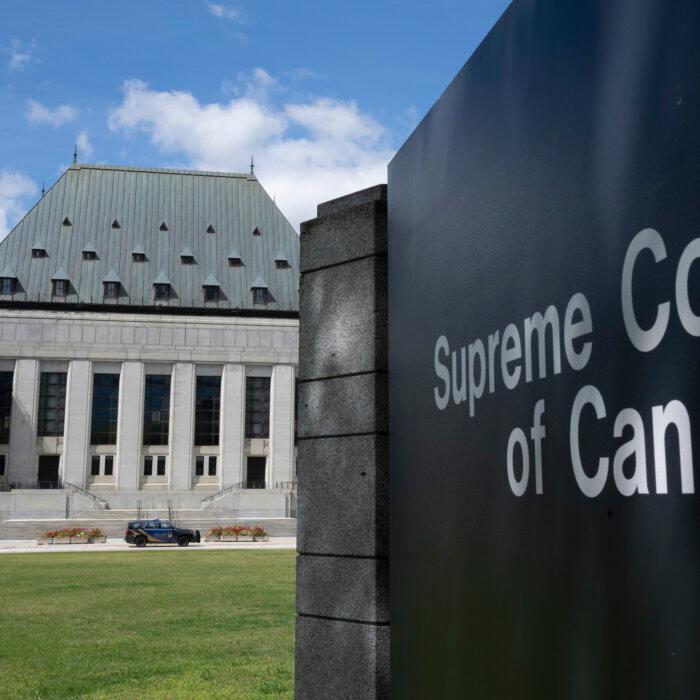
The Supreme Court decision, issued by Judges Andromache Karakatsanis, Sheilah Martin, Nicholas Kasirer, Mahmud Jamal, and Mary Moreau, said mandatory minimum sentences don’t allow judges discretion to impose sentences other than jail time.
“It must be recognized that these offences can be committed in different ways, under different circumstances and by different offenders,” they wrote.
The judges said the offence can cover “a very wide range of circumstances,” from a “well-organized offender” who has “accumulated thousands of files,” to an “18‑year‑old offender who, one day, keeps and views a file showing a 17‑year‑old victim that was sent to the offender without them having requested it.”
Judges Richard Wagner, Suzanne Côté, Malcolm Rowe and Michelle O’Bonsawin wrote a dissenting opinion that was included in the Oct. 31 decision. They said it had not been shown that mandatory minimum sentences constitute “cruel and unusual punishment.”
“These heinous offences call for strong condemnation; the court owes greater deference to Parliament’s decision to enact the mandatory minimum,” they concluded.
A spokesperson for Justice Minister Sean Fraser told The Epoch Times in an email the implications of the court’s decision were being “carefully” reviewed.
“Crimes that exploit or abuse children are among the most serious and reprehensible in our society,“ said Lola Dandybaeva.”Plain and simple: child abusers should face the toughest penalties Canadian law allows.”
Politicians Weigh In
Several Canadian politicians also weighed in on the Supreme Court decision and called on Ottawa to respond by using the notwithstanding clause to enact new legislation.Smith called on the federal government to invoke the notwithstanding clause in response to the court’s decision.
Ontario Premier Doug Ford also urged Ottawa to use the clause, calling those convicted of child pornography offences “predators” and “disgusting scumbags who prey on children.”Ford said they belonged in jail for the rest of their lives.