The approval and building of key projects, like a new pipeline, should be a priority even without a consensus from stakeholders and premiers, Conservative Leader Pierre Poilievre says.
If Canada has any hope of selling its oil and gas to countries beyond the United States, a new pipeline is a necessity, Poilievre said during a June 9 press conference on Parliament Hill.
“We’ve got to get it done. We need a pipe at the end of the day,” Poilievre said. “If you wait until everybody agrees on everything, nothing will happen. You’re never going to get everybody to agree on every single project.”
The Tory leader noted Canada is sending 90 percent of its oil and 100 percent of its gas to the United States at an “enormous” price discount.
“This is costing us tens of billions of dollars every single year to the exclusive benefit of American refineries and commodity traders who are able to take our product, bid up the price by $15, and sell it on the world stage, and do that literally, about a billion times a year. That is insane,” he said. “We can’t wait any longer. We have to get things done.”
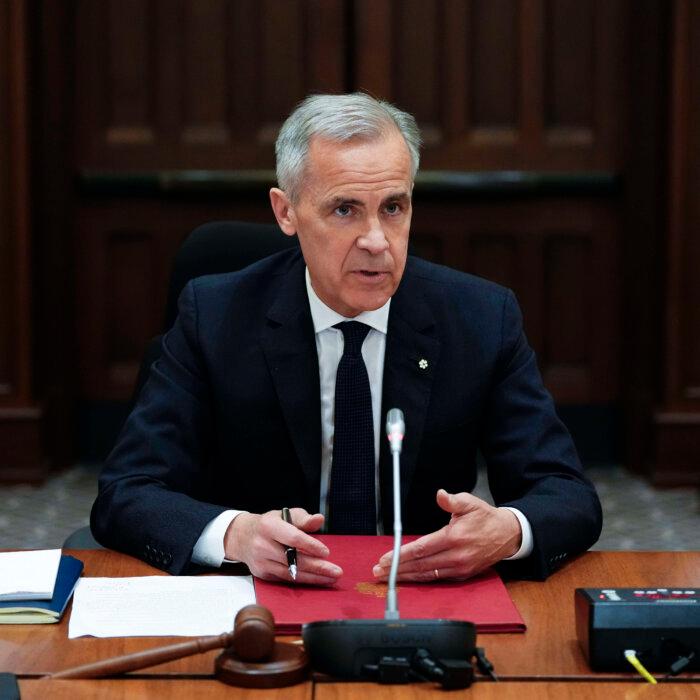
Prime Minister Mark Carney introduced a bill last week designed to stimulate interprovincial free trade, improve labour mobility, and accelerate the approval process for an unspecified number of large-scale projects deemed to be in the national interest.
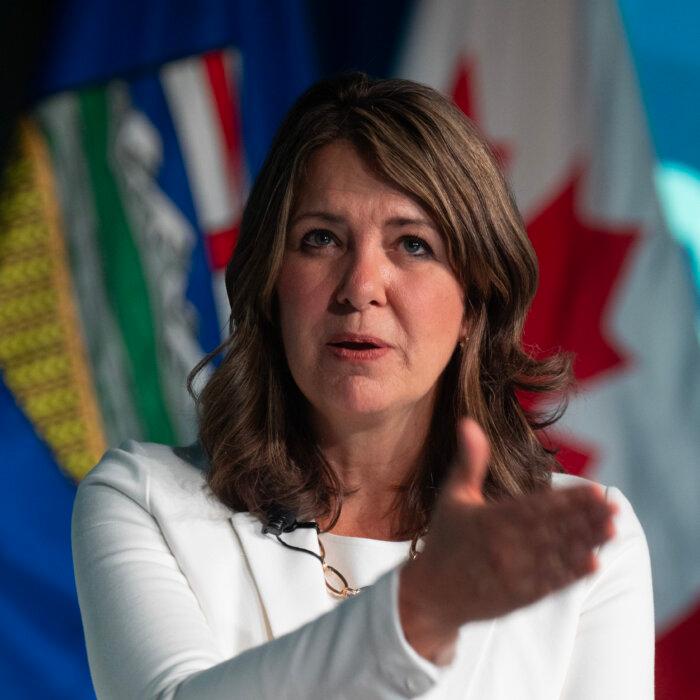
The legislation does not specifically mention any project, including new pipelines. Alberta Premier Danielle Smith has made a heavy push for a cross-country pipeline project, with some other provinces voicing support.
British Columbia Premier David Eby signalled a lack of interest in a new pipeline through his province, noting during a June 3 press conference that Smith’s vision for a north coast pipeline was “many, many years off.” He said the Trans Mountain pipeline carrying crude and refined products from Edmonton to the B.C. coast is already operational and should be used to its maximum potential before any other pipeline is considered.
Carney has said he would support a new pipeline but only if there is a “consensus” among all parties involved. He told reporters after the bill was tabled last week that his government would not impose any project on a province that did not support it.
“We must have a consensus of all the provinces and the indigenous people ... If a province doesn’t want it, it’s impossible. It’s not the choice of the federal government,” he said in French.
Smith said during a weekend interview that she planned to “convince” Eby to support building a pipeline to take Alberta oil to northern B.C.’s coastline for shipment to other countries.
Eby’s potential support for a pipeline remains unclear. Last month, he said he would consider a pipeline if Smith was able to convince the federal government to approve one, but added that his focus was on decarbonizing his province’s economy.
He made similar comment during a June 9 press conference in Seoul, South Korea, the final stop on a 10-day trade tour through Asia that has also included Japan and Malaysia.
Eby told reporters the biggest problem in accomplishing such a project is that there is no money for it or companies vying for the opportunity to build another pipeline. He said if Smith succeeds in finding a proponent and funding, and assembles a project, then B.C. “will certainly cross that bridge.”
British Columbia has a history of pipeline opposition. The federal government purchased the Trans Mountain pipeline expansion project in 2018 for $4.5 billion after energy conglomerate Kinder Morgan abandoned it, citing B.C. opposition.
While other premiers including those from Saskatchewan, Ontario, and Nova Scotia have expressed interest in a coast-to-coast pipeline, Poilievre said, for now, the best route for another Canadian pipeline is to the Pacific.
“Any other route is going to be even harder politically and physically,” he said. “So we need a pipeline to the Pacific, and if the prime minister says he’s going to wait till everyone agrees, then nothing will get done, which is what has been happening for the last decade.”
The Canadian Press contributed to this report.