Conservative Leader Pierre Poilievre is outlining several measures that could be used to stop the Longest Ballot Initiative from stacking dozens of candidates into byelections, as he is set to face at least 77 opponents in the riding of Battle River-Crowfoot next month.
“We have to take action, because this is a scam. It is unfair, it is unjust, and it must stop,” Poilievre told a group of supporters during a July 11 town hall in Stettler, Alta., in footage originally posted by Hometown Media.
The Longest Ballot Committee (LBC) is targeting the Battle River-Crowfoot byelection, where Poilievre is looking to regain a seat in the House of Commons. The group, which opposes the first-past-the-post system and is calling for electoral reform, has a goal of registering 200 candidates in the byelection ahead of the July 28 deadline. Seventy-seven have been registered so far.
Poilievre said Elections Canada could “fix this” by implementing two new rules: that every candidate on the ballot must have 1,000 unique signatures from community members and that nobody can sign a petition twice. He said this would “would make it impossible for 200 people to go out and have their names piled onto the list,” noting that only candidates who are truly running for office should be listed on the ballot.
The LBC targeted Poilievre’s Carleton riding in the April 28 election which the Conservative leader lost to Liberal candidate Bruce Fanjoy. Poilievre, who had held the riding for more than two decades, received 45.8 percent of the vote compared to Fanjoy at 50.8 percent.
The LBC was able to field in excess of 90 candidates in Carleton, leading to ballots that were nearly a metre long and had to be folded multiple times to fit into voting boxes.
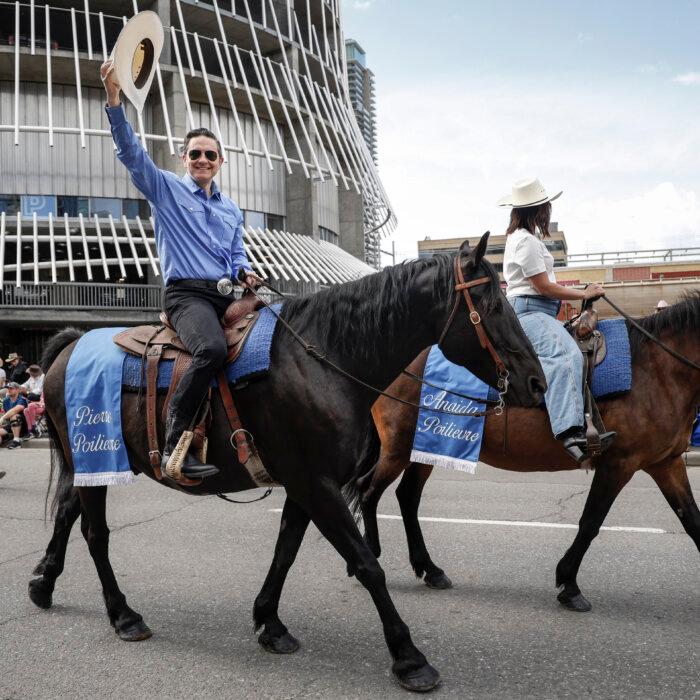
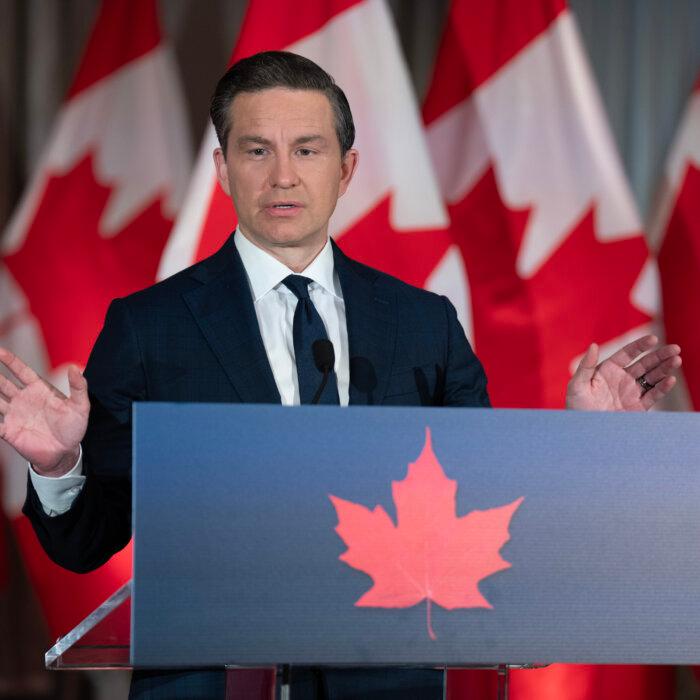
The Tory leader announced shortly after his election loss that he would run in a byelection in Battle River-Crowfoot after Conservative MP Damien Kurek offered to vacate his seat to allow Poilievre to regain a position in the House of Commons.
The longest ballot movement traces its origins to the satirical Rhinoceros Party of Canada, which was founded in 1963 and has policies such as making “Sorry” the country’s official motto and naming “illiteracy the third official language of Canada.” It has also pledged to open “tax havens” in all provinces, and allowing for advertising in the House of Commons and Senate.
LBC associate Donovan Eckstrom said in January that LBC would target both Poilievre’s Carleton riding and former Deputy Prime Minister Chrystia Freeland’s seat of University-Rosedale. The plan to have dozens of candidates run in Freeland’s riding was later dropped.
Chief Electoral Officer Stéphane Perrault told the House of Commons in November 2024 he had concerns about the protest movement making it more difficult for Canadians with language or accessibility barriers to vote.
“Just imagine the difficulties faced by a voter who has any form of disability or literacy barrier or who can’t easily handle this type of ballot,” he told the House Affairs Committee.
Perrault recommended Bill C-65, which made changes to the Elections Canada Act, be amended so voters are limited to signing the nomination paper in support of a single candidate. Bill C-65 was terminated when Parliament was prorogued in January 2025.