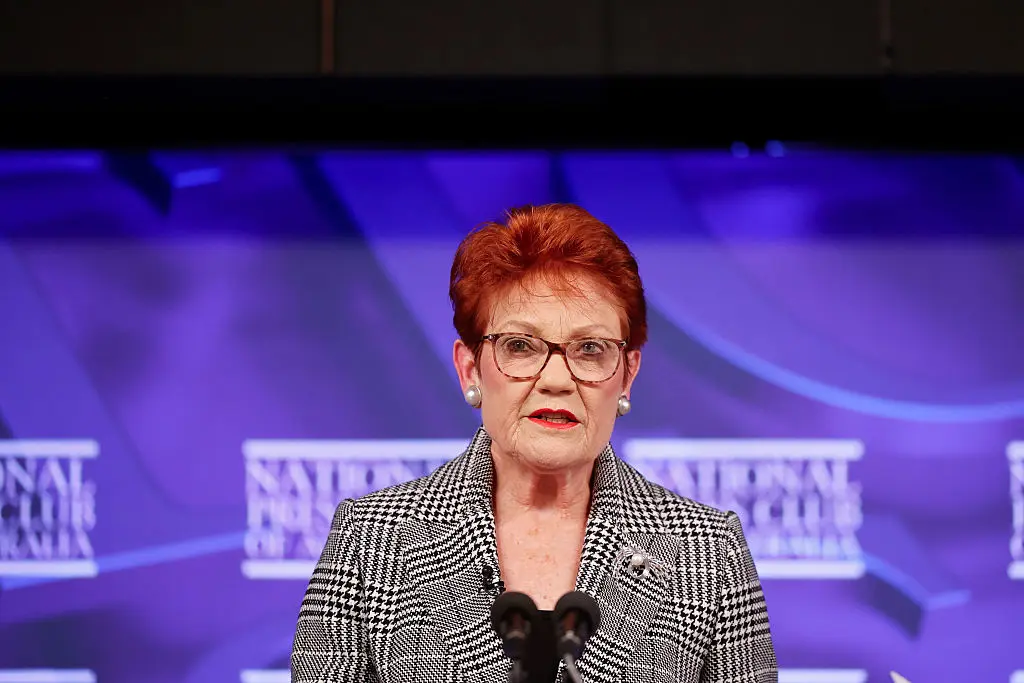
Australian Prime Minister Anthony Albanese has rejected One Nation’s call for the country to become a “monocultural” society rather than a multicultural one.
The Labor leader made the statement during a press conference revealing the government had secured support from the left-wing Greens to pass its contentious tax overhaul through the Senate.
“Modern Australia is not a monoculture and it never has been,” Albanese told reporters on June 23, pointing to the presence of Aboriginals prior to European colonisation.
Albanese also said those who arrived on the First Fleet, which transported the first formal group of British colonisers to Australia, were not united as one.
“There were some in chains, and some who were in charge of the people in chains. There were Catholics and Protestants,” the prime minister said.
Albanese also pointed to the Australian national soccer team, the Socceroos, as an example of diversity.
“So, it’s really a nonsense argument to go back to something that was actually never there, and I think that it’s an example of policies and a vision for the country that isn’t thought through, that doesn’t represent who we are in 2026,” he said.
“We won’t move forward if we get stuck in these cultural debates that are all aimed at dividing people.”
Hanson blamed migration volumes for contributing to the housing and rental crisis in Australia.
“Unsustainable demand is being driven by several factors, but the biggest is high immigration,” she said.
Hanson outlined Australian Bureau of Statistics (ABS) estimates from 2000 that the national population would reach 24-28 million in 50 years, a benchmark that has already been met.
The conservative-leaning leader also took aim at the ideology of multiculturalism for contributing to deteriorating social cohesion.
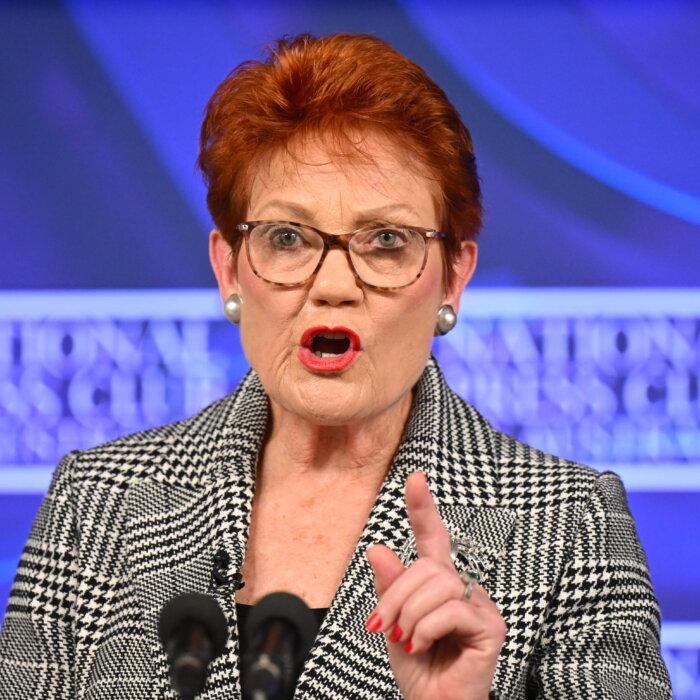
“At the centre of this crisis is the utterly flawed policy of multiculturalism,” she said.
“We cannot be a multicultural society. We are a multiracial society, but we must be ’monocultural,'” Hanson said. “Australians must live under the one cultural umbrella.”
“We oppose entirely people coming into this country and bringing with them the troubles they have left behind, coming to this country and ignoring our values, our language, our traditions, our dress, and the fact that we are predominantly a Judeo-Christian society,” she said.
One Nation has surged across multiple polls since late last year, winning seats at the South Australia state election and taking the Farrer by-election. More recently it has pipped the Labor government as the most popular party in the country.