This copy is for your personal, non-commercial use only. Distribution and use of this material are governed by our Subscriber Agreement and by copyright law. For non-personal use or to order multiple copies, please contact The Epoch Times Reprints.
Prime Minister Mark Carney’s former associate who will oversee Ottawa’s new Defence Investment Agency could be cabinet’s highest paid appointee.
Toronto banker Doug Guzman was appointed CEO of Canada’s new Defence Investment Agency when it was launched on Oct. 2. The agency, which will operate within Public Services and Procurement Canada, aims to speed up defence purchases for the Canadian Armed Forces (CAF) and the Canadian Coast Guard by eliminating redundancy and red tape.
Guzman is set to earn between $577,300 and $679,100 per year, according to an Oct. 1 cabinet order that was first covered by Blacklock’s Reporter. Guzman could also earn a 33 percent bonus on top of his salary.
The highest paid Crown corporation CEOs will be paid between $573,500 and $674,700 in the 2025-26 fiscal year, with an added maximum bonus of 33 percent, the federal government says.
Guzman is set to earn a higher salary than the Bank of Canada governor, who earns between $463,100 and $544,800 per year. Guzman is also set to earn a higher salary than the federal finance minister, who earns $309,700 per year, or even Carney himself, who earns $419,600 per year.
Guzman most recently served as deputy chair of the Royal Bank of Canada and has held leadership roles at Goldman Sachs, where Carney has also worked. The Prime Minister’s Office (PMO) said Guzman’s “expertise in capital allocation, project execution, and large financial projects will be instrumental in accelerating procurement and growing our defence industrial base.”
Guzman told The Globe and Mail in 2007 and 2008 interviews that Carney was an athletic competitor who “ran the marathon,” and was “a guy who wants to get the right answer on things,” saying he was “successful in athletics, academics and business.”
“If you took a blank piece of paper and wrote a definition of what a bank governor is today, you would need someone who is analytical, can exist in the public eye and who has worked on three continents. That’s Mark. You almost couldn’t have anyone better,” Guzman told The Ottawa Citizen in 2012.
Guzman also co-chaired an award committee at Western University last year where Carney won the Ivey Business Leader Award.
“We are fortunate to have leaders like Mark, who have personal and passionate interest in leading efforts to find the solutions to Canada’s, and indeed the world’s, most complex challenges,” Guzman said in a March 2024 statement.
Carney has appointed other former associates and top corporate leaders to his cabinet, such as Energy Minister Tim Hodgson, who worked with Carney at Goldman Sachs and served as Carney’s special advisor at the Bank of Canada before his role as chair of Hydro One. Carney’s chief of staff Marc-André Blanchard is a former ambassador with the United Nations, where Carney also worked, and Privy Council Clerk Michael Sabia shares leadership experience with Carney at the World Economic Forum.
Defence Spending
The PMO said Canada’s defence procurement is currently “fragmented across departments, slow to consult industry, and too complicated to respond to rapidly evolving military needs,” saying the new Defence Investment Agency will aim to expedite defence purchases through a centralized review and approval system.
The agency will also ensure “earlier engagement” between the CAF and Canada’s defence industry and will strengthen Canada’s collaboration with partners like the United Kingdom, Australia, and France, which already have dedicated procurement bodies, the PMO said.
The new agency builds on Ottawa’s commitment to increase defence spending to 2 percent of GDP by the end of this fiscal year, and to 5 percent of GDP by 2035. The PMO says the agency will prioritize partnerships and investments to meet these pledges.
Carney’s government is expected to table a budget on Nov. 4 with a much higher deficit. Carney has said he will try to find efficiencies in the government, while at the same time increasing federal spending on infrastructure. He has repeatedly said his government will “spend less and invest more.”
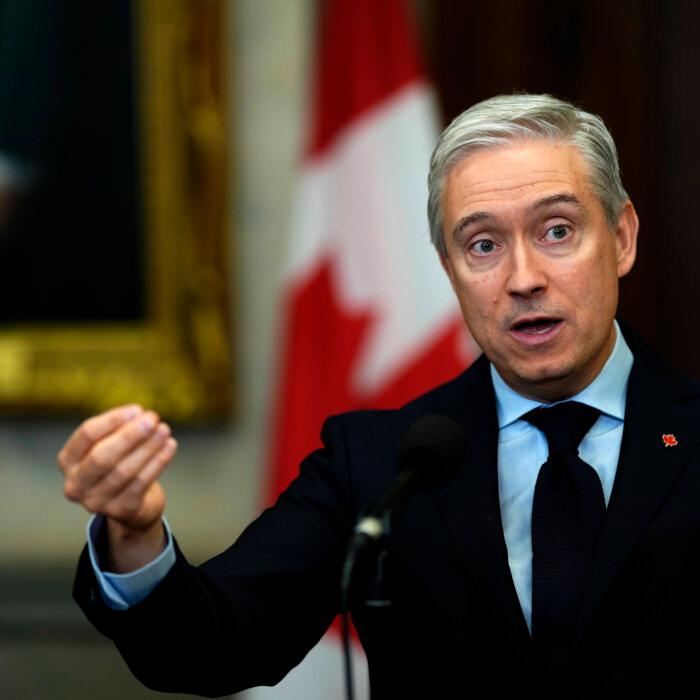
Cabinet ministers have been looking for efficiencies within their departments after Finance Minister François-Philippe Champagne sent a letter to his colleagues in July asking them to make cuts to their departmental budgets. He asked them to achieve 7.5 percent savings starting in fiscal 2026, increasing to 10 percent savings in 2027, and then reaching 15 percent in 2028.