Ottawa and British Columbia have reached an infrastructure agreement that maintains the northern oil tanker ban while outlining how the federal government could proceed with a new oil pipeline through the province.
Alberta has advocated for the tanker ban to be lifted so that an oil pipeline to B.C.’s North Coast could ship up to one million barrels per day of oil to Asian markets. Prime Minister Mark Carney had also previously suggested that the ban, which was implemented back in 2019, could be overturned to export oil from the new pipeline.
Speaking to reporters on July 2, B.C. Premier David Eby said he was “proud to say” that talks with the federal government had preserved the tanker ban, “protecting British Columbia’s pristine northern coast and the $2 billion-plus economy that relies on it.”
While Eby has expressed opposition to the building of the pipeline, he said that such a project is ultimately under the federal government’s jurisdiction. Eby said Carney’s decision to coordinate with B.C. on the pipeline is a “sign of leadership and a commitment to collaborative federalism in Canada.”
Ottawa and Alberta first signed a memorandum of understanding (MOU) on a pipeline in November 2025, which included commitments by Alberta to pair the proposed pipeline with a carbon capture project and increase her province’s industrial carbon tax.
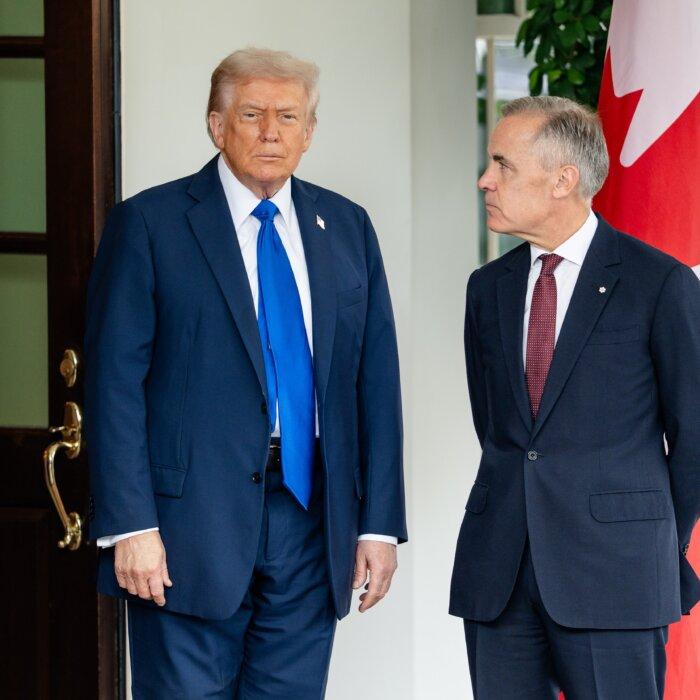

Ottawa-BC Agreement
The construction of the pipeline is dependent on a private-sector proponent stepping forward to build it. Smith has said a proponent for the pipeline would likely come when there is “some certainty” that the project will get built.The agreement commits Ottawa to engaging with First Nations on the pipeline, expanding economic opportunities for indigenous communities, and negotiating a framework with British Columbia that would provide the province with annual royalty payments and establish an environmental emergency response fund.
The agreement states that the Liberal government will support infrastructure improvements associated with the Roberts Bank Terminal 2 project in Delta, B.C., which would expand the port’s shipping capacity by around 50 percent.
Given that B.C.’s steel manufacturing industry faces “compounding disadvantages,” the agreement states that Ottawa and B.C. will develop trade and competitiveness measures to address the challenges. The two governments will also commit to strengthening B.C.’s softwood lumber industry.
As part of the agreement, Ottawa and B.C. also commit to collaborating on the development of new clean power projects, supporting the province’s growing wind power sector, and watershed protection.