This copy is for your personal, non-commercial use only. Distribution and use of this material are governed by our Subscriber Agreement and by copyright law. For non-personal use or to order multiple copies, please contact The Epoch Times Reprints.
Ottawa has signed a memorandum of understanding with Seoul to bring South Korean automotive manufacturing and new investments to Canada’s auto sector.
Industry Minister Mélanie Joly and her Korean counterpart, Minister Jung-Kwan Kim, signed a memorandum of understanding (MOU) earlier this week aimed at strengthening Canada and Korea’s “comprehensive strategic partnership,” which launched in 2022, Innovation, Science and Economic Development Canada said in a Jan. 29 news release.
Ottawa says the non-binding MOU was signed to facilitate cooperation between Canada and Seoul on bringing Korean automotive manufacturing to the country and expanding domestic electric vehicle (EV) manufacturing opportunities. It also covers collaboration on critical minerals and artificial intelligence.
The MOU also intends to attract investments in Canada’s battery production, battery-materials processing, and “the refinement, processing and recycling of Canadian critical minerals.”
“This agreement will grow our auto sector, create good jobs and reinforce Canada’s position as a global leader in future‑ready vehicle manufacturing,” Joly said in a Jan. 29 statement.
She told reporters on Jan. 27 that Canada is “happy to have the Koreans in town,” noting that the agreement follows her trip to Korea in November 2025, where she engaged with senior government officials and industry representatives.
Energy Minister Tim Hodgson said the MOU also means Canada is diversifying its exports, but the release didn’t contain any further explanation about what this involves.
The new agreement comes as Canada is seeking to strengthen its auto sector as U.S. tariffs continue to put strain on the industry.
Prime Minister Mark Carney struck a deal with China earlier this month to allow 49,000 Chinese EVs into Canada at a 6.1 percent tariff, instead of the 100 percent tariff imposed on China in 2024, with the expectation that the deal would drive Chinese investment in Canada. Some researchers and policymakers have warned that lower cost Chinese EVs have flooded other markets, such as in Europe, which has come at the expense of domestic products.
Ontario Premier Doug Ford, whose province is the core of Canada’s auto industry and has been critical of Ottawa’s deal with Beijing, welcomed the agreement with Korea, saying his province will support Korean auto manufacturers in Canada.
“Hyundai Kia sell 220,000 cars a year, and they have no presence here in Canada, so we welcome that. We’ll be there to support them any way we can,” Ford told reporters on Jan. 29.
“Hopefully those people that lost a job at GM [General Motors] or Stellantis in Brampton, there should be a priority hiring them.”
More than 1,000 auto workers at GM’s Oshawa plant are losing their jobs this week as the company moves jobs to the United States, Unifor, the union representing 40,000 auto sector workers in Ontario, said in a Jan. 28 news release.
Stellantis also announced in October that it would relocate a portion of its production at its Brampton Assembly Plant in Ontario to the United States, which affects roughly 3,000 Canadian jobs.
South Korea’s auto industry is among the world’s top 10 for vehicle production, producing more than 4 million vehicles in 2024, while 12 percent of all cars sold in Canada in 2024 were made by South Korean automotive companies, according to Innovation, Science and Economic Development Canada.
Canada has had a free trade agreement with South Korea since 2015, and the country is Canada’s seventh-largest trading partner.
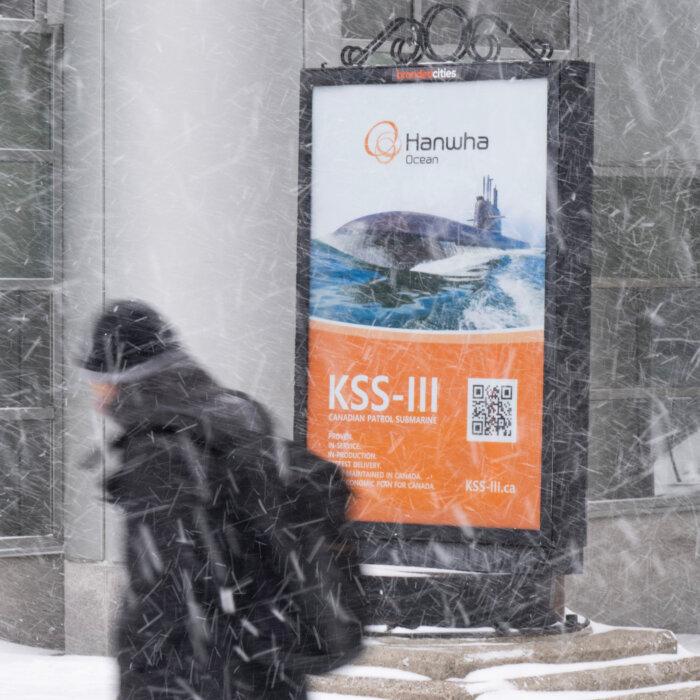
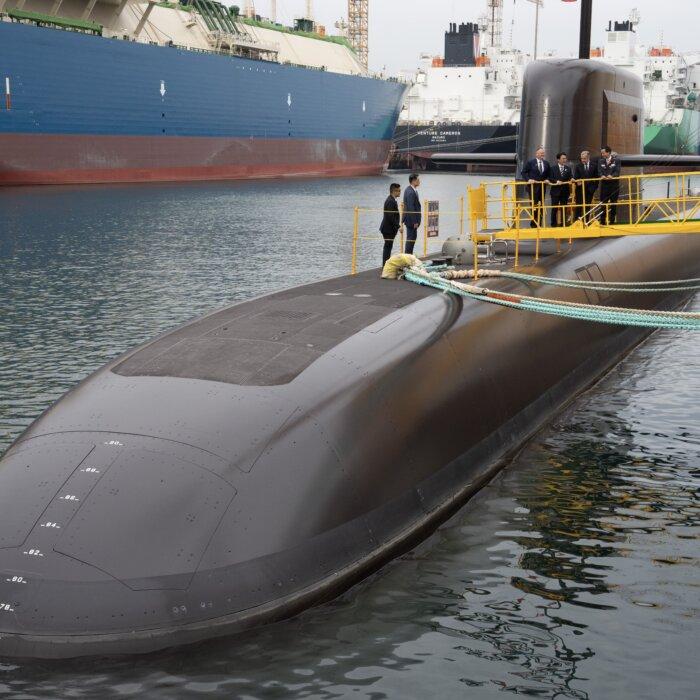
The MOU also comes as Korea and Germany have been competing to win a contract to replace Canada’s fleet of submarines.
Hanwha Ocean, the Korean company seeking to build Canada’s submarines, said earlier this week that it signed multiple MOUs with Canadian companies on steel, space, artificial intelligence, and advanced defence technologies in support of the Canadian submarine procurement project.
Hanwha signed agreements with Algoma Steel, Telesat, MDA Space, Cohere, and PV Labs on the sidelines of a visit by a South Korean government delegation, “underscoring South Korea’s commitment to supporting Canada’s long-term industrial development and job creation in line with nation-building priorities,” the company said in a Jan. 26 press release.