Manitoba Premier Wab Kinew says Ottawa has hinted at a timeline of 2030 to develop the Port of Churchill as a hub for energy exports, including liquefied natural gas.
“The federal government has made it very clear, they want to build big things and they want to build things fast,” Kinew told reporters.
After meeting Prime Minister Mark Carney and Energy and Natural Resources Minister Tim Hodgson on April 14 in Ottawa, Kinew said he interpreted remarks from Carney as an “ultimatum” to show progress by 2030 in order to secure federal funding.
The port, located on Hudson Bay in Churchill, Man., is Canada’s only Arctic deep-water port connected to the national rail network. It has long been discussed as a strategic route for grain, critical minerals, and energy shipments, including liquefied natural gas (LNG).
Ottawa has promoted faster approvals and major infrastructure development, but has not confirmed a formal 2030 deadline for LNG exports from Churchill.
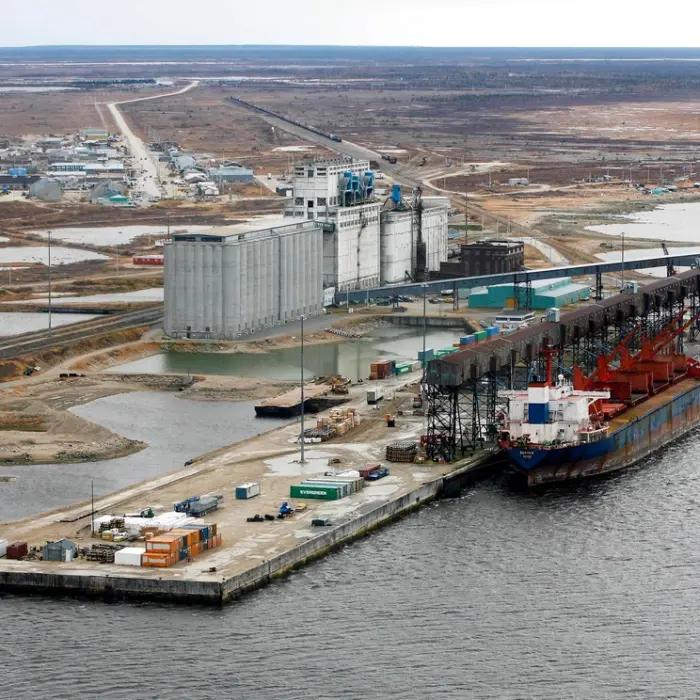

Major upgrades would be required before LNG exports could proceed, including improvements to the Hudson Bay Railway, expansion of port storage and loading facilities, energy infrastructure build-outs, and upgrades to ice-route shipping logistics.
While the statement did not specify a 2030 deadline for LNG exports, it framed the plan within a broader push to “build new ports, highways, and trade and energy corridors at speed and scale” across Canada.
“The new Co-operation Agreement will help accelerate major infrastructure projects across Manitoba – getting shovels in the ground faster on projects like the Port of Churchill Plus,” it said.
Carney also repeated a pledge of federal support for the project during a press conference alongside Kinew.
Kinew said Manitoba is “very excited about the prospect of working together” with Ottawa to “open up new trade destinations for all of Canada.”
Whether Churchill becomes an LNG export hub by 2030 will depend on how quickly governments, indigenous partners and private investors convert political commitments into physical infrastructure.