The federal government will be providing $10 billion in funding for a new agreement on Churchill Falls and other electricity projects in Labrador.
The agreement, which the Liberal government said is the largest clean energy investment in North American history, would upgrade the Churchill Falls generating station, develop the Gull Island hydroelectric project, implement a 2,000-megawatt onshore wind energy project in Labrador, and build transmission lines.
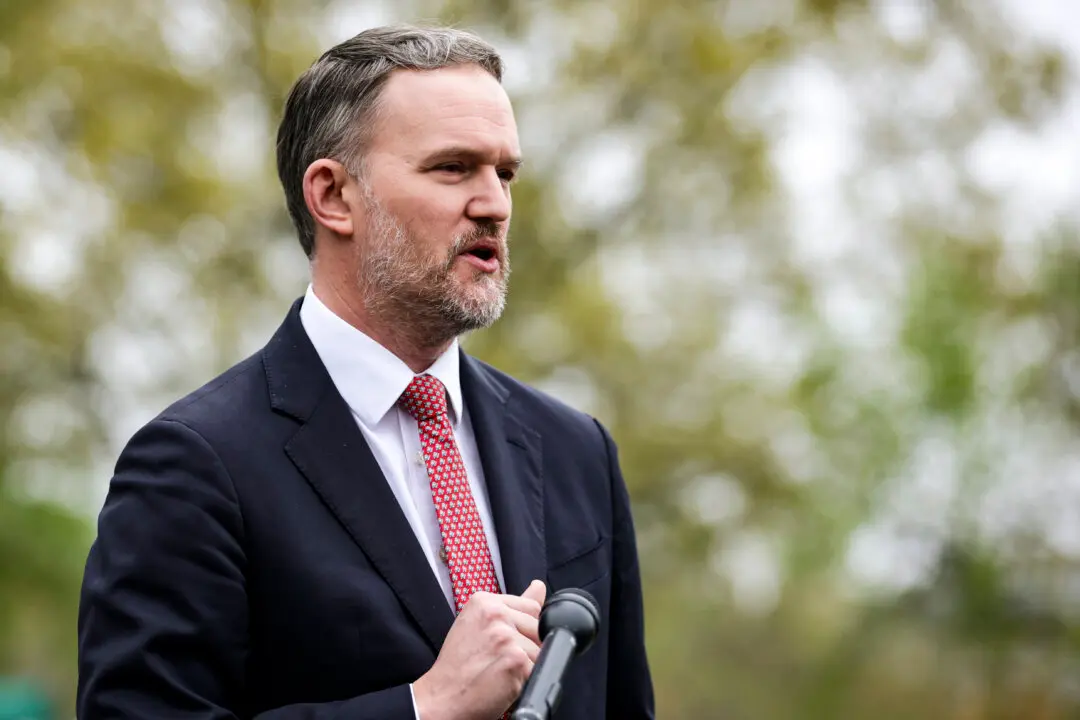
Speaking in St. John’s on Aug. 17, Newfoundland and Labrador Premier Tony Wakeham said the agreement meant they were “finally turning the page on one of the darkest chapters in our past, and replacing both the notorious 1969 Churchill Falls Agreement and the 2024 [memorandum of understanding] with a better deal for all of us.”
Wakeham said when the Newfoundland government entered into negotiations with Quebec and Ottawa, “we made it clear there was one thing which we would not compromise: that Newfoundlanders and Labradorians must always be the primary beneficiaries of our own resources.”
As such, the new agreement allows Newfoundland to sell up to 985 megawatts through Quebec to other markets in North America, to which it previously did not have guaranteed access.
“Newfoundlanders and Labradorians will finally be the primary beneficiary of our own resources, with complete control over whether we use our power to develop our economy or sell to outside markets,” Wakeham said.


Wakeham noted that the new agreement will allow Newfoundland to “maintain complete optionality in how we choose to use our power” from Churchill Falls. “We can keep this power as part of an economic strategy to develop our own mining industry and other industries, or we could choose to sell this power,” he said.
Quebec Premier Christine Frechette, also speaking at St. John’s, said the partnership would provide Canada with “energy security” for the next 50 years, while also protecting Quebec’s autonomy and keeping electricity bills low. “Businesses will be able to grow as they wish to grow to their full capacity without being limited by the electric power we can provide,” she added.
Through the agreement, Ottawa is also agreeing to support pre-development projects in the Labrador region, which include the Labrador West Transmission Expansion to connect critical mineral mining operations to the electricity grid, the Kami Iron Mine Partnership’s project, Focus Graphite’s project to undertake pre-construction work for a new transmission line and road, and SFP Pointe-Noire’s project to expand critical minerals handling capacity and rail infrastructure.