Australia is set to launch its own low-Earth orbit (LEO) satellite in 2028 through a new project led by Optus, in collaboration with the iLAuNCH Trailblazer program, HEO, Inovor Technologies, and the Defence Science and Technology Group.
Its initial role will focus on space domain awareness—tracking and monitoring other space objects as more and more satellites are being launched into orbit. The number currently stands at around 12,000.
Advanced Equipment for Space Observation
The spacecraft will host two major pieces of equipment.The first is a 20-centimetre Adler Imager—a space telescope developed by HEO in partnership with Optus and the University of Southern Queensland.
This non-Earth imaging system will provide high-resolution images of space objects, helping government and commercial users track assets, protect infrastructure, and gain insights into space operations. The telescope will also enable astronomical observations of stars, planets, and other celestial bodies.

The second payload is being developed by the University of South Australia with support from SmartSat CRC. It includes a compact, high-speed laser communications terminal capable of transmitting and receiving data via light beams between satellites or to ground stations.
Strengthening National Capability
Nick Leake, head of satellite and space systems at Optus, said the project would be a major step in supporting Australia’s connectivity needs and national capability.“We must continue to explore new ways of delivering services that businesses rely on. This project is a clear example of industry, academia and government working together to create future solutions,” he said.
The project builds on earlier efforts by iLAuNCH, Australia National University, Optus, and Leonardo UK to develop more affordable laser communications ground stations.
Optus also continues to explore multi-orbit capabilities with additional partners.
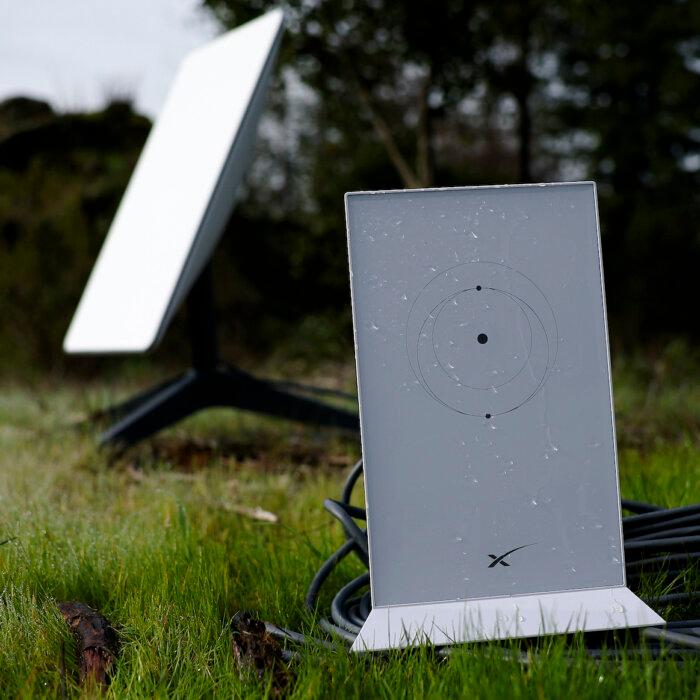
Since entering the Australian market in 2021, the Starlink satellite internet service has rapidly expanded, particularly in rural areas where traditional fibre or copper connections are either unreliable or unavailable.
However, concerns have been raised about the service’s foreign ownership and control.
A December 2024 regional telecommunications review warned that reliance on a U.S.-based provider posed potential data sovereignty and national security risks.
In May 2025, Starlink was issued a formal warning by the Australian Communications and Media Authority (ACMA), although the reasons were not made public.