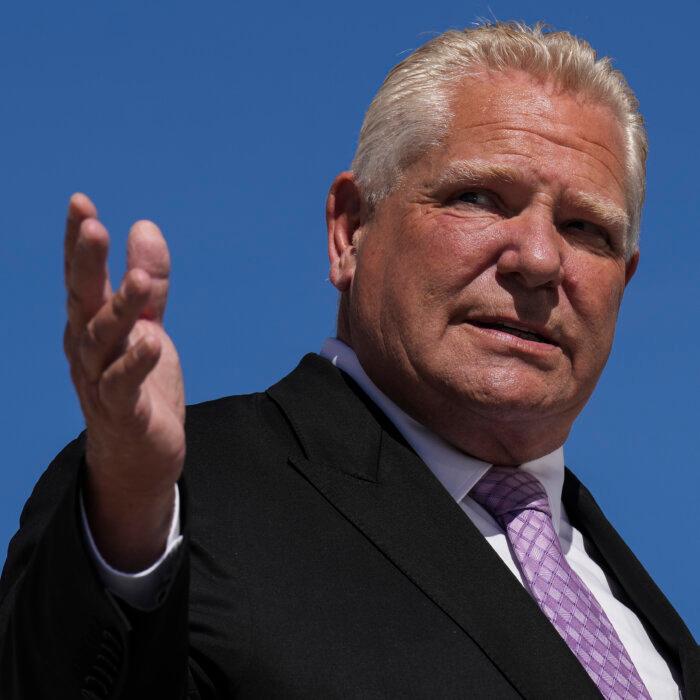
“He saw the ad before I put it out, so did his chief of staff. They both saw it, and we moved forward on it,” Ford told reporters at Queen’s Park on Oct. 27.
Ford said in the Ontario legislature on Oct. 27 that his ad campaign was “the best ad that ever ran.” Ford also said he was confident that U.S. President Donald Trump would not be following through on his threat to increase tariffs on Canada by 10 percent. Trump pledged the tariff hike on Oct. 25 in response to the ad.
The Epoch Times contacted the Prime Minister’s Office for comment but didn’t immediately hear back.
Carney said negotiations with the United States were progressing until Ontario’s anti-tariff ad aired.
“There were a series of very detailed, very specific, very comprehensive discussions … up until the point of those ads running,” he said on Oct. 27, speaking from Kuala Lumpur, where he was attending the ASEAN summit.
Ontario’s $75 million advertising campaign featured audio from Reagan’s 1987 address to the nation, in which he spoke about the value of free trade, including with Canada. At the start of that address, Reagan announced he was imposing tariffs on Japan, a part not included in Ontario’s ad. In that portion of his speech, he described the move as “steps that I am loath to take,” accusing Japan of unfair trade practices involving semiconductors.
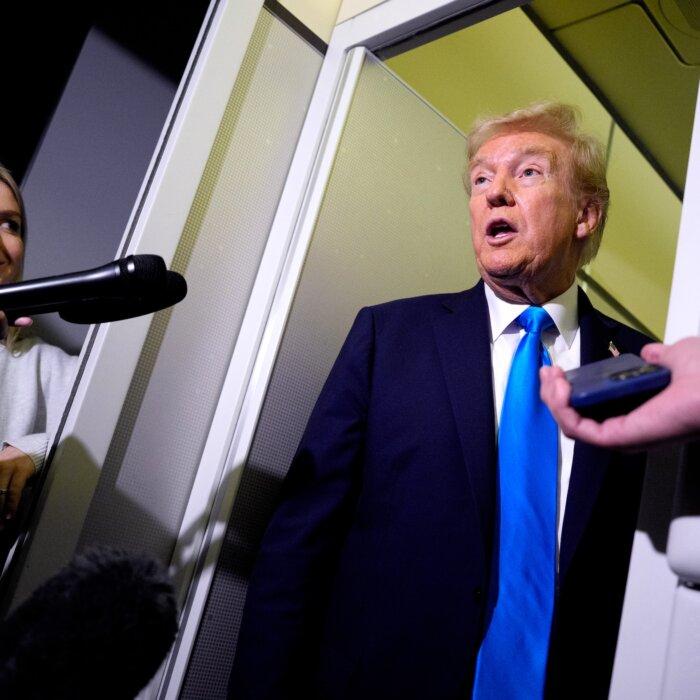
Speaking to reporters on Oct. 27, Trump said Reagan “liked tariffs,” and that Ontario’s advertisement made it appear he did not, which he said was meant to interfere with the upcoming U.S. Supreme Court hearing on Trump’s tariffs.
The U.S. president said he is pleased with the current trade arrangement with Canada, and that he would “let it ride.”
Canadian exports to the United States not covered by the United States-Mexico-Canada Agreement are currently subject to a 35 percent tariff rate. Canadian products are also subject to sectoral tariffs, including those on copper, steel, aluminum, autos, and lumber.
Carney told reporters in Malaysia that he had not spoken with the U.S. president since Oct. 23, but that he remains “ready” to meet with Trump to continue building on the trade relationship between the two countries.
Carney also said the federal government had chosen not to run anti-tariff advertisements in the United States, and that it was an “obvious” choice. He said Ford “took a decision which is different than the Canadian government’s, which is responsible for that relation.”
In an interview with ABC News Live on Oct. 27, Ford said he agreed that it is the “sole responsibility” of Carney to negotiate for Canada, but that Ford is attempting to protect his province’s steel, manufacturing, and auto sectors. Ford said he does not want to fight with the United States, and wants to see Carney and Trump “get to the table and start making a deal on all those sectors that make both countries a lot stronger.”
Ford also said he does not regret airing the ad “at all,” as he had intended to inform Americans about the impact of tariffs. Ford also rejected Trump’s characterization of the ad as “dirty,” saying it was “factual” in nature.