The Ontario government is ending financial support for seven supervised drug consumption sites this June, as the province continues to shift focus from harm reduction to treatment and abstinence.
“Drug injection sites are a failed experiment that make communities unsafe and trap vulnerable people in addiction,” Premier Doug Ford said in a March 16 social media post. “Instead of standing by as addictions get worse, we’re funding treatment and lasting recovery while keeping our communities safe.”
“Through our almost $550 million investment to establish HART Hubs across the province, we are ensuring people struggling with addiction can access the care and supports they need to break the tragic cycle of addiction and rebuild their lives while protecting Ontario communities,” Jones said in the press release.
The province will initiate a 90-day wind-down period, to give clients time to transition to local HART Hubs, Jones said.
The decision will impact the final two provincially funded supervised consumption sites located in Toronto—Moss Park Overdose Prevention Site and the site at Fred Victor Centre—along with two sites in Ottawa, and one site each in Niagara, Peterborough, and London.
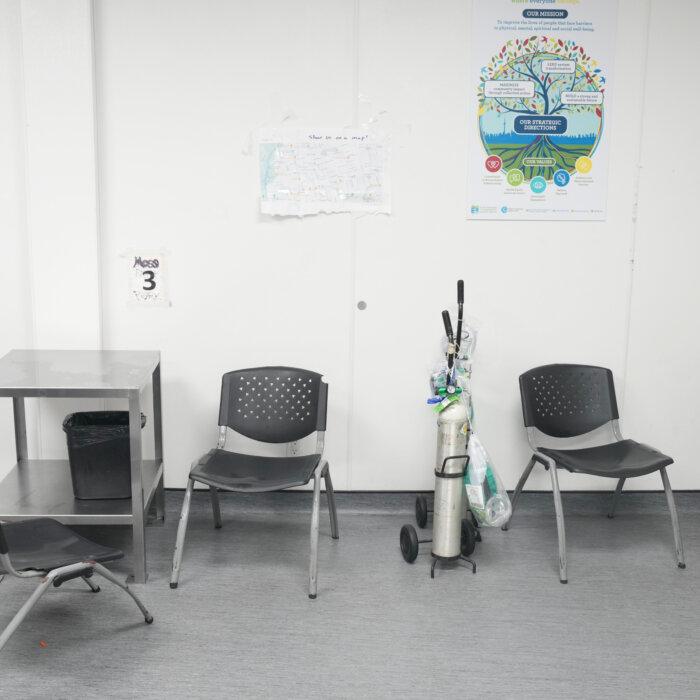

The funding cut is a decision that harm reduction advocates say will cause sites to shut their doors this summer unless they are able to obtain private funding.
HIV Legal Network co-executive director Janet Butler-McPhee told a March 13 press conference that advocacy groups learned of the change the same day, after letters were sent out to the affected sites.
A letter from the Ministry of Health to the Fred Victor Centre, one of the two Toronto sites, says provincial funding for consumption and treatment services will end as of June 13.
“This decision reflects Ontario’s commitment to prioritizing treatment, recovery and supports that help individuals move toward long-term stability while protecting Ontario communities,” the letter says.
The funding cut follows the closure of 10 sites in early 2025, which was prompted by the provincial government’s ban on such facilities within 200 metres of schools or daycares. Most of those sites converted to the province’s new abstinence-based HART hubs.
Premier Doug Ford’s government has also prohibited the establishment of any new consumption sites as it transitions from a harm reduction approach to one based on abstinence.
The letter sent to Fred Victor Centre says the province will spend nearly $550 million to open 28 HART hubs across Ontario in place of the funding for supervised consumption sites.
Butler-McPhee and several other supervised consumption site advocates criticized the move.
HART Hubs
The letters received by the supervised consumption sites on March 13 came the same day that the province announced the opening of a HART hub in the Durham region.Mental Health and Addictions Associate Minister Vijay Thanigasalam said the Whitby, Ont., facility would be headed by the Durham Community Health Centre and would work with partner organizations in the community to deliver services.
Nine supervised consumption sites in Toronto, Ottawa, Hamilton, Kitchener, Guelph, and Thunder Bay have already transitioned to the provincial HART Hub model, the government said.
Ford has described the HART Hub model as better suited to help addicts get off of drugs and called supervised drug consumption facilities “the worst thing that could ever happen to a community.”