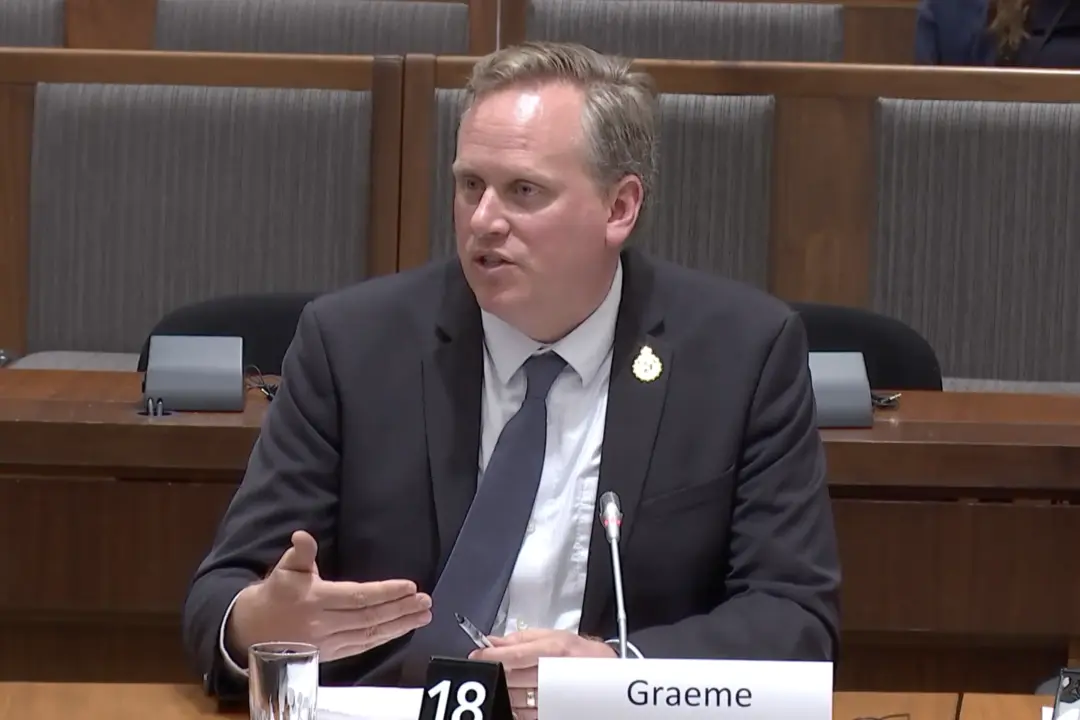
The Ontario Provincial Police (OPP) commissioner has told MPs that Ottawa should crack down on illegal guns coming over the U.S. border instead of collecting guns from law-abiding citizens through its buyback program, saying 91 percent of guns used in crime come from the United States.
“These are the dangers. These are the strains and drains on our resources, and this is where we need to be spending our time and our attention.”
Carrique told MPs it’s “very rare” that legally owned firearms are used in crimes or in violent acts. He said time and resources should be spent focusing on illegal guns coming to Canada across the U.S. border, instead of focusing on collecting guns from law-abiding firearm owners.
“Our concern as Canadians should be on those crime guns that are primarily coming from the U.S,” Carrique said. “They are illegal from the day they arrive, and we need to focus our attentions on the border to lock that down.”
Carrique was called to testify in committee on Canada’s bail system, sentencing, and handling of repeat violent offenders. He spoke on the issue of gun crime in response to questions from Conservative MPs.


Enforcing Bail Conditions
Carrique also told the justice committee on Oct. 28 that enforcing bail conditions for repeat violent offenders is “very resource intensive.” He noted police services across the country experience “unprecedented” levels of civil unrest in major urban centres, increasing crime in rural areas, and repeat violent offenders that need to be monitored, on top of the number of illegal guns coming across the border.Among several amendments, the legislation creates new reverse onuses for major crimes, meaning the accused will be required to prove why they should be released from detention, rather than prosecutors needing to prove they should be detained.
Justice Minister Sean Fraser said the Liberal government heard from police organizations and provincial governments that reverse onuses should be introduced at bail for certain serious crimes. He noted that a few violent offenders can represent a “huge proportion of the criminal activity we actually witness in our communities.”