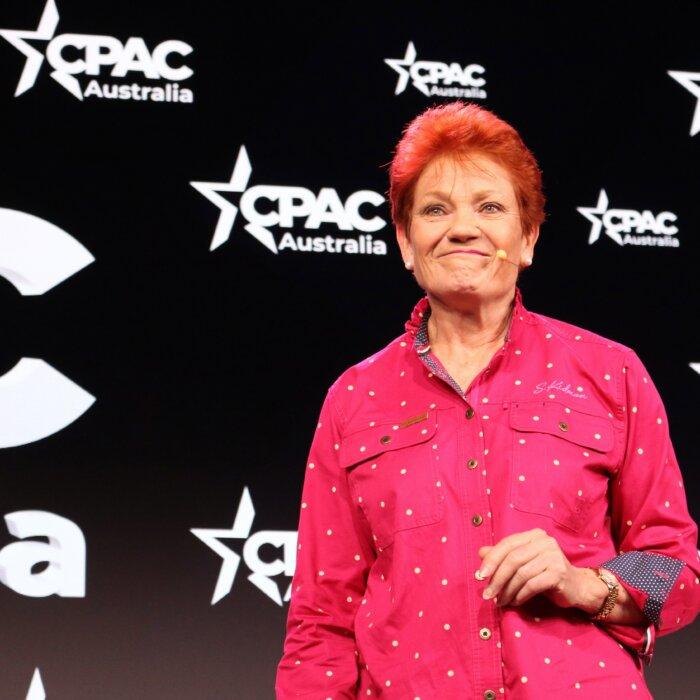
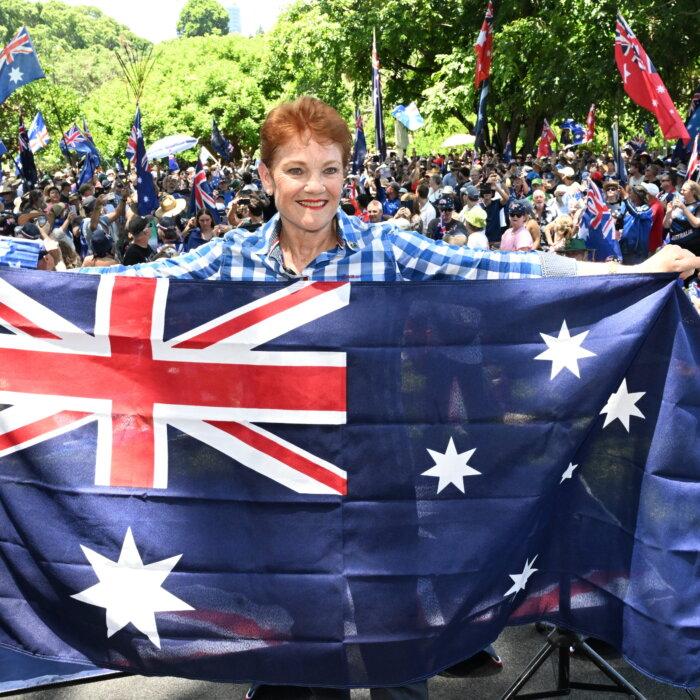
Pauline Hanson, who heads the conservative-leaning One Nation party is now the most popular political leader in Australia, according to new polling.
It’s the latest in a string of polls showing Hanson’s steady rise since the May federal election.
The latest poll from Redbridge and the Australian Financial Review, found 38 percent of respondents favoured Hanson as leader of Australia, compared to current Prime Minister Anthony Albanese who dropped to 34 percent.
Liberal Opposition Leader Sussan Ley garnered just 10 percent of support, even falling behind fellow party members Andrew Hastie, Angus Taylor, and the Nationals leader David Littleproud.
In contrast, Nationals defector—now One Nation MP—Barnaby Joyce was favoured by 23 percent of participants.
Polling also showed strong support for One Nation’s Hanson from baby boomers and Generation X, while millennials and Generation Z showed more support for Labor.
In terms of primary support, this poll shows Labor’s support at 34 percent, dropping 1 point, while One Nation gains a major 9 point boost to 26 percent of overall support.
One Nation ‘Ahead by a Mile’: Pollster
Redbridge Group Australia Director Kos Samaras, a former Labor Party advisor, described the numbers as “brutal.”The trade and TAFE-qualified voter base, which has traditionally supported the Coalition, is now giving 33 percent of its support to One Nation, compared with 14 percent for the Liberals.
“It’s a structural transfer of conservative identity, from mainstream centre-right parties to a populist-right alternative,” Samaras said.
“But here’s the key point going forward—as the contest increasingly shifts toward Labor v One Nation, we will need to model and test preference behaviour in a Labor v One Nation two-party framework, because the preference flows of former Coalition voters will shape the next political era. Unless the former Coalition can turn this around.”
For the Liberals, Samaras said they were bleeding voters on both sides—their more moderate supporter base is moving to Labor and independents, while their more conservative supporters are siding with One Nation.

One Nation’s Road to Power?
Australian Institute of Progress Director Graham Young said One Nation needed to do more to be able to govern.“To form government, One Nation would need to become a proper democratic, mass-based party, and develop a suite of policies that could be implemented to run the country,” he told The Epoch Times. “I understand they are setting-up branches, but I’m unsure what their constitutional position is.”
“They want income splitting for couples for tax purposes, but there is no policy about expenditure or debt, although they do claim they will save $90 billion (US$62.7 billion) by abolishing various government departments, but I don’t think there is any serious costing of this,” he said.
“There is nothing about defence or foreign affairs.”
Young also said that One Nation’s best chances for lower house seats was via suburban areas.
“If (One Nation) were to become the major party in the parliament it would be by taking outer suburban and regional seats,” he said.
“In Queensland you would look to the areas where they originally won big in the 1998 state election, or where Campbell Newman won unexpectedly in 2012.
“That means a number of National, Liberal and Labor seats would change hands.”