One Nation has traditionally drawn most of its support from the Australian “battler,” lower and middle-income families living in suburban or regional areas.
However, recent polling suggests that may be changing as more high income earners shift their preference to the conservative-leaning party amid the fallout of Labor’s tax overhaul.
According to Capital Brief/DemosAU polling since February, One Nation’s share of voters who earn more than $125,000 per year has steadily increased to overtake Labor.
In February, in a survey of about 1,500 people, just 19 percent gave their support to One Nation compared to 31 percent for Labor, and the Liberals on 36 percent.
By April, One Nation’s figure increased to 26 percent while Labor’s support stayed steady and the Liberal’s dropped to 23 percent.
In the most recent poll in June, One Nation’s support of high earners now sits on 30 percent with Labor dropping to 23 percent and the Liberals shifting back to 31 percent support.

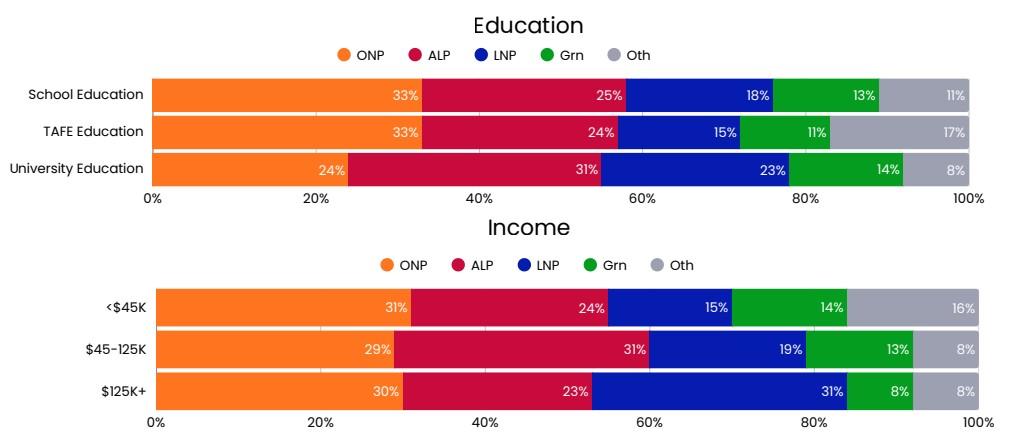
One Nation’s support among those earning less than $45,000 a year, and between $45,000-$125,000, has largely remained steady.
The latest poll comes after Labor announced its contentious tax overhaul program in May targeting wealth creation channels.
The policy shifts include restricting negative gearing to new properties, and taxing capital gains from asset sales at a higher rate—moves the Labor government say are aimed at disincentivising investors from buying property.
A third measure is a new 30 percent tax on the income going into a discretionary trust—a popular legal instrument to help families and businesses split income and lower their tax burden.
Labor has faced a strong pushback from tech start-ups, medical technology firms, and small businesses over the initiatives.
In one case, small business owners kicked off a viral AI meme trend mocking Australian Prime Minister Anthony Albanese for being a “silent business partner” who would take roughly 47 percent of their profits.
Since late last year, One Nation has seen a surge of popularity across multiple polls—now the most popular party in Australia—compared to its 2007 low where it received 0.26 percent of the popular vote, about 32,650 votes.
That year, Labor won 43.48 percent, or 5,388,184 of votes, while the Liberal-Nationals won 36.28 percent and 5.49 percent of the vote.