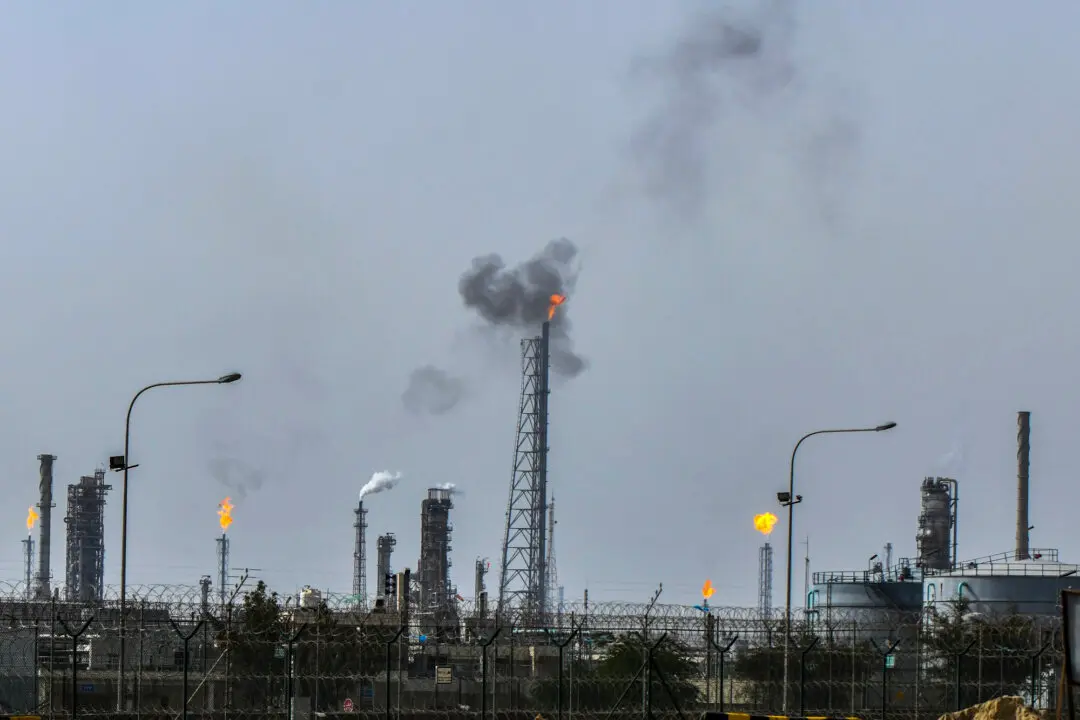
The average U.S. gasoline price rose above $4 per gallon on July 20 as fighting between the United States and Iran continued to restrict oil shipments through the Strait of Hormuz.
The nationwide average price of regular gasoline reached $4.003 per gallon, according to the American Automobile Association, after standing just below the politically sensitive threshold on July 19.
“Instability along the Strait of Hormuz is contributing to the increase at the pump,” the association said in a recent note.
The last time the national average stood at $4 or higher was June 17, when it was about $4.02 per gallon.
Brent crude futures were down by 16 cents, or 0.2 percent, at $87.94 per barrel by 5:22 a.m. ET after hitting $91.42, the highest level since June 11.
The price of U.S. West Texas Intermediate crude fell by 68 cents, or 0.8 percent, to $81.81 per barrel after reaching $85.39, its highest level since June 12.
The benchmarks had initially extended last week’s sharp gains as escalating fighting further curtailed tanker traffic through the Strait of Hormuz. The price of Brent rose by 15.9 percent last week, its biggest weekly advance since April, while the price of West Texas Intermediate gained 15.5 percent, its largest weekly increase since early March.
“With little sign of de-escalation in the Middle East, oil prices continue to move higher as vessel flows essentially grind to a halt,” ING commodities strategists Warren Patterson and Ewa Manthey said in a July 20 note.
The analysts said data from the London Stock Exchange Group showed that only two outbound oil tankers were visible transiting the strait in the latest readings, with no inbound traffic.
The intensified fighting in the Middle East dampened investor sentiment in Asia and Europe, where equities were broadly under pressure, although Wall Street futures pointed to a higher open amid expectations of strong corporate earnings.
“Following the latest escalation in the US–Iran conflict before the weekend, with no clear signs of de-escalation, risk-off sentiment is likely to persist this week,” ING analyst Frantisek Taborsky wrote in a July 20 note.
Hormuz Shipping in Crosshairs
The Strait of Hormuz, a critical choke point for oil and liquefied natural gas exports from the Persian Gulf, has become a hot spot amid the U.S.–Iran conflict.
The Islamic Revolutionary Guard Corps said on July 20 that two oil tankers had exploded and been immobilized after attempting to transit what Iran described as an unsafe southern route through the strait. The Epoch Times could not independently verify the claim.
The United States and Iran have clashed repeatedly over the Strait of Hormuz, with Tehran seeking to assert its control over the waterway.
Iranian forces have attacked ships trying to sail through the U.S. Navy-supported southern route along the Omani coast, in a bid to force vessels to transit through the Islamic Revolutionary Guard Corps-controlled northern passage.
A spokesman for the Iranian Ministry of Foreign Affairs told a news briefing on July 20 that Tehran remains focused on asserting control over Hormuz, with its forces determined to implement any measures necessary to prevent any “misuse” of the strait in a way that would threaten Iran’s national interests, according to Iranian state-run media outlet Islamic Republic News Agency.
Despite the uptick in hostilities, both sides have said that talks continue in a parallel effort to settle the conflict diplomatically.
‘Delicate Diplomatic Dance’
White House press secretary Karoline Leavitt told reporters on July 16 that Iran “very much continues” to talk to the United States and to express interest in a peace deal.
Iranian Ministry of Foreign Affairs spokesman Esmaeil Baghaei confirmed on July 20 that Tehran had received proposals from several mediators seeking to ease tensions with the United States, while responding to reporters’ questions about Qatar’s new initiatives, including a possible 10-day ceasefire.
Baghaei said diplomatic efforts were continuing alongside Iran’s military response, with mediators working to prevent further escalation.
“The proposals put forward through mediators have been conveyed to us, and we have received them,” he said. “However, I would rather not go into their details at this stage.”
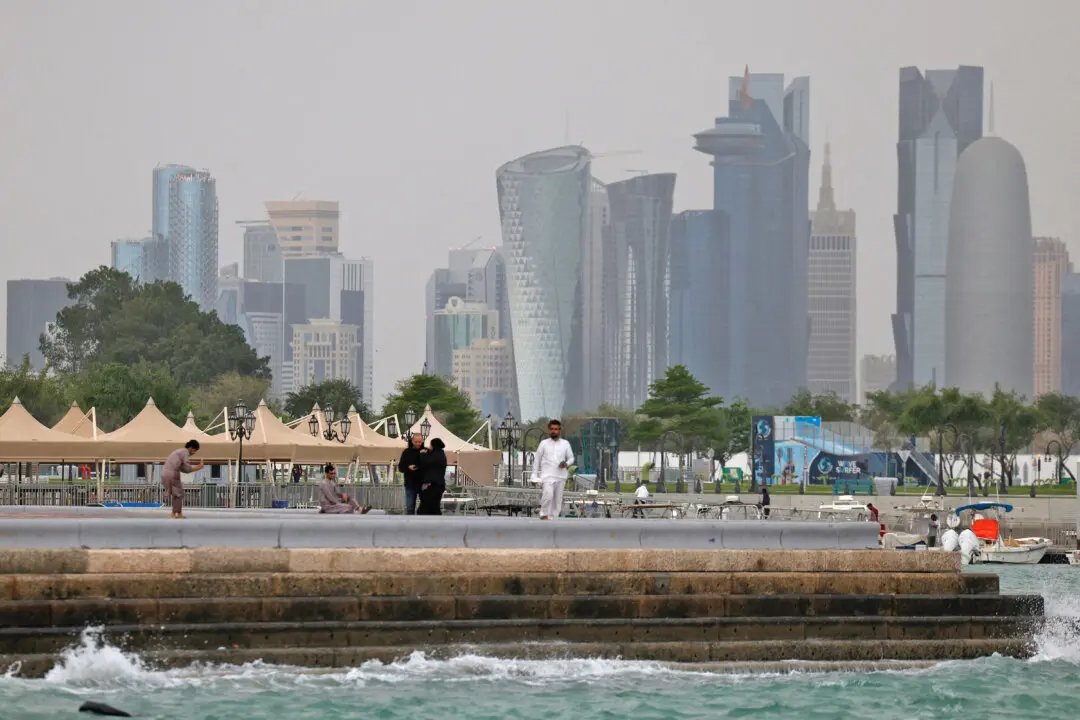
In a recent interview on The Joe Rogan Experience podcast, U.S. Vice President JD Vance described the challenges of the diplomatic track as partly due to divisions within Iran’s regime between hardliners and moderate officials more willing to compromise.
“What we’re doing is a delicate diplomatic dance where we’re using economic leverage points,” Vance said.
“We’re using carrots and sticks. We’re trying to talk to the pragmatists. And then, of course, when they commit acts of violence, we’re responding to it. And all those things are happening simultaneously to get us on a better trajectory.”
Although Vance said it is impossible to predict whether diplomacy will ultimately prevail, he expressed guarded optimism that the process is heading in the right direction, with some exchanges of fire taking place and Hormuz restricted but open enough “to prevent a worldwide energy crisis.”
“I don’t know exactly where this is going to go,” Vance said. “But I think fundamentally we are on the right trajectory.
“It’s just going to be really messy, and there’s going to be a lot of stops and starts.”