This copy is for your personal, non-commercial use only. Distribution and use of this material are governed by our Subscriber Agreement and by copyright law. For non-personal use or to order multiple copies, please contact The Epoch Times Reprints.

The Epoch Times
The Epoch Times
AD
The Epoch Times
Australia News

Number of Aboriginal Children in Protection Increasing, Despite More Funding

Out of every 1,000 Indigenous children, 72 are now subject to care and protection orders, the Australian Institute of Health and Wellbeing says.
Google LogoMark Us Preferred on Google
Number of Aboriginal Children in Protection Increasing, Despite More Funding
Children play football on the street on Tiwi Island on the December 23, 2007. Ezra Shaw/Getty Images
Rex Widerstrom
Rex Widerstrom
2/20/2024|Updated: 2/20/2024
0:00

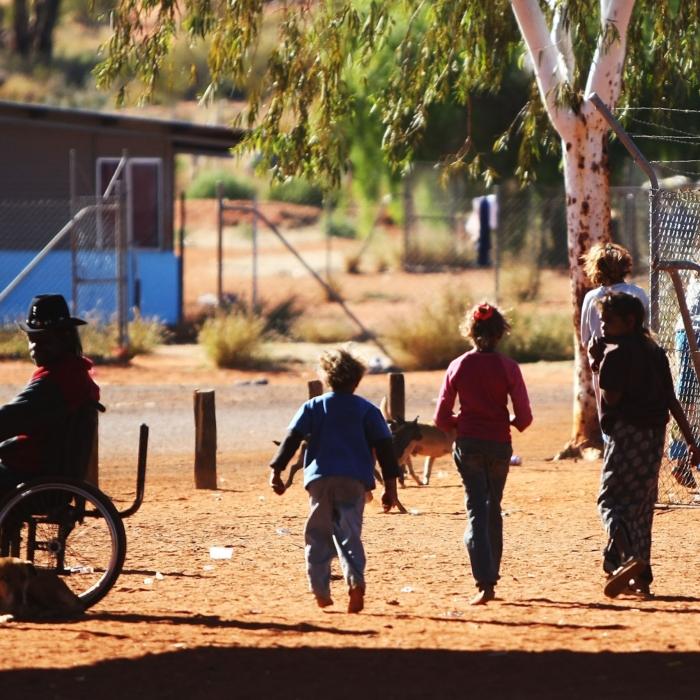
About 24,600 Indigenous children were subject to care and protection orders as of June 2022, new figures from the Australian Institute of Health and Wellbeing (AIHW) show.

That equates to 72 out of every 1,000, up from 62 per 1,000 four years earlier. Nearly a third of those affected are aged between 10 and 14.

Aboriginal children make up just 5 percent of all children in Australia, but they account for almost half of those in the child protection system.

Indigenous children who were placed with relatives for out-of-home care rose from 50 percent in 2017 to 54 percent in 2022.

In total, 19,000 were in out-of-home care, though not all of these were able to be placed with family. Of that number, 14,000 were classed as having been in long-term care, meaning they had been separated from their primary family unit for two years or more.

Of those with at least one sibling in out-of-home care, 70 percent were able to be placed with at least one of their brothers or sisters.
Related Stories
The Epoch Times
Prime Minister Vows Cultural Overhaul to Address Indigenous Inequality
The Epoch Times
Native Title Lawfare Does Little for Struggling Indigenous Communities

These figures mean the country is not on track to reach the target set in the “Closing the Gap” strategy, which aims to reduce the rate of Indigenous children in out-of-home care by 45 percent by 2031.

This is despite an estimated average of $4.2 billion (US$2.7 billion) spending on Indigenous-related issues every year by the federal government alone, according to a review of the October 2022-23 federal budget.

Long Way From Closing the Gap

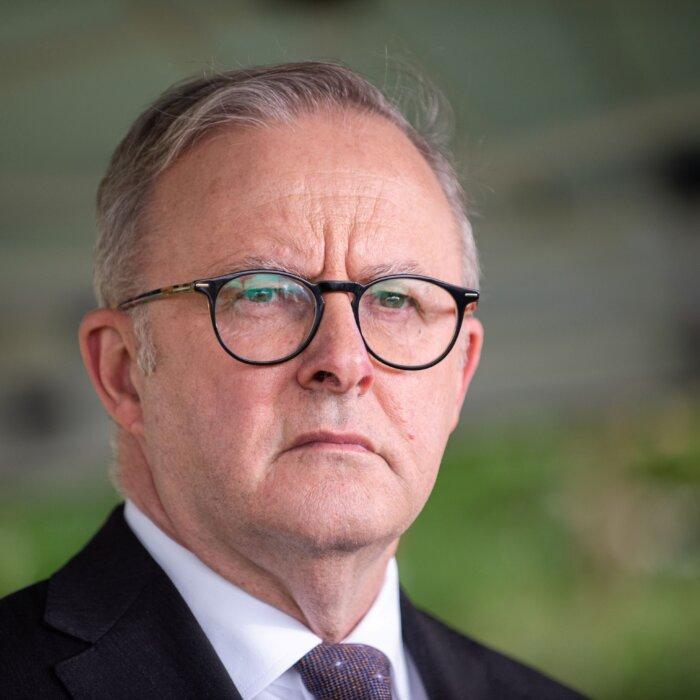
Prime Minister Anthony Albanese used his Closing the Gap speech in February to announce the establishment of a national commissioner for Aboriginal and Torres Strait Islander children. Part of its focus would be on the rates of Indigenous children in out-of-home care.

“What it all comes down to is strengthening families and keeping children safe,” he said in Parliament, saying the target was “guided every step of the way by the evidence.”

In October last year, a report by the South Australian Commissioner for Aboriginal Children and Young People, April Lawrie, found Aboriginal children were increasingly being removed from their families, despite commitments from governments to reduce family separation.

If current trends continue, the report found that “the number of Aboriginal children living in out-of-home care will increase by a further 50 percent over the next decade.”

Ms. Lawrie found that found that children were often removed without adequate consultation with relevant local Indigenous community organisations, especially in regional areas, and warned that “disconnection will only continue the cycle of disadvantage, poverty and trauma.”

Housing Disadvantage

United Nations Special Rapporteur on the Rights of Indigenous Peoples, Victoria Tauli-Corpuz, recently visited Western Australia, which has the highest over-representation of Indigenous children in the system, as well as the Northern Territory, Queensland, the Australian Capital Territory, Victoria, and New South Wales.
In her post-visit report, she recommended that an Aboriginal Children’s Commissioner be established in each State and Territory, and a national coordinating entity be established. She also called on the government to develop a national strategy to eliminate the over-representation of Aboriginal and Torres Strait Islander children in out-of-home care.

Lack of access to safe and stable housing can impact a family’s ability to care for their children. Data from AIHW and the National Indigenous Australians Agency has found Indigenous people are severely disadvantaged in the housing market.

They are 11 times more likely to live in social housing, 10 times more likely to access homelessness services, and four times more likely to reside in overcrowded homes.

Google LogoMark Us Preferred on Google
Rex Widerstrom
Rex Widerstrom
Author
Rex Widerstrom is a New Zealand-based reporter with over 40 years of experience in media, including radio and print. He is currently a presenter for Hutt Radio.
Author’s Selected Articles
Transparency Body Concerned Australia’s Corruption Commission Yet to Hold Public Hearings
Jun 26, 2026
Transparency Body Concerned Australia’s Corruption Commission Yet to Hold Public Hearings
Appointment Process for New Anti-Corruption Body Members Kept Under Wraps: Inquiry
Jun 26, 2026
Appointment Process for New Anti-Corruption Body Members Kept Under Wraps: Inquiry
Treasurer Confident Anger Over Capital Gains and Negative Gearing Changes Will Subside
Jun 25, 2026
Treasurer Confident Anger Over Capital Gains and Negative Gearing Changes Will Subside
Coalition Open to Working With Labor to Block ISIS-Linked Australians From Returning
Jun 25, 2026
Coalition Open to Working With Labor to Block ISIS-Linked Australians From Returning
Related Topics
Australia
Aboriginal and Torres Strait Islander peoples
Aboriginal children
AD
Add to My List
Save
The Epoch Times
Copyright © 2000 - 2026 The Epoch Times Association Inc. All Rights Reserved.