Laws banning protests in Sydney that were rushed through the state Parliament in the wake of the Bondi Beach terror mass killing have been struck down, with the state’s highest court ruling “they placed an unlawful burden on political expression.”
In a decision handed down on April 16, the Court of Appeal sided with protest groups, finding the expanded police powers went too far in restricting the right to assemble.
Chief Justice Andrew Bell said the provisions “impermissibly burdens the implied constitutional freedom of communication on government and political matters and is invalid.”
The laws had allowed police to block public gatherings across the Sydney CBD area and were largely aimed at preventing further pro-Palestinian gatherings in the wake of the Bondi terror attacks that claimed 15 lives and injured 40.
Within hours of being enacted, the NSW police commissioner initially applied the powers across Greater Sydney. The declaration was renewed multiple times, remaining in effect for weeks before being scaled back to the CBD and eastern suburbs.
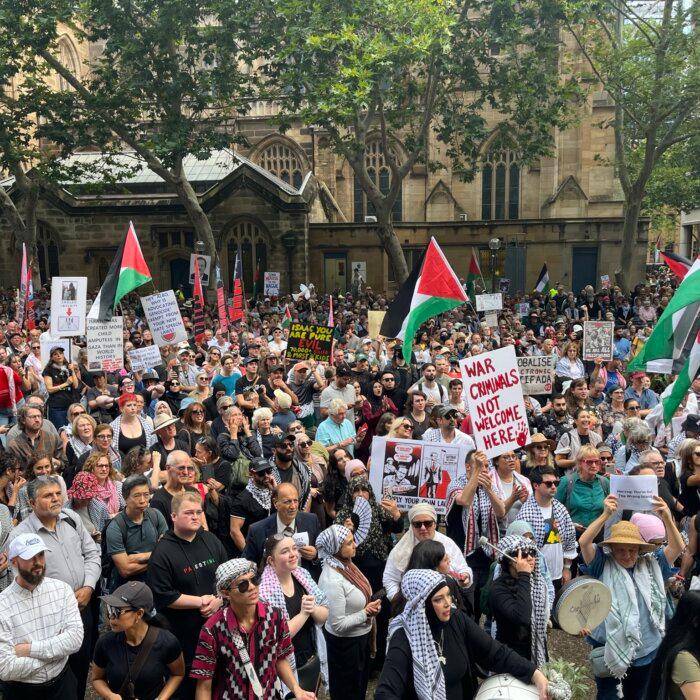
Restrictions continued during the February visit of Israeli President Isaac Herzog, which drew protests from pro-Palestine activists.
However, the laws have faced repeated challenges from pro-Palestinian groups including Elizabeth Jarrett of the Blak Caucus, Joshua Lees of the Palestine Action Group, and Michelle Berkon from Jews Against the Occupation ’48.
In the case, Chief Justice Bell rejected the government’s justification that widespread restrictions were needed due to heightened tensions, noting that existing laws already dealt with unlawful behaviour at protests.
State’s Case Falls Short
The NSW government had argued the laws were narrowly targeted and served a legitimate purpose in maintaining public safety.It pointed to intelligence assessments highlighting rising tensions linked to the Middle East conflict and incidents of violence associated with protests.
The state’s lawyers maintained it was reasonable to empower police to respond to situations involving “intimidation, harassment and fear,” even if those incidents did not escalate into serious threats.
But the court found that reasoning insufficient to justify its restrictions.
The state’s lawyers also argued the plaintiffs—Jarrett and Berkon—were fighting the laws to prevent being charged under the laws.
The court rejected that argument finding it not realistic.
Response
Outside court, the Palestine Action Group’s Lees described the ruling as a decisive victory.“[Premier Minns] needs to end his war on democracy in New South Wales,” Lees said outside the court.
The premier stood by the laws.
“I’m not saying there wasn’t clashes, I’m not saying it wasn’t difficult and I don’t regret moving that legislation at all,” he said on April 16 ahead of the judgement.
“It’s tricky when you’re introducing changes to legislation like that because there’s a necessary infringement on constitutional principles,” he added.