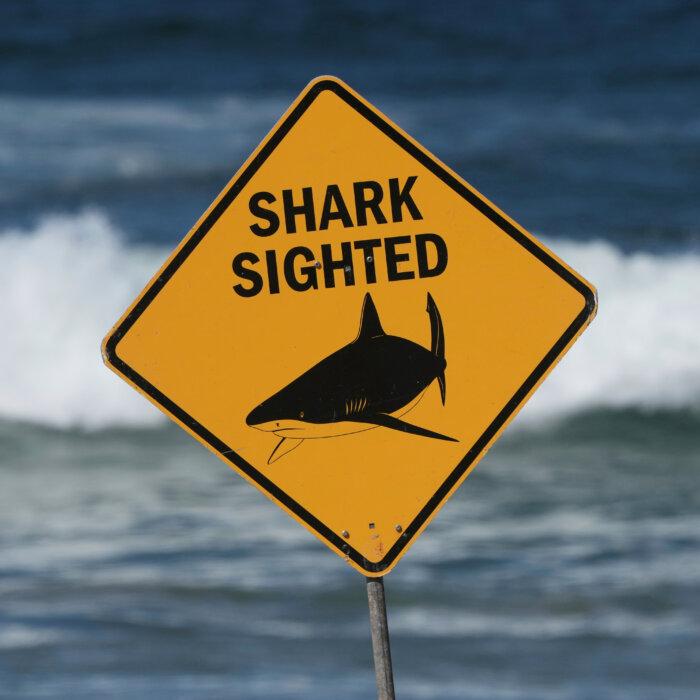
The latest shark attack that critically injured a woman in front of shocked swimmers has reignited calls for culling as a community reels from the incident off a popular beach.
And the NSW government is not ruling out the measure.
The attack happened about 20–30 metres from shore and between the flags at Sydney’s popular Coogee Beach about 11 a.m. on Saturday.
The woman, believed to be in her 30s, was airlifted to hospital after being brought from the water by an off-duty lifeguard.
It has prompted strong calls by NSW independent MP Rod Roberts to cull sharks for the sake of community safety.
Agriculture Minister Tara Moriarty did not rule it out on Sunday.
“Nothing is off the table in terms of how we keep the community safe,” she told reporters.
Shark nets would be installed on Sept. 1 and the government was seeking expert advice from the Department of Primary Industries, Moriarty said.
Mitigation programs included drone surveillance and shark tagging.
“We swim in the ocean with living, breathing animals and we have to share the ocean every day,” she said.
Roberts said swimmers needed to be protected.
“We’re not talking about culling out on the Great Barrier Reef, just the popular swimming areas around Sydney,” he said.
Marine experts and conservationists warn culling is not a sustainable, scientifically grounded solution.
Footage from a Westpac Life Saving Rescue Helicopter shows a large shark swimming close to the shore after the attack.
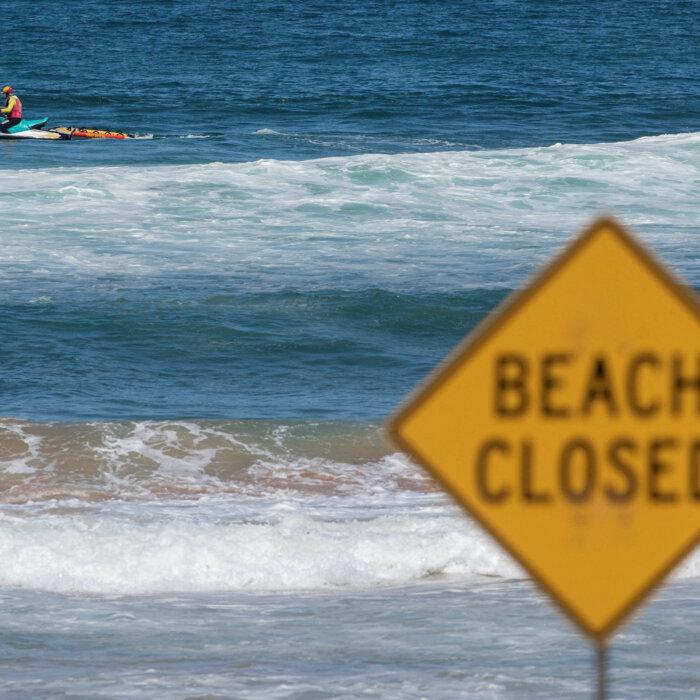
All of Sydney’s eastern suburbs beaches remain closed after Randwick City Council made the call to prohibit anyone from entering the surf during the 24 hours following the attack.
The closure includes Coogee, Clovelly, and Maroubra beaches, and “all other ocean beaches under council management.”
As a precaution, Bondi, Bronte, and Tamarama beaches are also closed.
The shark involved is believed to be three to four metres long and possibly a Great White, which is a protected species.
An exemption to fly drones has been sought by SLNSW from the Civil Aviation Safety Authority, Moriarty confirmed.
Lifeguards were seen testing them out on Coogee beach.
The Department of Primary Industries and Fisheries shark programs leader Marcel Green said Saturday’s attack was “unique and different.”
“She [the swimmer] was doing everything right but it was just one of those random events and we can never be protected 100 percent every day, all the time,” he said.
About 170 white sharks have been detected by the department’s listening stations dotted across the entirety of the state’s coastline.
The most recent fatal attack in Australian waters happened on June 6, when 35‑year‑old diver Daniel Turpin was bitten by a suspected 4.5‑metre shark while spearfishing near Albany in WA.
His death followed those of 38‑year‑old Perth father Steven Mattaboni off Rottnest Island and spearfisher Michael Jensz, 39, south of Cairns in May.
In January, NSW made international headlines after recording four shark attacks in 48 hours.
Two resulted in people being hospitalised in critical condition, while the other two escaped without serious injuries.
Coogee Surf Life Saving Club will host a community gathering on Monday at 6:30 p.m.